Key Takeaways
- The clinical dose studied in perimenopausal women is 300 mg of a standardized ashwagandha root extract taken twice daily, for 8 weeks.
- One randomized trial in 100 perimenopausal women reported reduced Menopause Rating Scale scores, higher estradiol, and lower FSH and LH against placebo (PMID: 34553463).
- The NCCIH still classifies the evidence for menopausal symptoms as insufficient. Most trials are small and run 8 weeks or less.
- Rare cases of liver injury have been reported. Safety data are strongest for short-term use of roughly 3 months or less.
- Ashwagandha is not hormone therapy. Speak with your prescriber before combining it with HRT, thyroid medication, or sedatives.
Ashwagandha for perimenopause is one of the most searched herbal questions of the transition, and most pages answering it either oversell the herb or dismiss it. Our editorial team reviewed the current clinical literature for this update in August 2026, including the perimenopause-specific randomized trial, a new 2026 trial in women aged 45 to 55, and the position statements from the National Center for Complementary and Integrative Health.
What follows separates what has actually been measured in perimenopausal women from what has been assumed. The short version is that a real signal exists, it is narrower than the marketing suggests, and the safety conversation is bigger than most articles admit.
Understanding the Perimenopausal Shift
Perimenopause is the transitional period before menopause. It can last for several years as the ovaries gradually begin to make less estrogen. This is a natural biological process, but the hormonal fluctuations can trigger a wide range of symptoms. These can include changes in menstrual cycles, hot flashes, sleep problems, and mood shifts.
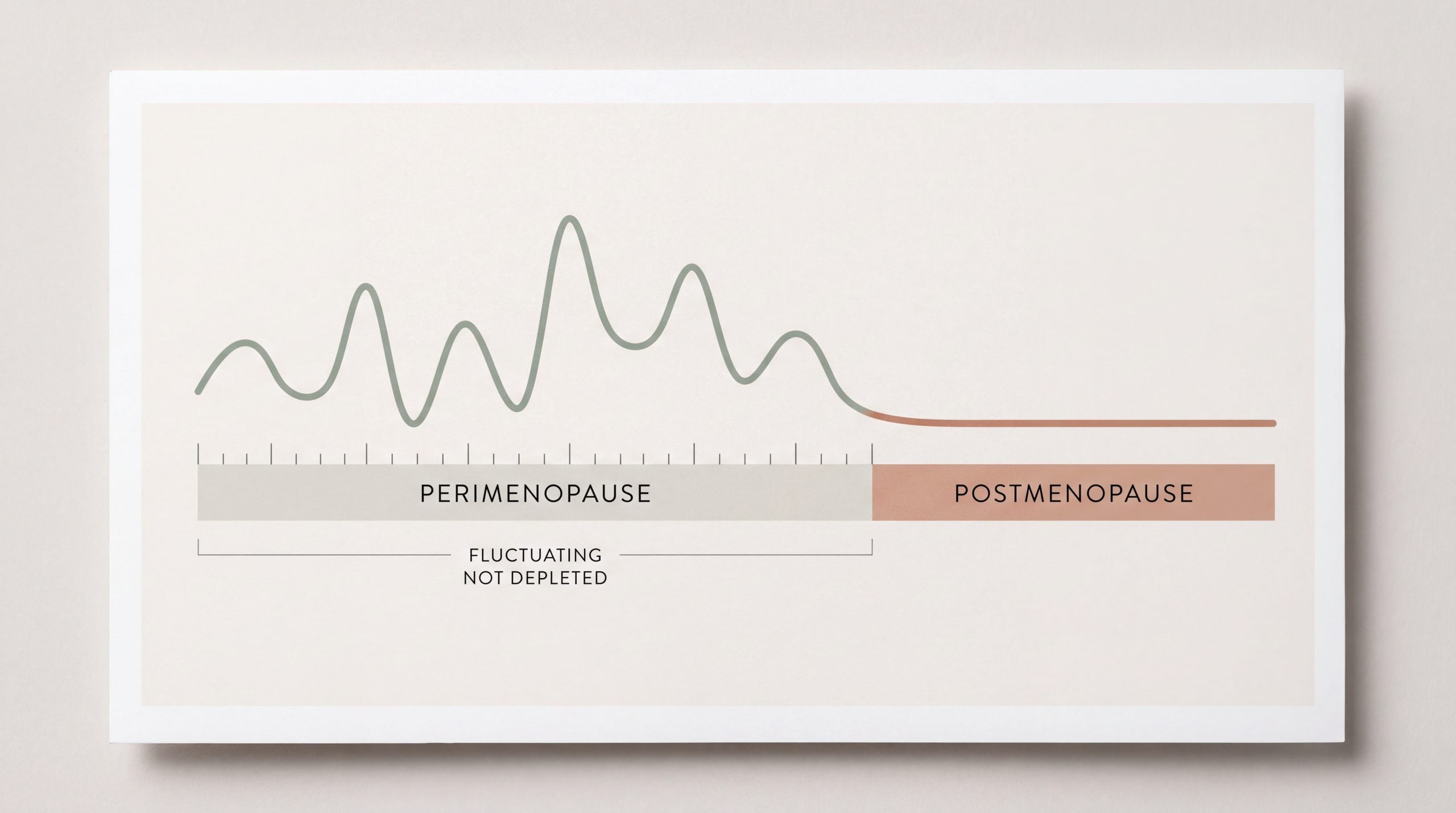
The distinction that matters for reading research is this. In perimenopause, estradiol is fluctuating rather than depleted, and menstrual cycles are still occurring, however irregularly. In postmenopause, estradiol has settled at a consistently low level and cycles have stopped for twelve months or more. Those are different physiological states, and a trial run in postmenopausal women does not automatically describe what happens in perimenopause.
This matters more than it sounds. A great deal of the research quoted in articles about “ashwagandha for perimenopause” was actually conducted in postmenopausal women, or in mixed menopausal populations, or in healthy stressed adults with no menopausal status recorded at all. The experience is different for every woman, but understanding which population a study enrolled is the first step in judging whether its findings apply to you.
An Introduction to Ashwagandha
Ashwagandha, known botanically as Withania somnifera, is a member of the Solanaceae family with a long history of use in traditional Ayurvedic medicine, where it is classified as a rasayana or rejuvenative tonic. It is often called “Indian ginseng” for its restorative reputation, though it is unrelated to true ginseng.
It belongs to a class of plants called adaptogens, which are noted for their ability to help the body resist and adapt to physical and mental stressors. The compounds most often credited for that activity are the withanolides, a group of steroidal lactones concentrated in the root. Standardized commercial extracts are typically calibrated to a fixed withanolide percentage, which is why the word “standardized” appears in nearly every clinical trial protocol and why it matters so much on a supplement label.
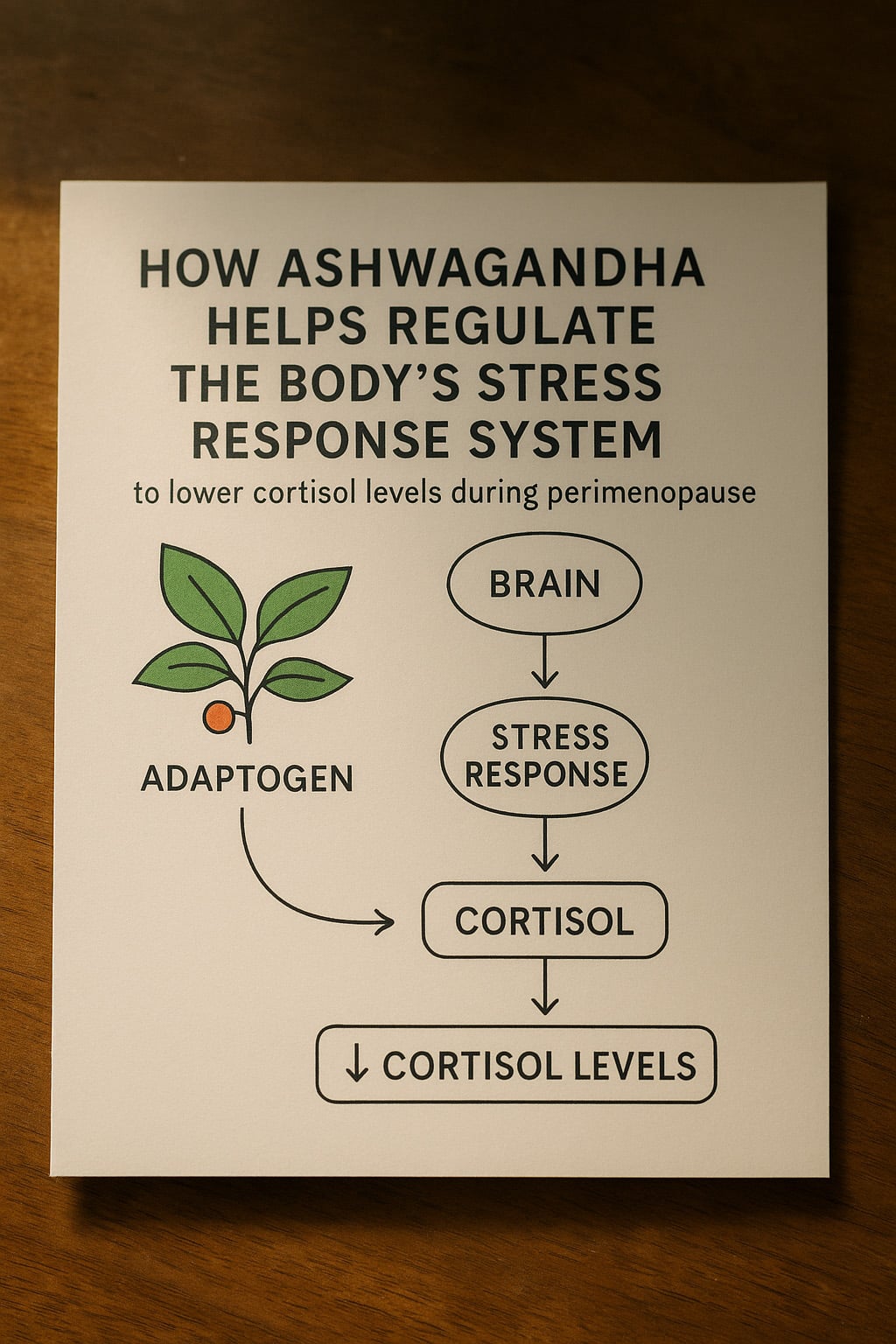
While its traditional uses are extensive, modern science has focused on the specific mechanisms behind its activity, particularly the interaction between the herb and the body’s stress-response system.
What the Evidence Actually Shows, and What It Does Not
Ashwagandha (Withania somnifera) has been studied in perimenopausal women in at least one randomized, double-blind, placebo-controlled trial, which reported reductions in climacteric symptom scores and measurable shifts in estradiol, FSH, and LH over 8 weeks (Gopal et al., 2021, Journal of Obstetrics and Gynaecology Research, PMID: 34553463). The NCCIH nonetheless describes the overall evidence for menopausal symptoms as insufficient, because the trials are small and short. Both statements are true at once.
What the perimenopause trial actually measured
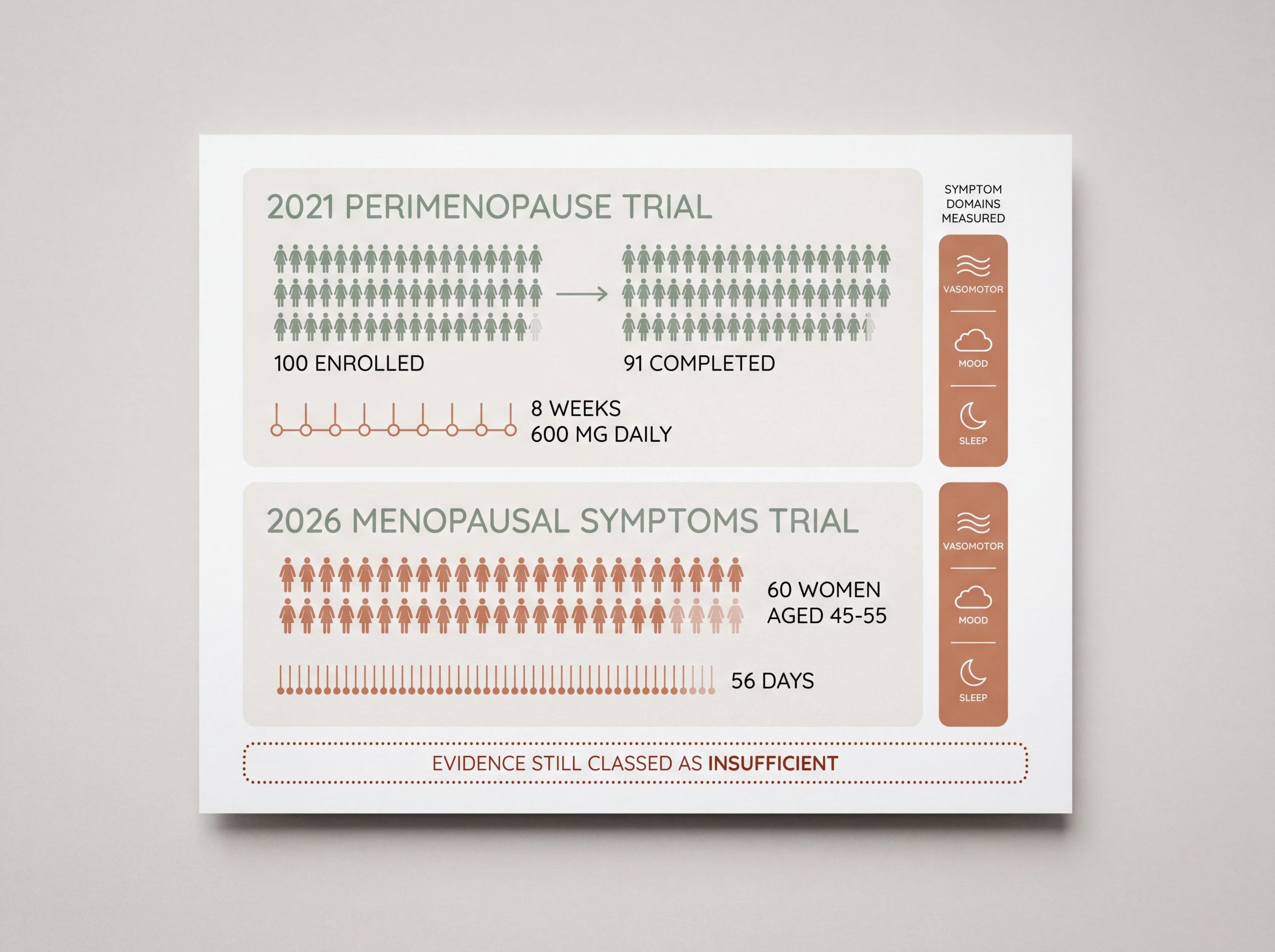
The single most relevant study is an 8-week randomized, double-blind, placebo-controlled trial that enrolled 100 women with climacteric symptoms during perimenopause, of whom 91 completed the protocol (Gopal et al., 2021, PMID: 34553463, DOI: 10.1111/jog.15030). Participants received either placebo or 300 mg of a standardized ashwagandha root extract twice daily.
The measured outcomes were specific rather than general. Total Menopause Rating Scale score fell significantly against placebo, with reductions across all three domains the scale tracks, which are the psychological, the somato-vegetative, and the urogenital. Menopause-specific quality of life scores improved. Serum estradiol rose, serum FSH fell, and serum LH fell. Serum testosterone showed no significant difference between groups.
The authors concluded that the root extract can be a safe and effective option for relieving mild to moderate climacteric symptoms during perimenopause. We want to be precise about the scope of that conclusion. It describes mild to moderate symptoms, over 8 weeks, in 91 women, at one dose, using one extract. It is the best perimenopause-specific evidence available, and it is a single study.
What the 2026 trial adds
In January 2026, a prospective, randomized, double-blind, placebo-controlled trial was published in Frontiers in Reproductive Health (Vani et al., 2026, PMID: 41561822, DOI: 10.3389/frph.2025.1647721). It enrolled 60 women aged 45 to 55 who received either ashwagandha root extract or placebo for 56 days.
Total Menopause Rating Scale score fell significantly across the psychological, somatic, and urogenital domains. Serum estradiol and progesterone improved, FSH and LH fell, hot flash events decreased, quality of life scores on the SF-12 rose, and Perceived Stress Scale scores fell. The trial was registered with the Clinical Trials Registry of India.
This is the newest primary evidence on the question, and it points in the same direction as the 2021 trial. It also carries the same limitation. Sixty participants is a small sample, and the study describes menopausal symptoms in healthy women rather than perimenopause as a defined stage.
Where the evidence still falls short
Reading these trials together, three limitations hold across the whole body of work. First, sample sizes are small, ranging from roughly 60 to 100 participants. Second, follow-up windows are short, typically 8 weeks, which tells us nothing about what happens at 6 months or 2 years. Third, different trials use different branded extracts at different withanolide concentrations, which makes results difficult to pool.
The NCCIH position reflects this. Its guidance describes the evidence for ashwagandha in menopausal symptoms as insufficient, and its broader review of complementary approaches for menopausal symptoms reaches a similar conclusion for most botanicals. Memorial Sloan Kettering Cancer Center’s herb database phrases it as limited clinical data suggesting relief of mild to moderate climacteric symptoms in perimenopausal women.
From our hands-on assessment of the trial literature, that is the honest position. There is a real, measured, replicated signal in a small evidence base, and it has not yet been confirmed at the scale that would justify calling anything settled.
How Ashwagandha May Ease Symptoms
Scientific inquiry has focused on how ashwagandha interacts with the body’s hormonal and stress-response systems. The evidence points to several routes by which it may affect the common complaints of the menopausal transition.
Calming Stress and Anxious Feelings
One of the most studied effects of ashwagandha is its influence on the body’s stress response. Perimenopause can be a demanding period, and fluctuating hormones can raise cortisol, the primary stress hormone. The herb is understood to act on the hypothalamic-pituitary-adrenal axis, the circuit that governs cortisol release.
In an 8-week randomized, double-blind, placebo-controlled trial in 60 stressed adults, both 250 mg and 600 mg daily of a root extract were associated with significant reductions in Perceived Stress Scale scores and in serum cortisol against placebo, along with improved sleep quality (Salve et al., 2019, Cureus, PMID: 32021735). Those participants were not selected for menopausal status, which is worth holding in mind, but the stress pathway is the mechanism most consistently supported across the literature.
Hot Flashes and Night Sweats: What the Trials Measured
Vasomotor symptoms are among the most commonly reported complaints of this life stage. In the perimenopause trial described above, the somato-vegetative domain of the Menopause Rating Scale, which captures hot flashes and sweating, improved significantly against placebo over 8 weeks (PMID: 34553463). The 2026 trial similarly recorded a significant reduction in hot flash events (PMID: 41561822).
What the research has not established is a mechanism specific to thermoregulation. The most plausible reading is indirect, through the stress and hormonal pathways rather than through direct action on the thermoregulatory center. Effects on vasomotor symptoms vary considerably between individuals, and neither trial claims otherwise.
Promoting Restful Sleep
Difficulty sleeping is often linked to the anxiety and hormonal shifts of perimenopause. By influencing cortisol and calming the nervous system, ashwagandha may support sleep quality.
A 2026 randomized, double-blind, placebo-controlled trial compared 300 mg of root extract twice daily against melatonin, a combination of both, and placebo in 200 adults over 8 weeks, measuring sleep onset latency by actigraphy (Movva et al., 2026, Clocks & Sleep, PMID: 42029558). Sleep onset latency fell significantly across the treatment groups, with the combination showing the largest change and the two single-ingredient arms producing moderate and comparable benefits. That trial enrolled adults aged 18 to 50 generally rather than perimenopausal women specifically.
Supporting Hormonal Balance
This is the area of greatest interest for women in perimenopause, and the area where careful language matters most. In the perimenopause trial, supplementation was associated with a significant increase in serum estradiol and significant reductions in serum FSH and LH compared with placebo (PMID: 34553463). The 2026 trial reported the same directional pattern, adding improved progesterone (PMID: 41561822).
These are measured hormonal shifts in small, short trials. They are not equivalent to hormone therapy; they were not accompanied by any claim of restoring premenopausal hormone levels, and the clinical meaning of the change over longer periods has not been established. Ashwagandha is not an estrogen, and it should not be understood as a substitute for one.
Clearing Brain Fog and Improving Mood
Cognitive changes, often described as brain fog, are among the most frustrating features of the transition. The adaptogenic activity of ashwagandha may support cognitive function and mood indirectly, by reducing the physiological load of stress. The psychological domain of the Menopause Rating Scale improved significantly in both perimenopausal and menopausal trials, and Perceived Stress Scale scores fell in the 2026 study.
Ashwagandha vs Shatavari for Perimenopause
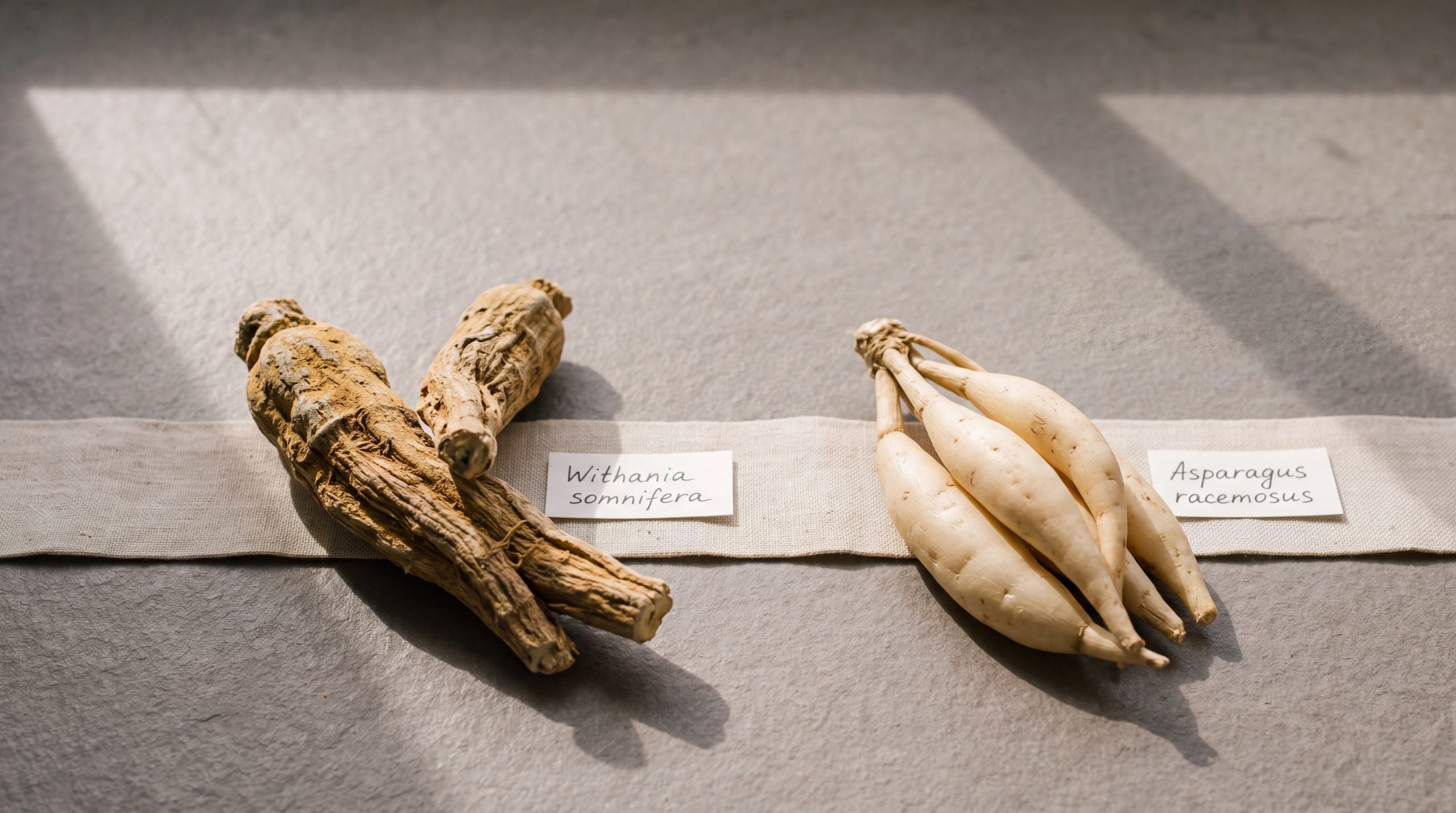
Shatavari (Asparagus racemosus) is the herb most often raised alongside ashwagandha in this context, and it is the comparison almost no article makes properly. Both are Ayurvedic rasayana herbs, both have been tested in perimenopausal women, and they have been tested together.
| Factor | Ashwagandha (Withania somnifera) | Shatavari (Asparagus racemosus) |
|---|---|---|
| Traditional Ayurvedic role | Rasayana, classed as a stress and vitality tonic | Rasayana, classed as a female reproductive tonic |
| Primary studied mechanism | HPA axis and cortisol modulation, indirect hormonal effect | Hormonal regulation, with measured effects on mood and stress scales |
| Perimenopause-specific trial | Yes. 100 women, 8 weeks, RDBPC (PMID: 34553463) | Yes. 80 randomized, 73 completed, 8 weeks, RDBPC (PMID: 41209045) |
| Dose used in that trial | 300 mg standardized root extract twice daily | 300 mg root extract once daily |
| Reported hormonal shifts | Estradiol up, FSH down, LH down | Estradiol up, FSH up, T3 up |
| Principal cautions | Thyroid, autoimmune, and liver considerations. Rare hepatotoxicity reported | Asparagus family allergy. Fewer long-term safety datasets published |
| Sources: PMID 34553463, PMID 41209045. Both trials ran for 8 weeks in perimenopausal populations. | ||
The two herbs have also been tested in combination, though in a different population. A 24-week randomized, double-blind, placebo-controlled study in postmenopausal women aged 40 to 55 tested shatavari and ashwagandha extracts alone and combined, and reported dose-dependent reductions in menopause-specific quality of life scores and in a vascular reflection index, alongside changes in bone turnover markers (Pingali et al., 2025, Journal of Menopausal Medicine, PMID: 40347163). Because that trial enrolled postmenopausal women, its bone and vascular findings sit outside the perimenopausal window and are covered in our article on ashwagandha for menopause.
The practical read is that shatavari has the more direct traditional claim on female reproductive health, ashwagandha has the stronger stress and sleep evidence base, and the perimenopause trials for each are comparably sized and comparably short.
Safe and Effective Use
To use ashwagandha sensibly, dose, timing, duration, and interaction risk all need to be understood together rather than separately.
Recommended Dosage
The dose studied in perimenopausal women is 300 mg of a standardized Withania somnifera root extract taken twice daily, for a total of 600 mg per day, over an 8-week period (Gopal et al., 2021, PMID: 34553463). The 2026 menopausal-symptom trial used a comparable root extract protocol over 56 days (PMID: 41561822). No trial has established a higher dose as more effective for this purpose.
Two timelines appear in the literature, and both are worth knowing. Changes in mood, perceived stress, and sleep are commonly described within 2 to 4 weeks of consistent daily use. Changes measured on formal symptom instruments such as the Menopause Rating Scale were assessed at the 8-week endpoint in both perimenopause trials. If you are judging whether the herb is doing anything for you, the stress and sleep signal arrives first, and the symptom-score signal takes longer.
Starting at a lower dose to assess individual tolerance before moving to the full studied amount is a reasonable approach, and one many clinicians suggest.
How and When to Take It
Practical handling makes a measurable difference to tolerability.
- Take it with a meal. Doing so may reduce the mild stomach upset some people experience.
- Split the dose. The perimenopause protocol used 300 mg twice daily rather than 600 mg all at once.
- Time it to your goal. Daytime dosing suits stress support, evening dosing suits sleep support.
- Treat it as short-term. Safety data are strongest for use of roughly 3 months or less, with reassessment after that.
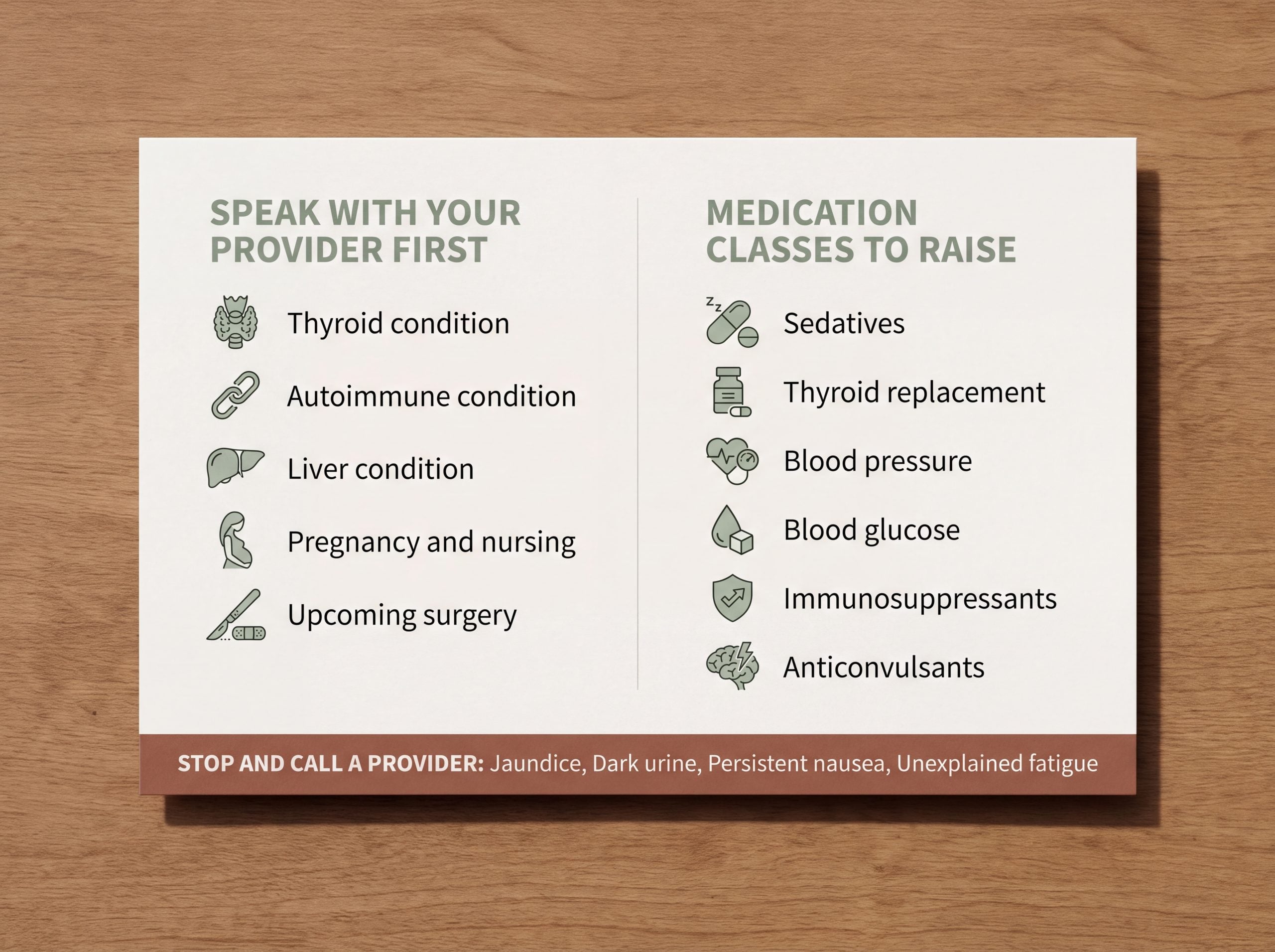
- Use caution with thyroid, autoimmune, or liver conditions, and speak with your provider first.
Potential Side Effects and Precautions
Ashwagandha is well tolerated by most people in the published trials, and no serious adverse events were attributed to it in either perimenopause study. Some people do experience mild effects, including stomach upset, diarrhea, and drowsiness.
Thyroid function deserves a fuller explanation than it usually gets. Ashwagandha has been observed to raise circulating thyroid hormones, meaning T3 and T4. For someone with well-managed hypothyroidism on a stable levothyroxine dose, that is a reason for their prescriber to know and to monitor. For someone with hyperthyroidism or an autoimmune thyroid condition such as Hashimoto’s thyroiditis, the caution is stronger, and the same applies to other autoimmune conditions including rheumatoid arthritis and lupus, because the herb may influence immune activity.
You should avoid ashwagandha entirely if you are pregnant or breastfeeding. Discontinue it well ahead of any scheduled surgery, given its sedative potential.
What About Liver Safety and Long-Term Use?
Rare cases of liver injury have been reported in people taking ashwagandha supplements, and this is the safety point most articles about perimenopause leave out. It is documented by the NIH LiverTox resource and noted by both the NCCIH and the NIH Office of Dietary Supplements in their consumer and health-professional materials.
Rare means rare. It does not mean theoretical. The reported cases have generally involved otherwise healthy adults, have appeared within weeks to a few months of starting the supplement, and have typically resolved after stopping it. Because the mechanism is not understood and the cases are not predictable by dose, the practical response is awareness rather than avoidance.
Stop taking it and contact a healthcare provider promptly if you notice yellowing of the skin or eyes, unusually dark urine, persistent nausea, unexplained fatigue, or discomfort in the upper right abdomen. Anyone with existing liver disease should not begin ashwagandha without medical supervision.
On duration, the safety evidence supports short-term use. Most trials ran 8 weeks, and available guidance describes safety as reasonably established for use up to roughly 3 months. Long-term continuous use has not been well studied. Taking a planned break and reassessing with a provider is the sensible approach rather than treating it as a permanent daily addition.
Can You Take Ashwagandha With HRT or Other Medications?
This is the question we see asked most often and answered least often. There is no published trial testing ashwagandha alongside menopausal hormone therapy, so there is no evidence base to draw a conclusion from either way. Because the herb has been observed to shift estradiol, FSH, and LH in small trials, anyone taking HRT should raise it with their prescriber before starting rather than assume the two are independent.
Beyond hormone therapy, the drug classes most consistently flagged across NCCIH and NIH materials are these.
- Sedatives and benzodiazepines, because of additive drowsiness.
- Thyroid hormone replacement, because of the observed effect on T3 and T4.
- Blood pressure medications, because of a possible additive lowering effect.
- Blood-glucose-lowering medications, for the same reason.
- Immunosuppressants, because the herb may increase immune activity.
- Anticonvulsants, where interaction has been raised as a theoretical concern.
None of these are absolute prohibitions. They are conversations to have with the person who wrote your prescription.
Selecting a Quality Supplement
When choosing a product, look for one made from root material, as the root is the part used in the clinical trials described here. At Back To Your Roots Herbs, we advocate for supplements that have been third-party tested for purity and potency, and manufactured in a cGMP-compliant facility.
Our organic ashwagandha root powder and our ashwagandha root capsules are whole-root preparations. We want to be straightforward about what that means in the context of this article. Whole root powder is not the same material as the concentrated standardized extract used in the perimenopause trials, and we are not going to imply that a whole-root product delivers the trial dose. Whole root is a traditional Ayurvedic preparation with its own long history of use. A standardized extract is a modern concentration made to deliver a fixed withanolide percentage. Both are legitimate, and they are not interchangeable at the same milligram figure.
Does 300 mg of One Extract Equal 300 mg of Another?
No, and this is the single most common source of confusion in ashwagandha dosing. A milligram figure on a label tells you the mass of the material, not its potency.
Three variables change what 300 mg actually means. The first is the withanolide standardization percentage, which is the concentration of the active steroidal lactones and which varies widely between products. The second is the plant part, since root-only extracts and root-and-leaf extracts have different constituent profiles, and the clinical trials in perimenopausal women used root material. The third is the branded extract itself. KSM-66 and Sensoril are the two branded preparations most often named in the trial literature, and they differ in both extraction method and withanolide concentration.
In our sourcing experience, the word “extract” on a label without a stated standardization percentage and plant part tells you almost nothing. The specification is the product. If a label does not state which part of the plant was used and to what withanolide percentage it was standardized, there is no way to compare it against a published trial dose.
Frequently Asked Questions
How long until I see results?
Effects vary between individuals. Changes in perceived stress and sleep are commonly described within 2 to 4 weeks of consistent use, while the formal symptom-score improvements in the perimenopause trials were measured at the 8-week endpoint. Consistent daily use is what the trial protocols tested.
Is ashwagandha safe to take with HRT?
There is no published trial testing the combination, so there is no evidence base either way. Because ashwagandha has been observed to shift estradiol, FSH, and LH in small studies, discuss it with your prescriber before adding it to hormone therapy rather than assuming the two do not interact.
Can ashwagandha damage the liver?
Rare cases of liver injury have been reported and are documented by the NIH LiverTox resource. The cases are uncommon and have generally resolved after stopping the supplement. Stop use and contact a provider if you notice jaundice, dark urine, persistent nausea, or unexplained fatigue.
How does ashwagandha compare to shatavari for perimenopause?
Both have an 8-week randomized placebo-controlled trial in perimenopausal women. Ashwagandha has the stronger stress and sleep evidence base, while shatavari has the more direct traditional association with female reproductive health. The comparison table above sets out the measured differences.
How long should I take ashwagandha before taking a break?
Safety data are strongest for use of roughly 3 months or less, which is also the length of most published protocols. Long-term continuous use has not been well studied. Planning a break and reassessing with a healthcare provider is more sensible than open-ended daily use.
Can I take it with other supplements?
Generally yes, but speak with a doctor or pharmacist first, particularly if you take other supplements that affect hormones, thyroid function, or neurotransmitters. Additive sedative effects are the most common practical issue when it is combined with other calming botanicals.
Does it help with weight management?
By influencing cortisol, a hormone associated with abdominal fat storage, ashwagandha may indirectly support healthy weight management as part of a broader routine. It is not a weight-loss supplement and should not be approached as one.
Will it increase testosterone?
In the perimenopause trial, serum testosterone showed no significant difference between the ashwagandha and placebo groups (PMID: 34553463). The hormonal changes recorded in women centered on estradiol, FSH, and LH rather than testosterone.
Related Reading
Continue with our articles on ashwagandha for menopause, which covers the postmenopausal evidence and the KSM-66 versus Sensoril comparison in depth, chasteberry for perimenopause, how ashwagandha affects cortisol, and relieving hot flashes naturally.
Important: This article is for educational and informational purposes. The statements have not been evaluated by the Food and Drug Administration. The herbs and herbal products discussed are not intended to diagnose, treat, cure, or prevent any disease, including perimenopausal and menopausal symptoms. Information presented here is not a substitute for professional medical advice, diagnosis, or treatment. Always consult a qualified healthcare provider for medical guidance specific to your circumstances. Do not delay seeking medical care because of information you have read on this site.