Ashwagandha, a revered herb in Ayurvedic medicine, is gaining recognition for its potential to support weight management by addressing stress and cortisol levels. This adaptogen helps the body become more resilient to various stressors, making it a valuable addition to a holistic wellness approach.
The Connection Between Stress, Cortisol, and Weight Gain
Cortisol, often called the “stress hormone,” plays a vital role in regulating numerous bodily functions, including metabolism and immune response. While cortisol is essential for daily functioning, chronically elevated levels can contribute to weight gain, particularly around the abdominal area.
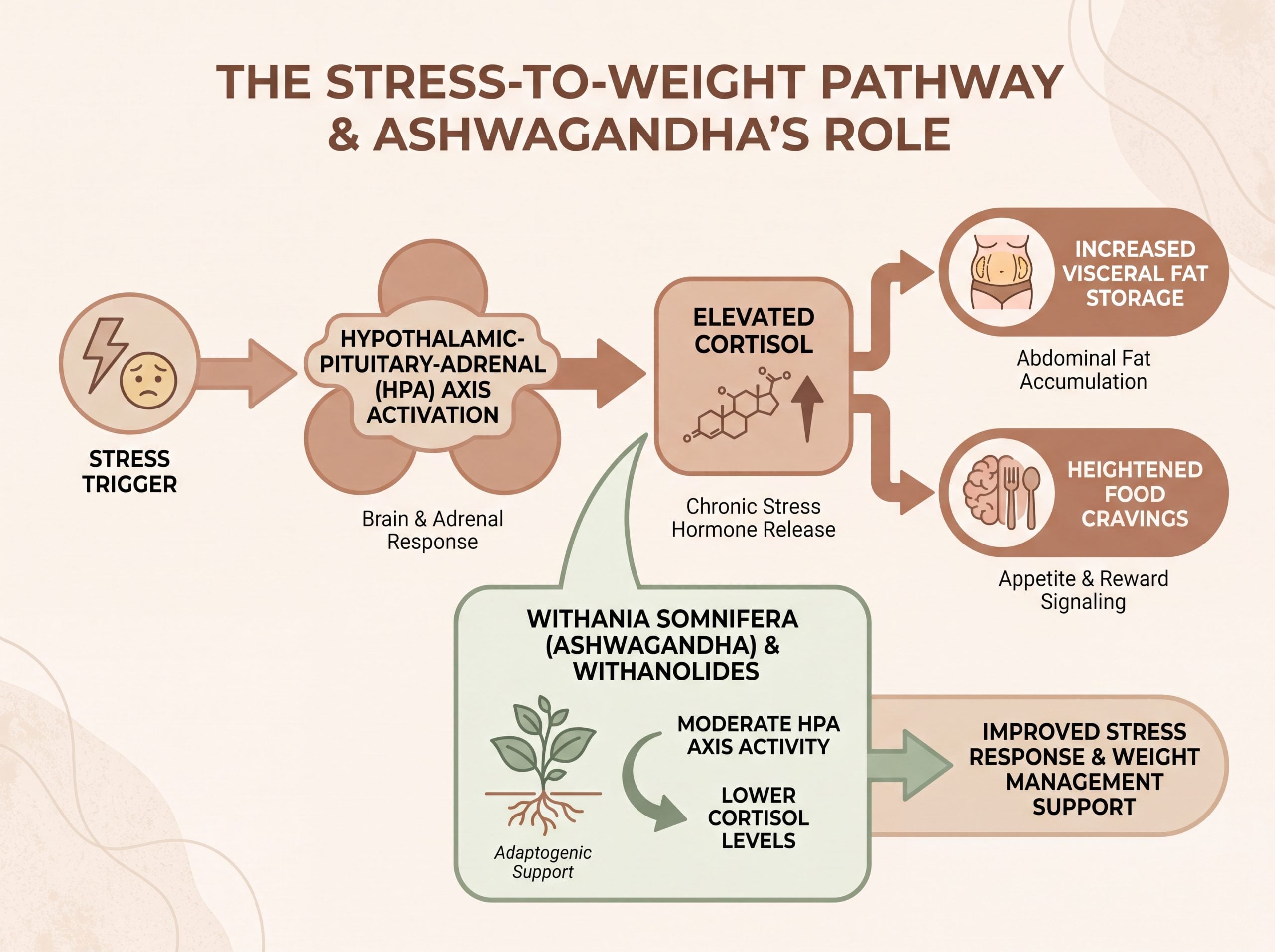
When the body experiences stress, the hypothalamic-pituitary-adrenal (HPA) axis is activated. The hypothalamus signals the pituitary gland, which then signals the adrenal glands to produce cortisol. This is a beneficial response in short-term, acute situations. However, persistent stress can lead to chronically high cortisol levels, disrupting normal metabolic processes.
Elevated cortisol levels send a signal to the body, suggesting that resources might be scarce or that the body is under duress. This can intensify fat storage, especially visceral fat – the dangerous fat stored around the organs. Multiple studies highlight that individuals with consistently high cortisol levels often experience changes in appetite and an increased tendency toward unintentional weight gain. Effectively managing stress can potentially counteract these metabolic shifts.
High cortisol levels can also affect appetite and cravings. Cortisol can stimulate the desire for high-calorie, palatable foods, often referred to as “comfort foods.” Furthermore, chronic stress and elevated cortisol are linked to insulin resistance, a significant factor in weight gain and difficulty losing weight.
Cortisol also influences the hormones leptin and ghrelin, which regulate hunger. Ashwagandha has been shown to improve leptin sensitivity, promoting better appetite control.
How Ashwagandha Affects Cortisol Levels
Withania somnifera has demonstrated the ability to lower cortisol levels, which can mitigate the adverse effects of stress on the body. By promoting hormonal balance, ashwagandha can play a key role in weight management and overall health.
- Stress Reduction: Withania somnifera is recognized for its calming properties, leading to lower cortisol levels and reduced anxiety.
- Increased Energy: By stabilizing hormones, ashwagandha can enhance energy levels, making it easier to engage in physical activity.
- Metabolic Support: This herb may help regulate metabolic processes, contributing to more effective weight management and improves overall health. Ashwagandha contains antioxidants that help to improve overall health in the body, speed up metabolism, and decrease inflammation. Ashwagandha enhances metabolic rate.
Ashwagandha, a cornerstone of Ayurvedic medicine, is renowned for its ability to help individuals cope with stress and support weight management. This adaptogenic herb enhances the body’s resilience to stressors, making it a valuable addition to any wellness regimen.
Multiple herbal compounds have been traditionally linked to stress relief, yet ashwagandha stands out due to its unique active components known as withanolides. These withanolides are believed to have supportive effects on various bodily systems, including the stress response. According to a randomized, double-blind, placebo-controlled study published in the Indian Journal of Psychological Medicine (2012), participants who took a standardized ashwagandha extract experienced an average cortisol reduction of about 27.9% compared to the placebo group.
Mechanisms of Action of Ashwagandha
Withania somnifera’s effects on cortisol and weight management are multifaceted, stemming from its adaptogenic properties.
- Influence on the HPA Axis: The hypothalamic-pituitary-adrenal (HPA) axis regulates stress responses. Ashwagandha is believed to help stabilize this feedback loop.
- Withanolides: The bioactive compounds in ashwagandha, known as withanolides, are thought to modulate inflammation and manage cortisol production.
- Adaptogenic Effect: As an adaptogen, ashwagandha helps the body adapt to stressful conditions by modifying cortisol release and supporting energy levels.
In our review of the pharmacology, the most consistent explanation for these effects is moderation of the hypothalamic-pituitary-adrenal (HPA) axis. A 2019 randomized, double-blind, placebo-controlled study found that a standardized ashwagandha extract lowered morning cortisol relative to placebo over 60 days, an effect the authors linked directly to HPA-axis moderation (Lopresti et al., 2019, Medicine (Baltimore), PMID: 31517876). The withanolides in Withania somnifera are the bioactive compounds most associated with this adaptogenic activity.
Ashwagandha and Stress-Related Eating
Stress often leads to emotional or stress-related eating. Many individuals turn to food for comfort when stressed, and ashwagandha’s stress-reducing properties can help manage this behavior. By reducing cortisol levels, Withania somnifera can help curb cravings and promote healthier eating habits.
Several holistic practitioners highlight that ashwagandha’s stress-modulating function could play a pivotal role for individuals who experience emotional eating. Emotional eating often coincides with higher cortisol levels, creating a cycle of stress and unplanned caloric intake. By managing this hormone more effectively, some people may find it easier to maintain a balanced diet.
Scientific Evidence Linking Ashwagandha and Weight Loss
While more research is always beneficial, several studies support the connection between ashwagandha, cortisol reduction, and weight management:
- A 2016 study showed a 3.03% reduction in body weight in the ashwagandha group versus 1.46% in the placebo group after 8 weeks.
- A 2021 study found that participants experienced a 44% reduction in perceived stress and a 27% reduction in cortisol.
- Another 2021 study showed that the ashwagandha group experienced a 32.7% reduction in perceived stress, a 22.2% reduction in blood cortisol levels, and less uncontrolled and emotional eating.
- A study analyzing body weight management in adults under chronic stress indicated a significant reduction in both body weight and body mass index in patients who took ashwagandha extract, compared to the placebo group.
- Study in Overweight Adults: In a 2017 pilot study published in Ayurveda and Integrative Medicine, researchers noted that overweight adults who combined ashwagandha with moderate exercise and a balanced dietary regimen noticed improvements in overall body composition over an eight-week period.
- Focus on Stress-Related Habits: High cortisol may prompt mindless snacking or late-night eating. By modulating cortisol, Withania somnifera assists some individuals in curbing these stress-based behaviors.
- Sleep Quality: Better rest supports metabolic health. Ashwagandha, known to support more restful sleep, can indirectly influence metabolism.
In our editorial review of the clinical literature, the body-composition signal traces back to a small set of randomized, placebo-controlled trials rather than to any single headline number. In a 2016 randomized controlled trial, 52 adults under chronic stress took 300 mg of a standardized Withania somnifera root extract twice daily for 8 weeks and recorded measurable reductions in serum cortisol, body weight, and food-craving scores compared with placebo (Choudhary et al., 2016, Journal of Evidence-Based Complementary and Alternative Medicine, PMID: 27055824). Earlier work recorded a substantial drop in serum cortisol after 60 days at the same 300 mg twice-daily dose (Chandrasekhar et al., 2012, Indian Journal of Psychological Medicine, PMID: 23439798), and a later dose-response study observed cortisol reductions at 8 weeks across two extract doses (Salve et al., 2019, Cureus, PMID: 32021735). Read together, these findings point to a stress-and-cortisol pathway that may support healthy weight management rather than any direct fat-burning effect.
Can Ashwagandha Support Muscle While Managing Weight?
One question our readers raise often is whether lowering cortisol costs them lean muscle. The available evidence suggests the opposite pattern. In a 2015 randomized, double-blind, placebo-controlled trial, 57 healthy men who paired 300 mg of ashwagandha root extract twice daily with 8 weeks of resistance training gained more bench-press and leg-extension strength, added more arm and chest muscle size, and lost more body fat than the placebo group (Wankhede et al., 2015, Journal of the International Society of Sports Nutrition, PMID: 26609282). From our reading, this is why Withania somnifera is better understood as a body-composition ally than a simple appetite tool. It may support lean mass and recovery alongside a training program, while the cortisol pathway helps address stress-related eating. These are structure-and-function observations, not a promise of a specific weight or physique result.
How to Use Ashwagandha for Weight Management
To effectively incorporate ashwagandha into a weight management plan, consider the following:
- Form: Ashwagandha is available in capsules, powders, and tinctures. Capsules offer convenience, while powders can be added to smoothies or other beverages.
- Dosage: A common dosage range is 300-600 mg per day of a standardized extract. However, it’s advisable to start with a lower dose (e.g., 300mg) to assess tolerance. Consulting with a healthcare professional is recommended for personalized guidance.
- Timing: Ashwagandha can be taken in the morning for energy and stress management throughout the day or in the evening for relaxation and better sleep. Splitting the dose is also an option.
- Consistency: Consistent, long-term use (several weeks to months) is often necessary to observe noticeable effects on weight. Since ashwagandha is shown to provide similar benefits to meditation, briefly mention meditation as another technique that can help manage stress and reduce cortisol release and blood glucose.
Potential Side Effects and Precautions
While ashwagandha is generally considered safe for most adults, some potential side effects and precautions should be considered:
- Gastrointestinal Issues: Some individuals may experience mild digestive upset, such as nausea, diarrhea, or stomach cramps.
- Allergic Reactions: Although rare, allergic reactions are possible.
- Medication Interactions: Ashwagandha may interact with certain medications, including sedatives, thyroid medications, diabetes medications, blood pressure medications, and immunosuppressants. Always consult with a healthcare provider before starting any new supplementation.
- Autoimmune Diseases: Individuals with autoimmune diseases (e.g., Hashimoto’s thyroiditis, rheumatoid arthritis, lupus) should generally avoid ashwagandha, as it may stimulate the immune system.
- Thyroid Disorders: Withania somnifera is contraindicated in hyperthyroidism. It may be used with caution in hypothyroidism, but only under the supervision of a healthcare provider.
- Pregnancy and Breastfeeding: Ashwagandha is not recommended during pregnancy or breastfeeding due to insufficient safety data.
- Liver Disease: Individuals with liver conditions should avoid using ashwagandha.
A Holistic Approach to Weight Management
It’s important to emphasize that ashwagandha is not a magic solution for weight loss. It works best when combined with a holistic approach that includes:
- Balanced Nutrition: A healthy diet rich in whole, unprocessed foods, lean protein, and fiber is essential.
- Regular Exercise: Physical activity, including both cardio and strength training, supports weight management and overall health.
- Stress Management Techniques: Practices like yoga, meditation, and deep breathing can complement ashwagandha’s stress-reducing effects.
- Adequate Sleep: Prioritizing sleep is crucial for hormonal balance and weight management.
Addressing Common Concerns
Can ashwagandha cause weight gain?
Ashwagandha is not typically associated with weight gain. Its primary action is to help the body manage stress, and by reducing cortisol levels, it may indirectly support healthy weight management. Some studies even suggest it may help with weight loss in the context of stress-related eating.
Comparative Benefits of Ashwagandha
| Benefit | Ashwagandha | Other Adaptogens |
|---|---|---|
| Stress Relief | ✔️ | ✔️ |
| Weight Management | ✔️ | ✔️ |
| Energy Boost | ✔️ | ✔️ |
| Hormonal Balance | ✔️ | ❌ |
Certain other adaptogens, such as Rhodiola rosea and Panax ginseng, also exhibit stress-supportive benefits. However, some studies suggest that ashwagandha may have a distinctive impact on thyroid hormone balance and cortisol regulation. When comparing adaptogens for weight management specifically tied to stress, ashwagandha remains a go-to option, especially for those focused on the cortisol-fat storage connection.
- Rhodiola rosea: Often praised for mental clarity, stamina, and potential antidepressant properties, but less research is available on its direct impact on cortisol.
- Panax ginseng: Valued for supporting vitality and mental function, though it may not show the same depth of cortisol-lowering evidence.
Frequently Asked Questions (FAQ)
Q: Can ashwagandha alone help me lose weight?
A: While ashwagandha helps balance cortisol and may reduce some stress-related eating habits, relying on it exclusively for weight loss may not yield ideal results. A well-rounded approach involving mindful eating, consistent physical activity, and good sleep patterns is encouraged.
Q: How long does it take for Ashwagandha to lower cortisol levels?
A: Studies suggest that measurable effects on cortisol can appear within a few weeks of consistent use, though results vary among individuals. Some may feel improvements in stress and mood earlier, while others might need more time.
Q: Is it safe to take ashwagandha with other supplements?
A: Some individuals use it alongside other herbs and vitamins without difficulties. However, consulting a healthcare professional is recommended to rule out potential interactions.
Q: Can ashwagandha cause me to lose too much weight?
A: Withania somnifera is not a conventional weight loss herb that initiates extreme fat reduction. Its impact is often mild to moderate, associated with lowered stress and possibly better lifestyle habits.
Q: Does ashwagandha have any impact on blood sugar levels?
A: Some preliminary research indicates that ashwagandha might help keep blood sugar in check, but more large-scale clinical trials are needed for definitive conclusions. Individuals with diabetes or on blood-sugar-lowering medications should proceed with caution.
Key Points to Remember:
- Ashwagandha is a powerful adaptogen that can help manage stress and support weight loss.
- It works by lowering cortisol levels and mitigating the negative effects of stress on the body.
- Consult a healthcare professional to determine the appropriate dosage and form.
- Be aware of potential side effects and interactions with medications.
- Consistency is key to achieving the desired benefits.
- Studies suggest that weight changes linked to Withania somnifera might be more gradual, often tied to consistent stress reduction and overall lifestyle adjustments. Individuals seeking rapid results may be disappointed without pairing the herb with other healthy habits.
- If you have an autoimmune condition or a particular health concern, discuss these factors with a qualified practitioner before trying Withania somnifera. While many adaptogens have a broad safety profile, personalized advice is crucial for those managing chronic illnesses or on multiple medications. Individuals with hyperthyroidism should be especially cautious, as ashwagandha might increase thyroid hormone levels.
Myths vs. Facts
Myth: Ashwagandha melts belly fat on its own. Fact: Ashwagandha alone is unlikely to reduce stored body fat without lifestyle modifications. Its main function is balancing stress hormones and improving stress resilience, which can support an overall plan for better weight management.
Myth: More ashwagandha means faster results. Fact: Exceeding recommended dosages won’t speed up progress and could increase the likelihood of side effects.
Myth: Ashwagandha works the same for everyone. Fact: Individual responses vary based on body chemistry, stress levels, and pre-existing health conditions.
Important Safety and Regulatory Information
These statements have not been evaluated by the Food and Drug Administration. This product is not intended to diagnose, treat, cure, or prevent any disease. Consult your healthcare provider before use, especially if you are pregnant, nursing, taking medication, or managing a thyroid or blood-sugar condition.