THE VERDICT (INTERNAL QUALITY SCORE):
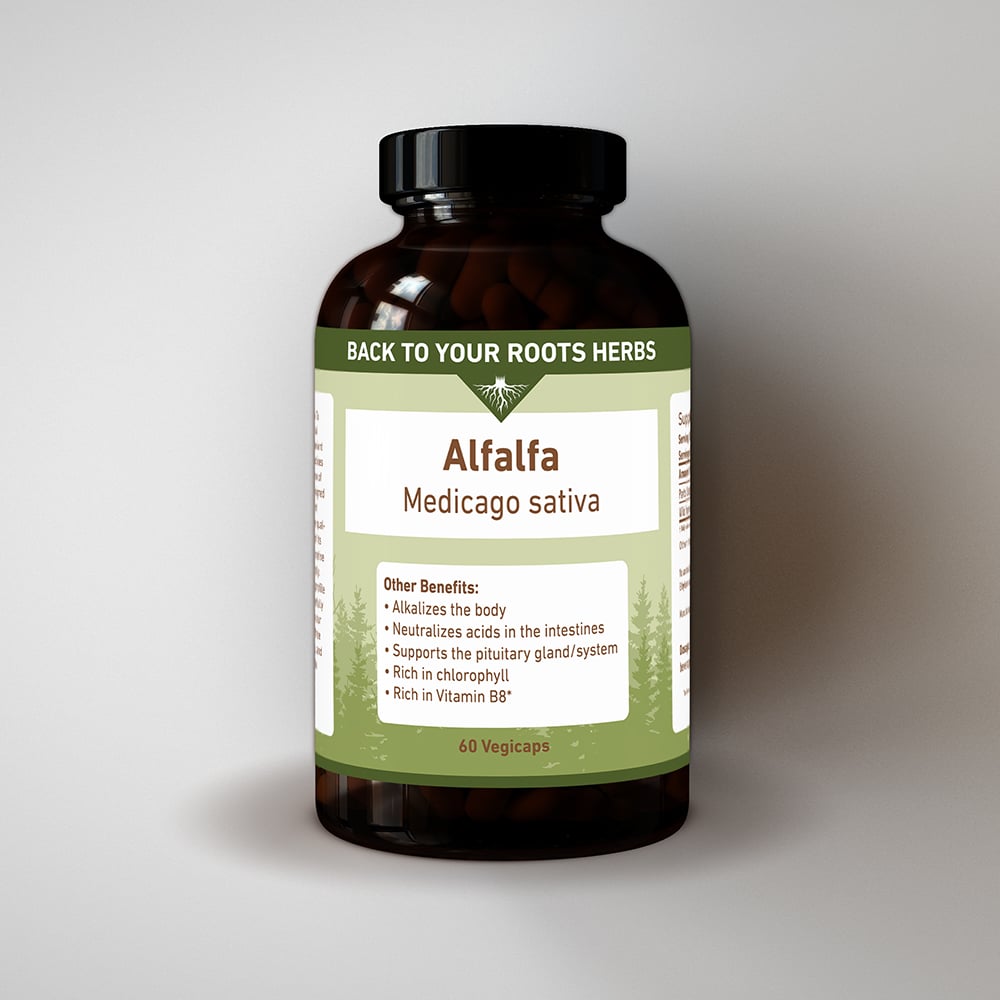
Grade A – Nutrient Density Score: 9.6/10. Wild-harvested Medicago sativa from Egypt’s Ismailia region (30.6 N, 32.3 E). The deep root system of this alfalfa plant draws minerals from 20+ feet of nutrient-rich Nile Delta soil. This alfalfa herbal supplement delivers full-spectrum Saponins, Chlorophyll, and Vitamin K not found in standard alfalfa extract capsules. Verified for heavy metal safety and botanical identity.
– Back To Your Roots Herbs Research Group
SENSORY ANALYSIS: What Does Alfalfa Powder Look and Taste Like?
We opened a capsule to verify the botanical identity of this alfalfa supplement. Authentic Medicago sativa has a distinct “green” sensory profile that separates it from generic alfalfa powder capsules.
Alfalfa Leaf Appearance and Aroma
- Look: A fibrous, deep green to olive powder with visible leaf and stem particles. The rich color confirms high chlorophyll retention during processing.
- Smell: Fresh, grassy, and hay-like. It smells like a sun-dried meadow. This grassy aroma indicates proper preservation of chlorophyll and plant nutrients.
- Taste: Mild, grassy, and slightly bitter. The capsule format works well for those who do not enjoy the taste of raw alfalfa herb powder in smoothies.
How Does Alfalfa Work for Cholesterol Support?
Research suggests the Saponins in alfalfa act as natural cholesterol binders in the digestive tract.
Alfalfa Saponins and Cholesterol Binding Mechanism
- The Herb: Medicago sativa (Alfalfa), wild-harvested from Ismailia, Egypt (30.6 N, 32.3 E).
- The Mechanism: Saponins and dietary fiber bind to cholesterol and bile salts in the GI tract, preventing intestinal absorption. They are then excreted naturally through the stool.
- The Evidence: Research by Malinow et al. (1981) confirmed that alfalfa saponins decreased cholesterolemia and increased fecal excretion of neutral steroids and bile acids in primates. (PMID: 7451648, Journal of Clinical Investigation)
Alfalfa for Cholesterol: What the Science Shows
Alfalfa extract has been studied for its effects on blood sugar, cholesterol, and immune system health. The saponins in this alfalfa dietary supplement bind to cholesterol in the intestine, which supports healthy lipid levels already within the normal range. Alfalfa nutrition research also points to benefits for liver health and digestive function.
Does Alfalfa Help with Breastfeeding and Lactation?
Yes. Alfalfa is a traditional galactagogue (milk booster) used by nursing mothers across cultures.
Alfalfa Capsules for Nursing Mothers
Alfalfa herb acts as a nutrient-dense pituitary stimulant. The deep root system of the alfalfa plant absorbs a wide spectrum of minerals from the soil, including Calcium, Iron, and Magnesium. These minerals enrich milk quality and may support increased supply. Many lactation consultants recommend alfalfa supplements as a natural approach alongside proper nutrition and hydration.
What Vitamins and Minerals Does Alfalfa Contain?
Alfalfa leaf capsules are a concentrated source of Vitamin K, Vitamin A, Vitamin C, Chlorophyll, Calcium, Iron, Magnesium, and plant-based protein. The chlorophyll content gives alfalfa its characteristic deep green color and supports healthy blood and energy levels. Alfalfa also contains fiber, carotenoids, and trace minerals that contribute to overall health and nutrition.
Alfalfa Capsules for Weight Loss and Energy
Some users seek alfalfa capsules for weight loss support. While alfalfa is not a fat burner, its high fiber and nutrient density may help reduce appetite naturally. The vitamins and minerals in this alfalfa supplement support energy metabolism and general wellness. Alfalfa for digestion is another common use, as the fiber content supports healthy bowel regularity.
Alfalfa for Skin Health and Immune Support
The antioxidants and Vitamin C in alfalfa leaf support immune system function and skin health. Alfalfa for skin health is a traditional use rooted in the plant’s high chlorophyll and mineral content. The Vitamin K in alfalfa capsules also supports healthy blood circulation and may help reduce the appearance of dark under-eye circles.
What Forms Is Alfalfa Available In?
Alfalfa is available as capsules, tablets, powder, tincture, tea, and raw seeds. Alfalfa capsules and alfalfa tablets are the most popular supplement forms. Alfalfa powder capsules deliver the whole plant ground into fine powder and packed into a vegetable cellulose capsule. Alfalfa extract capsules use a concentrated extraction process. Alfalfa tincture offers a liquid option. Alfalfa seeds can be sprouted for fresh use.
What Are the Side Effects of Alfalfa?
Alfalfa capsule side effects are rare at recommended doses. The primary concerns involve drug interactions and autoimmune conditions. See the Critical Safety section below for complete contraindication details. Always consult your healthcare provider before adding any alfalfa herbal supplement to your routine, especially if you take medications or have underlying health conditions.
CRITICAL USAGE: Alfalfa Dosage and Safety
Alfalfa Dosage Guidelines
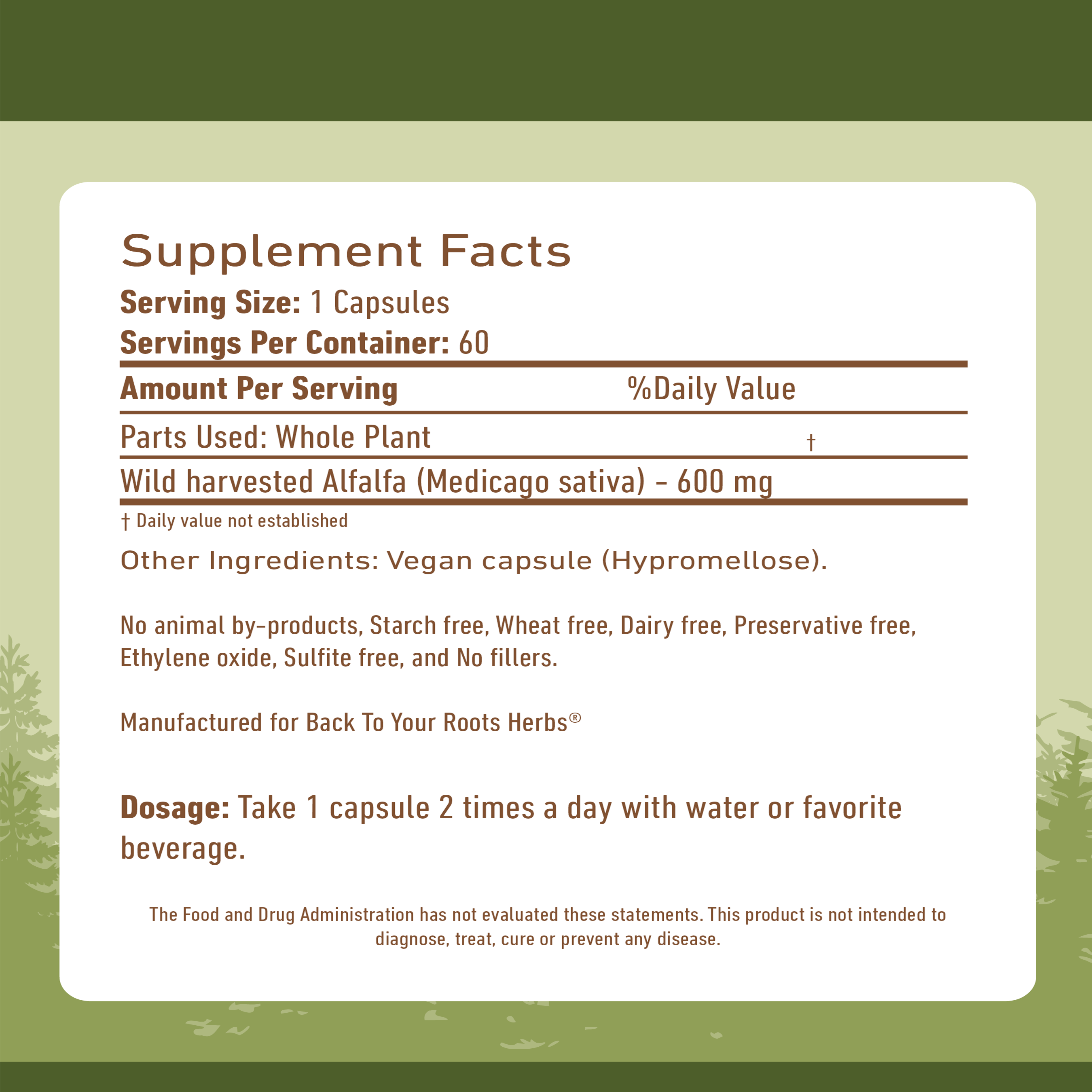
Take 1 capsule (550-600 mg) twice daily with meals. Alfalfa dosage may vary based on individual health needs. Consult your healthcare provider for personalized guidance. Do not exceed the recommended serving without medical supervision.
Alfalfa Contraindications and Drug Interactions
Blood Thinners (Warfarin/Coumadin): Alfalfa is high in Vitamin K. If you take Warfarin, Coumadin, or other blood thinners, do NOT use this product. Vitamin K will counteract the effect of blood-thinning medications.
Autoimmune Conditions (Lupus): Alfalfa contains L-Canavanine, an amino acid that can trigger flare-ups in Systemic Lupus Erythematosus (SLE). Do not use if you have Lupus or any autoimmune condition.
Immunosuppressants: By supporting immune system activity, alfalfa may decrease the effectiveness of immunosuppressant medications.
Birth Control Pills and Estrogens: Alfalfa contains phytoestrogens that may interact with hormonal contraceptives and estrogen therapy.
Diabetes Medications: Alfalfa may lower blood sugar. Taking alfalfa along with diabetes medications could cause blood sugar to drop too low. Monitor blood sugar carefully.
Pregnancy: Consult your healthcare provider before taking alfalfa capsules during pregnancy or while breastfeeding.
CLINICAL SPECS:
| Spec | Detail |
|---|---|
| Serving Size | 1 Capsule (550-600mg) |
| Frequency | 2 Times Daily (With Meals) |
| Active Marker | Saponins, Vitamin K, Chlorophyll |
| Processing | Whole Leaf & Stem Powder (No Extract) |
| Safety | Heavy Metal Tested (Pass) |
| Ingredients | Medicago sativa (Alfalfa) Whole Herb Powder |
| Other Ingredients | Vegetable Cellulose (Capsule) |
| Purity | Non-GMO, Vegan Capsule |
| Free From | Wheat, Gluten, Soy, Dairy, Binders, Fillers |
| Origin | Wild-Harvested, Egypt (Ismailia Region) |
| Manufactured | Virginia Beach, VA, USA |
COMPARISON TABLE: BTYRH Alfalfa vs. Generic Alfalfa Supplements
| Feature | BTYRH Alfalfa Capsules | Generic Alfalfa Supplement |
|---|---|---|
| Origin | Wild-Harvested, Ismailia, Egypt | Unspecified |
| Preparation | Whole Leaf & Stem Powder (Full Spectrum) | Juice Powder or Extract |
| Taste | Mild, Grassy, Slightly Bitter (Authentic) | Bland or Undetectable |
| Safety | Heavy Metal Tested, Identity Verified | Unknown/Untested |
DISCLAIMER: The Food and Drug Administration has not evaluated these statements. This product is not intended to diagnose, treat, cure, or prevent any disease. Consult a physician before starting any new supplementation regimen. Strict contraindication for Warfarin users and those with autoimmune conditions.
Reviews
There are no reviews yet.