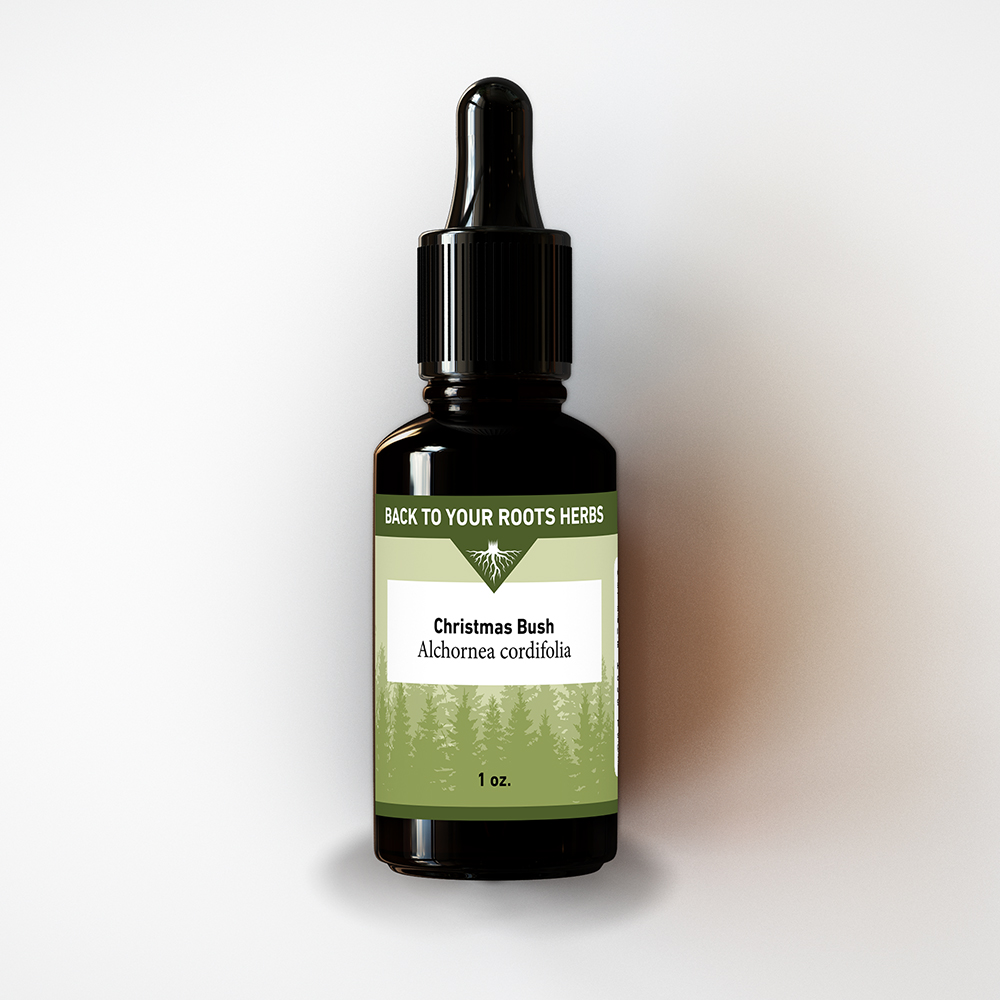
Alchornea Cordifolia: The Verdict (Internal Quality Score)
Grade A. Potency Score 9.4 of 10. This alchornea cordifolia tincture is pressed from wildcrafted Christmas Bush leaves hand-harvested in the secondary forest of southeastern Nigeria (5.95 degrees N, 8.59 degrees E, Cross River State). The 1:5 alchornea extract menstruum captures the whole alkaloid spectrum of the alchornea cordifolia leaf, including the imidazopyrimidine alkaloids alchorneine, alchornidine, alchornine, and triisopentenyl guanidine, alongside the phenolic flavonoids quercetin, gallic acid, and ellagic acid. Bitter on the front of the palate. Astringent and cooling on the finish.
– Back To Your Roots Herbs Research Group
Sensory Analysis of Our Alchornea Tincture
This is our first-hand bench report on the current production lot of Alchornea cordifolia tincture.
- Look: Deep amber to mahogany liquid alchornea extract. Faint tea-leaf sediment may settle at the base of the bottle, which is natural for a whole-leaf tincture of Alchornea cordifolia.
- Smell: Wet bark and cured tobacco, with a vegetal back-note of fresh alchornea leaf and Christmas Bush bark.
- Taste: Strongly bitter and astringent. Tannins coat the tongue. Earthy alchornea tincture finishes with a cool mineral note.
Alchornea cordifolia leaf at a glance
Alchornea cordifolia is a shrub or small tree in the Euphorbiaceae family. The alchornea plant is native to tropical Africa, grows up to 8 metres tall, and tolerates acidic forest soils that most cultivated species reject. Farmers in southeastern Nigeria propagate alchornea plants from stem cuttings, which root in roughly nine weeks. Only the Alchornea cordifolia leaf is used in our tincture and other small-batch leaf tinctures we press in this category.
How Does Alchornea Cordifolia Tincture Work?
Structure and function notes for our alchornea cordifolia tincture, with sources cited inline.
- The Herb: Alchornea cordifolia sourced from wildcrafted stands in southeastern Nigeria. Hand-selected alchornea leaf only.
- The Phytochemistry: Whole-leaf alchornea extract preserves the native imidazopyrimidine alkaloid profile (alchorneine, alchornidine, alchornine, alchorneinone, triisopentenyl guanidine, and yohimbine) along with the phenolic compounds gallic acid, ellagic acid, quercetin, kaempferol, myricetin, vitexin, rutin, and the alkaloid ochrolifuanine A, as documented in the leaf.
- The Tradition: Alchornea cordifolia is traditionally used in West African herbalism to support general well-being and a healthy daily inflammatory response.
- The Evidence: Antimicrobial screening of Alchornea cordifolia leaf fractions was published by Ebi (2001) in Fitoterapia 72(1):69-72 (PMID 11163946). The study isolated active phenolic and terpenoid fractions from the Alchornea cordifolia leaf.
Cordifolia plant family (Euphorbiaceae)
The species Alchornea cordifolia belongs to the spurge family. A 2021 phytochemistry review identified 95 distinct compounds across Alchornea cordifolia leaf, stem, and root bark. Our alchornea tincture concentrates the leaf fraction only.
Alkaloids: alchorneine and alchornidine
The leaf of Alchornea cordifolia carries imidazopyrimidine alkaloids that appear nowhere else in the Euphorbiaceae family. Alchorneine, alchornidine, and the guanidine alkaloid triisopentenyl guanidine are the marker compounds most often cited in Alchornea cordifolia phytochemistry literature. Yohimbine and quercetin-7-O-glucoside have also been isolated from Alchornea leaf and stem extracts.
Phenolic compounds (quercetin, gallic acid)
Beyond the alkaloid fraction, the Alchornea cordifolia leaf yields gallic acid, ellagic acid, shikimic acid, vitexin, rutin, quercetin, myricetin, quercitrin, kaempferol, and naringenin. These phenolic compounds contribute to the bitter-astringent flavor of any whole-leaf alchornea tincture and to the deep amber color of the alchornea extract.
Critical Usage and Contraindications
Recommended serving guide
Adults: 30 to 40 drops of alchornea cordifolia tincture in 2 ounces of water, up to three times daily. Hold the alchornea tincture under the tongue for 30 seconds before swallowing. Shake the bottle gently before each use. New users may start with 10 to 15 drops to assess sensitivity to the alkaloid fraction of the alchornea leaf.
Pregnancy and breastfeeding caution
Do not use this Alchornea cordifolia tincture during pregnancy or while breastfeeding. The alkaloid spectrum of the alchornea plant has not been evaluated for safety during pregnancy or lactation. Keep alchornea tincture out of reach of children.
Drug interactions and medications
If you take prescription medications, consult a qualified herbalist or healthcare provider before using alchornea cordifolia tincture or any other herbal tincture. Alchornea cordifolia may interact with medications metabolized through the liver. Discontinue alchornea tincture use if you experience sensitivity.
Possible side effects and tolerability
Alchornea cordifolia tincture is bitter and astringent, and the tannin fraction of the alchornea leaf can feel drying on the palate. Some people notice mild stomach upset when an alchornea tincture is taken on an empty stomach, so take it with water or food. Start low at 10 to 15 drops to gauge how you tolerate the alkaloid fraction. A laboratory toxicology screen of aqueous Alchornea cordifolia leaf extract reported a wide margin of tolerability in animal models (PMID 28676114), though human safety data remain limited. Discontinue the alchornea tincture and consult your healthcare provider if you notice any sensitivity.
Clinical Specs
| Spec | Detail |
|---|---|
| Serving Size | 30-40 drops (approx. 1 mL) |
| Frequency | Up to 3 times daily with water |
| Active Marker | Alchorneine and alchornidine (imidazopyrimidine alkaloids) |
| Processing | 1:5 cold-maceration alchornea extract, 21-day press |
| Safety | Heavy Metal Tested (Pass), Microbial (Pass), Pesticide Screen (Pass) |
| Ingredients | Wildcrafted Alchornea cordifolia leaf, organic non-GMO cane alcohol (50%), spring water (50%) |
| Other Ingredients | None. No glycerite, no vegetable glycerin, no apple cider vinegar |
| Purity | Wildcrafted, Non-GMO, Vegan, Gluten-Free |
| Free From | Wheat, Gluten, Soy, Dairy, Binders, Fillers, Synthetic Preservatives |
| Origin | Wildcrafted from secondary forest, Cross River State, southeastern Nigeria (5.95N, 8.59E) |
| Manufactured | Virginia Beach, VA, USA |
Comparison Table: Alchornea Cordifolia Sources
| Feature | BTYRH Alchornea Cordifolia Tincture | Generic Alchornea Tincture (Unbranded) |
|---|---|---|
| Origin | Cross River State, Nigeria (5.95N, 8.59E) | Unspecified West Africa |
| Plant Part | Whole Alchornea cordifolia leaf only | Mixed leaf, stem, and bark |
| Extraction Ratio | 1:5 cold-maceration Alchornea extract | Often 1:10 or undisclosed |
| Menstruum | 50% organic non-GMO cane alcohol, 50% spring water | Generic alcohol or undisclosed alcohol grade |
| Taste Profile | Bitter, astringent, earthy, mineral | Often diluted or flavored |
| Lab Testing | Heavy Metal, Microbial, Pesticide (Third Party) | Unknown or untested |
| Production Scale | Small-batch hand-pressed alchornea tincture | Industrial bulk processing |
Terroir: Where Our Alchornea Cordifolia Grows
Alchornea cordifolia growing conditions
Our Alchornea cordifolia is wildcrafted from secondary forest in southeastern Nigeria. The coordinates of the harvest zone are 5.95 degrees N, 8.59 degrees E in Cross River State. The alchornea plant thrives in marshy lowlands and along riverbanks, from sea level up to roughly 1,500 metres altitude. Alchornea cordifolia is one of the few woody species that prefers acidic forest soils. The plant is also studied as an agroforestry browse species in Nigerian crop-livestock systems.
Alchornea harvesting season
Leaves are hand-harvested at the end of the wet season, when the alkaloid and phenolic content of the Alchornea cordifolia leaf reaches its peak. Each harvest is shade-dried at low temperature to protect the heat-sensitive alchorneine and alchornidine markers before tincture pressing.
Phytochemistry of Alchornea Leaf
Active marker compounds
This alchornea tincture is pressed to capture the whole-leaf chemical fingerprint of alchorneine, alchornidine, and the broader imidazopyrimidine alkaloid family. The tincture menstruum draws phenolic flavonoids quercetin, kaempferol, rutin, and vitexin into solution along with gallic acid, ellagic acid, and the rare alkaloid ochrolifuanine A. Yohimbine is present in trace amounts.
Alchornea extract ratio
Plant material to menstruum ratio: 1:5. This is the traditional alchornea extract ratio used by Western herbalists for tannin-rich leaves such as alchornea cordifolia.
Alchornea tincture menstruum
50% organic non-GMO cane alcohol and 50% spring water. No glycerite, no vegetable glycerin, no apple cider vinegar. The alchornea tincture is alcohol-based to capture both the alkaloid and the phenolic fractions of the Alchornea cordifolia leaf in a single press.
Cordifolia leaf grade
We use whole, shade-dried Alchornea cordifolia leaves only. Stems and root bark are excluded from the press. The result is a cleaner Alchornea cordifolia extract with a consistent alkaloid signature across batches.
Tincture purity grade
Heavy metal panel: pass. Microbial panel: pass. Pesticide screen: pass. All Back To Your Roots Herbs tinctures, including this alchornea tincture, are tested at an independent third-party laboratory before any bottle is released to the apothecary shelf.
Documented Research on Alchornea Cordifolia
Alchornea cordifolia is one of the more heavily studied leaves in West African ethnobotany. A 2017 review in the Journal of Ethnopharmacology cataloged 95 compounds across the alchornea plant and mapped the documented activity of the alchornea cordifolia leaf, spanning antimicrobial, anti-inflammatory, and antioxidant research. The notes below summarize peer-reviewed findings on the alchornea leaf. They describe laboratory and animal research, not outcomes for any person, and they are not medical claims.
Benefits at a glance (what the research examines)
- Antimicrobial research: Early antimicrobial screening of alchornea cordifolia leaf fractions appeared in Fitoterapia (PMID 11163946). A later study in the Journal of Ethnopharmacology tested alchornea leaf and stem extracts against gastrointestinal, skin, respiratory, and urinary tract bacteria (PMID 26724423).
- Anti-inflammatory research: Animal-model work reported that methanol leaf extracts of alchornea cordifolia reduced induced oedema (PMID 15138002), and follow-up fractionation isolated specific anti-inflammatory compounds from the leaf and root bark (PMID 17942256).
- Antioxidant and phytochemistry: A 2021 analysis profiled the antioxidant capacity of Alchornea cordifolia extracts in DPPH and ABTS assays and tied that activity to the phenolic and flavonoid fraction of the Alchornea leaf (PMC7913913).
Read the primary sources directly: phytochemistry and ethnobotany review (Journal of Ethnopharmacology, 2017), antibacterial study (PMID 26724423), and antioxidant and chemical profiling (PMC7913913).
Alchornea Cordifolia in Traditional Practice
Traditional West African use
Alchornea cordifolia, known locally as Christmas Bush, has a long history in West African herbalism. Healers in Nigeria, Cameroon, and Ghana have used alchornea leaf decoctions and alchornea cordifolia tinctures for generations as a traditional herbal remedy and a daily wellness tonic among regional natural remedies. Ethnobotanical surveys across Cross River State and Akwa Ibom State document Alchornea cordifolia leaf in regional pharmacopoeia, often alongside other leaf tinctures and bark tinctures prepared by community herbalists. Alchornea cordifolia plants are also used as fodder and as a soil-improving species.
Christmas Bush: common names
Common names for Alchornea cordifolia include Christmas Bush, Dovyalis Bush, and a long list of West African vernacular names. The species epithet “cordifolia” refers to the heart-shaped Alchornea leaf. The family Euphorbiaceae is sometimes called the spurge family.
Skin and wound traditions
Across West Africa, fresh Alchornea cordifolia leaves and leaf poultices have a long folk history in topical skin and minor wound care. The astringent tannins of the alchornea leaf, including gallic acid and ellagic acid, are the compounds traditional healers associate with this use. Laboratory research has since examined alchornea leaf extracts against skin-associated bacteria (PMID 26724423) and measured topical anti-inflammatory activity from lipophilic alchornea leaf fractions in an animal ear-oedema model (PMID 21707250). Our alchornea cordifolia tincture is formulated for internal use as described in the serving guide above, not as a topical product.
Antioxidant and circulatory wellness traditions
Some West African herbal traditions also pair alchornea cordifolia leaf with daily circulatory and cardiovascular wellness routines. The plausible basis is the phenolic antioxidant fraction of the alchornea leaf, which includes quercetin, rutin, and myricetin. Laboratory assays have measured the antioxidant capacity of alchornea cordifolia extracts (PMC7913913). Antioxidant compounds may support the body’s normal defense against everyday oxidative stress. The documented research on alchornea is strongest for antimicrobial and anti-inflammatory activity, and cardiovascular use remains a traditional association rather than a proven outcome.
Pairs With (Buhner-Cited Herbs)
Modern Western herbalist Stephen Buhner cited Alchornea cordifolia in his herbal references. Many herbalists pair alchornea tincture with other Buhner-cited tinctures and botanicals as part of a daily herbal routine. Common companion plant tinctures include Cryptolepis sanguinolenta, Sida acuta (common wireweed), Houttuynia cordata (fish mint), Isatis tinctoria (ban lan gen), and Japanese knotweed plants. These are well-known single-herb tinctures in Western herbalism. Our alchornea tincture also stacks well with Cryptolepis-Sida-Alchornea blend tinctures sold by other apothecaries, since traditional protocols often combine multiple alkaloid-rich plant tinctures rather than relying on a single herbal tincture in isolation. Several modern detox-style botanical regimens reference these tinctures together.
How alchornea compares to other traditional antimicrobial herbs
Herbalists often ask how Alchornea cordifolia compares to other traditionally-used antimicrobial herbs. Cryptolepis sanguinolenta is prized for its berberine-type alkaloids. Sida acuta is valued for its broad traditional use. Alchornea cordifolia stands apart for its imidazopyrimidine alkaloids alchorneine and alchornidine, which are not found elsewhere in the Euphorbiaceae family, paired with a tannin-rich phenolic profile of gallic acid and ellagic acid. Many traditional protocols rotate or combine these alchornea, Cryptolepis, and Sida tinctures rather than relying on any single herbal tincture.
Why Back To Your Roots Herbs?
Back To Your Roots Herbs presses every batch of alchornea cordifolia tincture in our Virginia Beach apothecary. Each alchornea tincture bottle is hand-pressed, hand-labeled, and filled into a 1-oz amber glass with a calibrated glass dropper. We are an independent botanicals brand specializing in single-herb tinctures and traditional natural remedies. Our tinctures are pressed from whole-leaf material rather than concentrates or powders. We do not blend cheaper fillers into the tincture menstruum, and we do not buy bulk pre-made Alchornea extract from third-party tincture manufacturers. Each Alchornea cordifolia tincture lot is small enough to be traceable back to the harvest week, just like all of our other small-batch tinctures.
Third-party lab-tested
Made in Virginia Beach, USA
Small-batch hand-pressed
Vegan, gluten-free, non-GMO
Alchornea Tincture FAQ
What is the typical alchornea tincture dosage?
The traditional adult serving is 30 to 40 drops of alchornea cordifolia tincture in 2 ounces of water, up to three times daily. New users should start with 10 to 15 drops to assess tolerance to the alkaloid fraction of the alchornea leaf.
Is Alchornea cordifolia safe during pregnancy or while breastfeeding?
No. Do not use Alchornea cordifolia tincture during pregnancy or while breastfeeding. The alkaloid profile of the alchornea plant has not been evaluated for safety in these populations.
Can Alchornea cordifolia be used alongside other medications?
Consult a qualified herbalist or your healthcare provider before combining Alchornea cordifolia tincture with prescription medications. Alchornea may interact with drugs metabolized through liver enzyme pathways.
Where is your Alchornea cordifolia harvested?
Our Alchornea cordifolia leaf is wildcrafted from secondary forest in Cross River State, southeastern Nigeria (5.95N, 8.59E). The Alchornea plant is hand-harvested by local cooperatives at the end of the wet season.
What is the extraction ratio of this Alchornea cordifolia tincture?
The alchornea extract ratio is 1:5 (one part dried alchornea cordifolia leaf to five parts menstruum). The menstruum is 50% organic non-GMO cane alcohol and 50% spring water. No glycerite is added.
How long does an alchornea cordifolia tincture last?
An unopened alchornea tincture stored away from direct sunlight has a shelf life of approximately 3 to 5 years. Once opened, use within 18 to 24 months for the most consistent alchornea cordifolia flavor and color. Sediment at the bottom of the alchornea tincture bottle is normal.
Where should I store my alchornea tincture?
Store the alchornea cordifolia tincture in a cool, dry place away from direct sunlight. The amber glass bottle helps protect the alchornea extract from UV exposure. Do not refrigerate.
Is Alchornea cordifolia used for skin?
In West African folk practice, fresh alchornea cordifolia leaf and leaf poultices have traditionally been applied to skin and minor wounds, and laboratory studies have examined alchornea leaf extracts against skin-associated bacteria (PMID 26724423). Our alchornea cordifolia tincture is made for internal use per the serving guide, not as a topical product.
Are there side effects of alchornea cordifolia tincture?
Alchornea tincture is bitter and astringent, and the tannin fraction may feel drying or cause mild stomach upset on an empty stomach. Take it with water, start at 10 to 15 drops, and discontinue use and consult your healthcare provider if you notice sensitivity. Do not use during pregnancy or breastfeeding.
Bottle and packaging
1 oz amber glass bottle with calibrated glass dropper and a tamper-evident cap. Each Alchornea cordifolia tincture bottle ships with a printed batch label noting harvest origin and lot number.
Storage temperature
Store the alchornea tincture between 50 F and 75 F. Avoid prolonged storage above 85 F, which can degrade the alkaloid fraction of the Alchornea cordifolia leaf extract.
Heavy metal testing
Each Alchornea cordifolia tincture lot is screened for lead, arsenic, cadmium, and mercury at an ISO-accredited third-party laboratory. Reports are kept on file at our Virginia Beach apothecary.
DISCLAIMER: This statement has not been evaluated by the Food and Drug Administration. This product is not intended to diagnose, treat, cure, or prevent any disease. Information on this page is provided for educational reference only and is not medical advice. Consult a qualified healthcare professional before using any herbal tincture, especially if you are pregnant, nursing, taking prescription medications, or managing a health condition.
Reviews
There are no reviews yet.