The Verdict from Our Research Desk
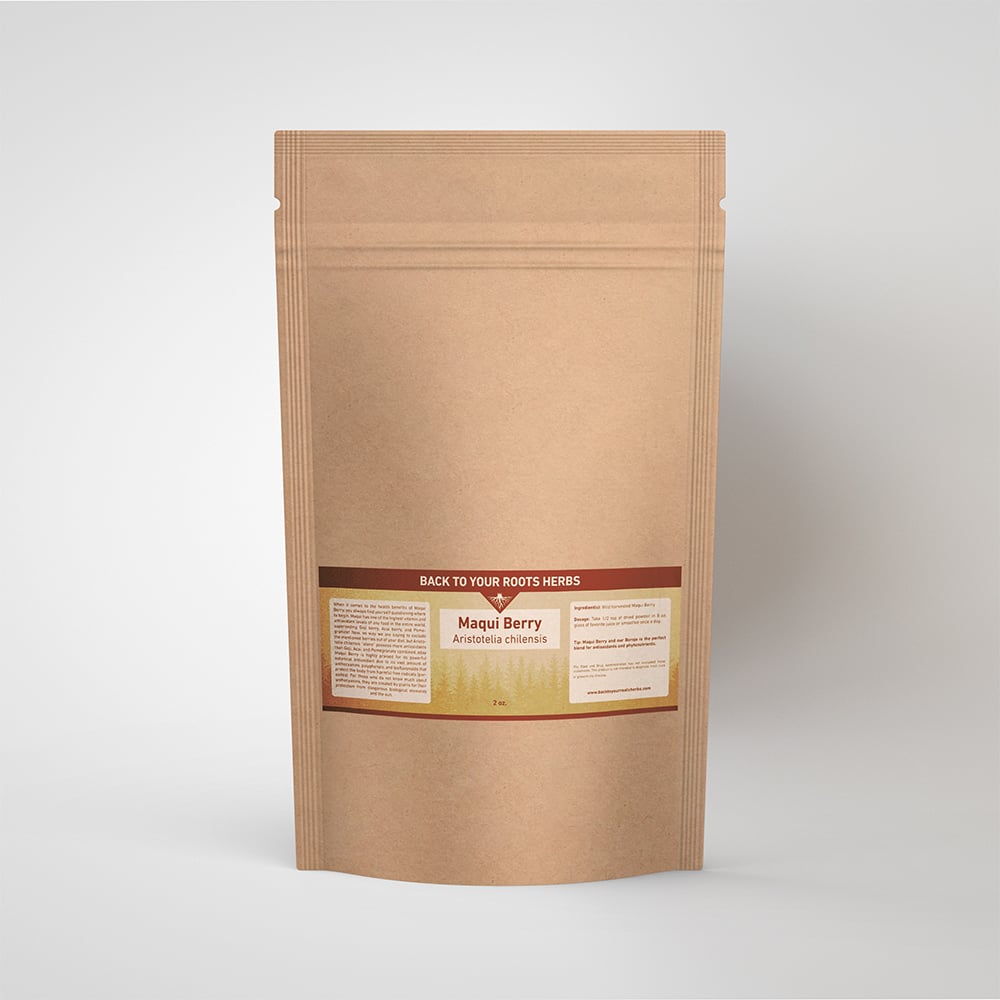
Grade A Patagonian maqui berry powder. Sourced from wild-harvest Mapuche cooperatives in the Andean foothills of south-central Chile near 41 degrees South 72 degrees West, this single-origin dried maqui delivers the concentrated delphinidin and cyanidin glycoside profile characteristic of the Aristotelia chilensis species. Whole berry powder, no extract, heavy-metal panel passed.
– Back To Your Roots Herbs Research Group.
Sensory Analysis of Our Maqui Berry Powder
Our first-hand review of this organic maqui powder batch:
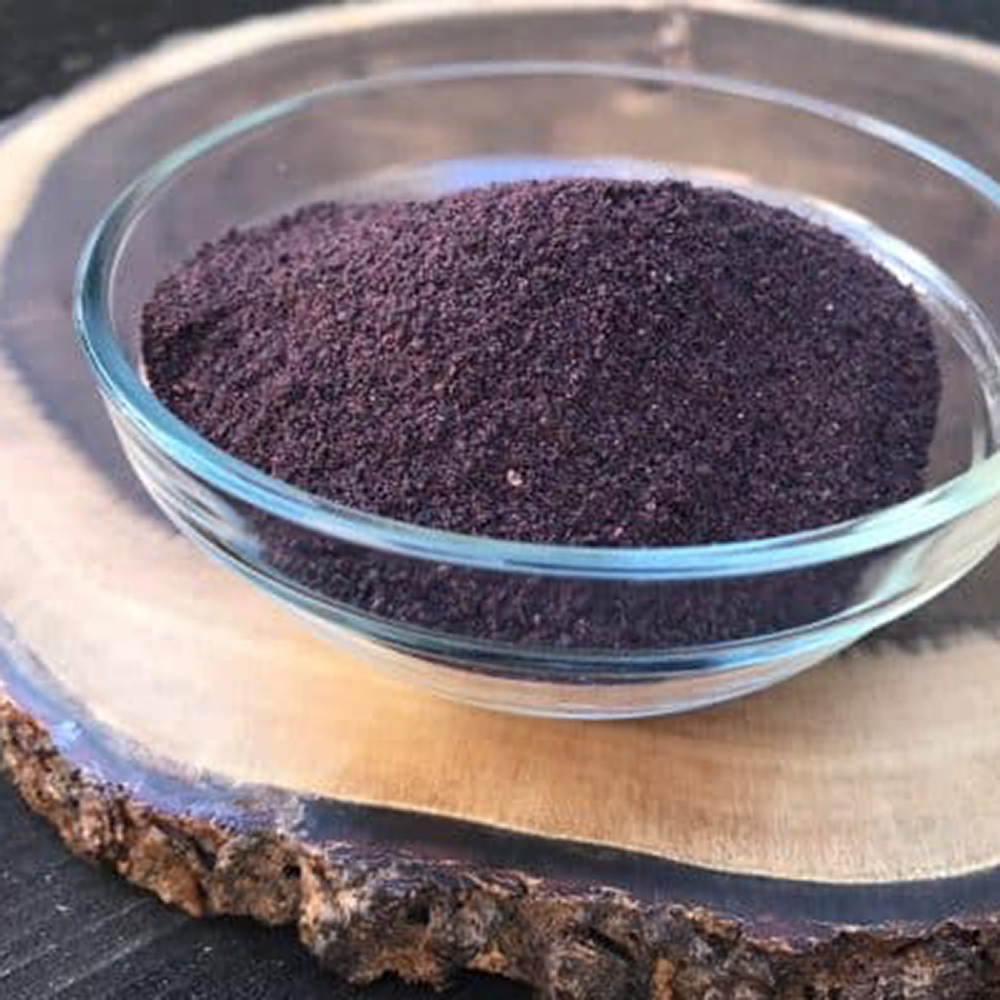
- Look: Deep violet, almost indigo-black, fine silken powder. The color alone signals the anthocyanin load.
- Smell: Earthy and slightly sweet. Notes of blackberry wine, dried fig, and faint cocoa.
- Taste: Tart on the front palate, drying astringent finish. Closest flavor cousin is acai without the bitterness, followed by a lingering red-wine note. Dissolves cleanly into cold liquids.
How Does Maqui Berry Powder Work
Our organic maqui berry powder delivers the specific polyphenol profile associated with this Patagonian superfruit. Here is the entity breakdown:
- The Herb: Aristotelia chilensis, known as maqui or the Chilean wineberry, is sourced from wild stands in Patagonian Chile and traditionally harvested by Mapuche families near the Andes.
- The Active Compounds: Delphinidin glycosides, cyanidin glycosides, and broader anthocyanins. These bioactive compounds give maqui its characteristic dark violet color.
- The Mechanism: Delphinidins behave as dietary antioxidants, contributing to total polyphenol intake from whole-food sources and supporting healthy antioxidant status already within the normal range.
- The Evidence: A randomized clinical trial by Davinelli et al. (2015) published in the Journal of the American College of Nutrition evaluated an anthocyanin-rich maqui berry extract for its effect on oxidative stress biomarkers in healthy adults. (PMID: 26400431)
Patagonia, Chile, and the Mapuche Tradition
The Aristotelia chilensis tree is endemic to the Andean Patagonian forests of south-central Chile, ranging from the Coquimbo region to Aysen. Mapuche communities have used dried maqui berry as a traditional food and beverage for centuries. Wild-harvest season runs from December through March. The cold, high-UV, volcanic-soil terroir is what produces maqui’s dense anthocyanin profile.
Why Whole Berry Maqui Powder and Not Extract
Many maqui products are delphinidin extracts standardized to a single marker compound. Our organic maqui powder is the whole dried berry, freeze-dried and milled. You receive the full anthocyanin spectrum, the native fiber, and the naturally occurring polyphenols in their original food-matrix ratio.
Delphinidins and Anthocyanins Explained
Delphinidins are a subclass of anthocyanins, the pigments responsible for the red, violet, and blue colors in berries. Maqui is one of the most concentrated natural sources of delphinidin-3-sambubioside-5-glucoside, a specific glycoside form of delphinidin.
Polyphenols in Whole Maqui Berry Powder
Beyond delphinidins, dried maqui berry contains cyanidin glycosides, ellagic acid, flavonols, and other polyphenols. The whole berry powder retains this full polyphenol matrix along with naturally occurring fiber.
Critical Usage and Dosage Guidance
Use 1 teaspoon (approximately 3 grams) of organic maqui berry powder once daily. Stir into cold water, smoothies, yogurt, chia pudding, or overnight oats. Avoid adding to boiling liquids because heat degrades the anthocyanin compounds.
Contraindications and Who Should Not Use Maqui Berry Powder
- Not evaluated for use during pregnancy or lactation.
- If you take prescription medication for blood glucose management, consult your healthcare provider before adding any polyphenol-rich food to your routine.
- Discontinue use 14 days prior to scheduled surgery.
- Keep out of reach of children.
Clinical Specs for Maqui Berry Powder
| Spec | Detail |
|---|---|
| Serving Size | 1 teaspoon (approximately 3 g) |
| Frequency | Once daily |
| Active Marker | Delphinidin and cyanidin glycosides (native spectrum) |
| Processing | Freeze-dried whole berry, milled to fine powder |
| Safety | Heavy Metal Tested (Pass) |
| Ingredients | 100% organic maqui berry (Aristotelia chilensis) whole berry powder |
| Other Ingredients | None |
| Purity | Organic, Non-GMO, Vegan |
| Free From | Wheat, Gluten, Soy, Dairy, Binders, Fillers |
| Origin | Patagonian Chile (wild-harvest, Mapuche region near 41 degrees South 72 degrees West) |
| Manufactured | Virginia Beach, VA, USA |
Comparison Table BTYRH Maqui Berry Powder vs Generic Brands
| Feature | BTYRH Organic Maqui Berry Powder | Generic Maqui Powder |
|---|---|---|
| Origin | Patagonian Chile wild-harvest (stated region) | Unspecified country of origin |
| Preparation | Whole berry, freeze-dried, no extract | Spray-dried or reconstituted concentrate |
| Taste | Tart, blackberry wine, earthy fig | Generic berry flavor |
| Safety | Heavy metal panel, Non-GMO verified | Unknown or untested |
Disclaimer: These statements have not been evaluated by the Food and Drug Administration. This product is not intended to diagnose, treat, cure, or prevent any disease.
Reviews
There are no reviews yet.