Cramp bark tea is known for its muscle-relaxing properties, making it beneficial for relieving menstrual cramps and muscle spasms. It may also help with headaches and digestive issues. Enjoy a cup to experience these soothing effects.
What is Cramp Bark?
Cramp bark, scientifically known as Viburnum opulus, is a shrub native to Europe and Asia. Also referred to as Guelder rose, water elder, European cranberrybush, and snowball tree, this plant has a long history of use in traditional medicine. The bark of the Viburnum opulus is the part used for medicinal purposes, often prepared as a tea, tincture, or extract. This herb is revered for its muscle-relaxant properties, making it a popular choice for alleviating various types of muscle spasms and pain.
Traditional Uses and History of Cramp Bark
Viburnum opulus boasts a rich history rooted in traditional medicine. Native American tribes, including the Meskwaki and Penobscot, utilized it extensively. Their uses spanned from addressing menstrual cramps and back pain to alleviating arthritis, and swollen glands, and even managing prolapsed uterus. This herb’s significance is further underscored by its inclusion in the United States Pharmacopeia from 1894 to 1916. During this period, it was officially recognized as a sedative and antispasmodic, highlighting its accepted medicinal value in the late 19th and early 20th centuries.
Effects of Cramp Bark on the Body
The interaction of Viburnum opulus with our bodies centers on its remarkable muscle-relaxant capabilities. This natural remedy, derived from the bark of the plant, works by easing muscle tension and reducing inflammation. The active components, including isovaleric acid, coumarins, and tannins, contribute to its anti-spasmodic and anti-inflammatory effects. These compounds work synergistically to provide a soothing effect on cramping muscles, making it effective not only for uterine cramps but also for a range of other conditions marked by spasms or pain.
Traditionally, this herbal remedy has been used to relieve symptoms associated with conditions like irritable bowel syndrome (IBS) and renal colic, in addition to menstrual pains. This highlights the versatility of Viburnum opulus as a broad-spectrum herbal solution.
Potential Health Benefits of Cramp Bark
The beneficial impact of Viburnum opulus extends beyond its primary application for menstrual relief and muscle spasms.
Menstrual Cramps (Dysmenorrhea)
Viburnum opulus is particularly effective for relieving dysmenorrhea. Its antispasmodic action relaxes the uterine muscles, reducing the intensity of contractions. This is believed to be due to compounds like scopoletin, viopudial, and valerenic acid. These compounds have demonstrated smooth muscle relaxant properties in in vitro studies. It may also help with associated symptoms like nausea and vomiting that sometimes accompany severe cramps. The herb contains methyl salicylate, a compound similar to that found in aspirin, contributing to pain relief and anti-inflammatory effects, but gentler on the stomach. Viburnum opulus can also help with heavy menstrual bleeding due to its astringent properties, and it has traditionally been used for post-partum contractions.
Other Muscle Spasms
Beyond menstruation, Viburnum opulus can provide relief from various muscular spasms, including those in the back, legs (including leg cramps at night), and neck. It’s been traditionally used for conditions like tension headaches and restless legs syndrome. Its action on skeletal muscles makes it a potential alternative to NSAIDs for some types of muscle pain. It is used in combination with magnesium, especially for athletes.
Cramp Bark for Men: Leg, Back, and Nighttime Muscle Cramps
Cramp bark’s antispasmodic action is not limited to the uterus. Because scopoletin and viopudial relax skeletal muscle as well as smooth muscle, the herb has a long traditional use for general muscular cramping that applies to anyone. Men commonly reach for it for nocturnal leg cramps, lower-back tightness, and post-exertion muscle spasms after training. Used this way, it is taken the same as for any muscular cramp — a warm cup at the onset of tightness, repeated as needed within the daily limit described above.
Digestive Issues
The antispasmodic effects of Viburnum opulus extend to the digestive system. It can help relieve cramping and discomfort associated with irritable bowel syndrome (IBS), bloating, gas, and even constipation. It may also be beneficial in conditions like diverticular disease and gallstone disease by regulating tension in the gastrointestinal tract. The herb nourishes and strengthens the mucosal lining because of its tannin content.
Kidney Stones
Emerging research suggests Viburnum opulus may help with the passage of small kidney stones. One study showed that cramp bark extract, combined with diclofenac, resulted in a higher rate of stone expulsion. It also reduced the need for additional treatment and analgesics compared to diclofenac alone. Viburnum opulus is high in citrate, similar to lemon juice, which can be beneficial for those prone to certain types of kidney stones.
Circulation
Viburnum opulus possesses vaso-dilatory properties. It widens the blood vessels, allowing blood to flow more easily and exerting a positive effect on blood pressure.
Other Potential Benefits
Traditionally, Viburnum opulus has also been used for anxiety, and insomnia, and even as a supportive therapy for certain cancers. However, scientific evidence for these uses is limited, and more research is needed. The herb also contains antioxidants (flavonoids, carotenoids) that may contribute to cellular health. Some animal and test-tube studies suggest potential anti-diabetic effects, but human studies are lacking.
How Long Does It Take to Feel the Effects of Cramp Bark Tea?
Most people who use cramp bark tea for acute muscle tension report feeling a relaxing effect within roughly 30 to 60 minutes of finishing a cup, which tracks with how quickly its antispasmodic compounds are absorbed. In our sourcing experience, the herb behaves more like an on-demand smooth-muscle relaxant than a slow-building tonic.
The timing depends on what you are using it for. For sudden menstrual or muscular cramping, a freshly brewed cup is traditionally taken at the first sign of discomfort and repeated as needed. For ongoing cyclical support, herbalists have long suggested beginning a day or two before cramps typically start, so the smooth-muscle-relaxing constituents are already on board. The two best-studied of these are scopoletin, a coumarin derivative, and viopudial, both of which are associated with reduced muscle tension (Viburnum opulus L. — A Review of Phytochemistry and Biological Effects, PMC7694363).
Response is individual. Body weight, brewing strength, and how recently you have eaten all shift the timeline. Start with a lower-strength infusion and adjust based on how your body responds rather than chasing a faster effect with a stronger brew.
Cramp Bark for Postpartum and Uterine Cramping
Cramp bark has one of the longest traditional associations with the uterus of any Western herb. Western and Eclectic herbalists have used Viburnum opulus for generations to support comfort during uterine and muscular cramping, including the afterpains some people experience in the days following childbirth. Its traditional reputation rests on the same antispasmodic action that makes it popular for menstrual discomfort — a gentle relaxing effect on smooth muscle tissue.
Mechanistically, the bark is considered the most uterine-active of the Viburnum species because it concentrates scopoletin and viopudial, compounds linked to smooth-muscle relaxation. Phenolic constituents including catechins, chlorogenic acid, and the coumarin esculetin round out its traditional antispasmodic profile (Comparison of Chemical Composition and Antioxidant Capacity of Fruit, Flower and Bark of Viburnum opulus, PMID: 31321622).
This is a structure-and-function description of traditional use, not medical guidance. The postpartum period carries real medical considerations, and cramp bark also acts on uterine tissue, so this is exactly the situation where professional oversight matters most. Anyone considering cramp bark after childbirth, while breastfeeding, or for any reproductive concern should work directly with their physician, midwife, or a qualified clinical herbalist before use.
How to Prepare and Consume Cramp Bark Tea
Preparing cramp bark teas involves a few simple steps to ensure the maximum extraction of its beneficial compounds.
- Boiling Water: Start by boiling water. The steeping process requires heat to release the herb’s medicinal properties.
- Measuring: Measure approximately one to two teaspoons of dried Viburnum opulus bark for every cup of water.
- Simmering: Once the water reaches a boil, add the bark and allow it to simmer for about 15 minutes. This slow brewing process is key to unlocking the bark’s potent beneficial compounds.
- Steeping: After simmering, remove from heat and let it steep for an additional 15 minutes.
- Straining: Strain the tea to yield a clean, medicinal brew ready for consumption.
How Much and How Often for Best Results
A standard cramp bark infusion uses roughly 1 to 2 teaspoons of dried bark per cup of just-boiled water, simmered or steeped for 10 to 15 minutes because bark is denser than leaf or flower and needs longer to release its constituents. For active cramping, the tea is traditionally taken up to three times a day, spaced across the day rather than all at once. For cyclical menstrual support, many people begin a day or two before discomfort usually starts and continue through the first couple of days of their cycle.
For those new to Viburnum opulus tea, starting with a lower dosage and gradually increasing it based on your body’s response is advisable. More is not better with cramp bark. Give it 30 to 60 minutes to take effect, and only then adjust. Viburnum opulus tea has a somewhat bitter, earthy taste, so you can add other herbals like peppermint, chamomile, or ginger to improve the flavor. Steeping longer makes the brew more bitter without meaningfully improving the result.
Cramp Bark vs. Other Natural Cramp Remedies
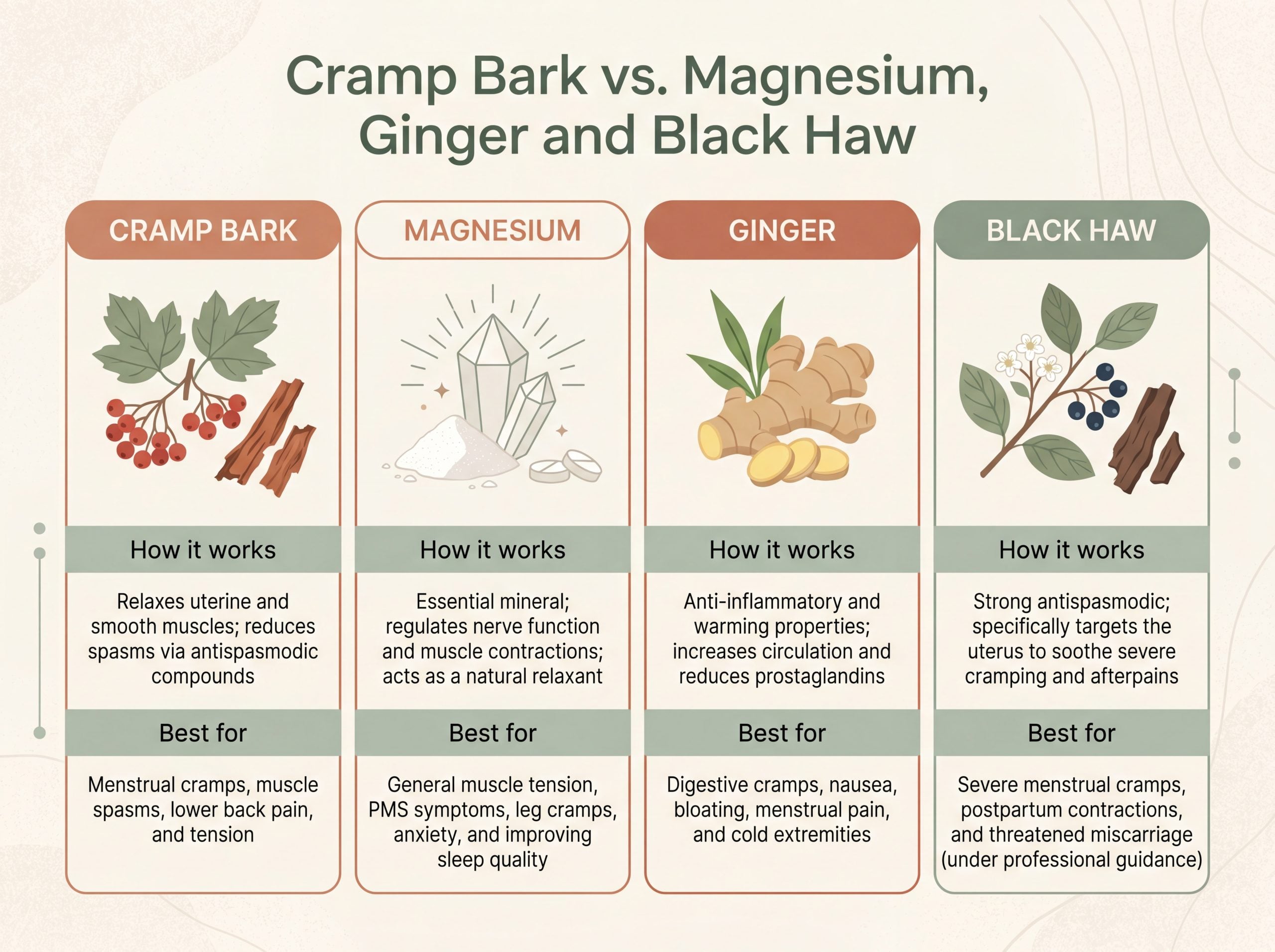
Cramp bark is one of several botanicals and nutrients people reach for when muscles or the uterus tighten up. Each works through a different mechanism, which is why some herbalists combine them. From our editorial team’s review of the traditional and clinical literature, here is how the most common options compare.
| Remedy | How it is traditionally understood to work | Most common use |
|---|---|---|
| Cramp bark (Viburnum opulus) | Antispasmodic action on smooth and skeletal muscle via scopoletin and viopudial | Acute menstrual and muscular cramping |
| Black haw (Viburnum prunifolium) | Closely related bark with overlapping antispasmodic constituents, traditionally considered gentler and more uterine-specific | Cyclical uterine cramping; often used interchangeably with cramp bark |
| Magnesium | An essential mineral involved in normal muscle relaxation and nerve signaling | Daily nutritional support for muscle and menstrual comfort |
| Ginger (Zingiber officinale) | Anti-inflammatory gingerols and shogaols; acts on prostaglandin pathways | Menstrual discomfort and digestive cramping |
| Sources: Drugs.com cramp bark monograph; NIH Office of Dietary Supplements, Magnesium. | ||
The practical difference: cramp bark and black haw are acute antispasmodics you take around the cramping itself, while magnesium is a daily mineral you build up over time. Ginger sits in between and is the easiest to add to a cup alongside cramp bark to soften its bitter, earthy taste. Black haw is the closest substitute if cramp bark is unavailable, since the two share much of the same constituent profile.
Other Forms of Cramp Bark
While the focus is often on teas, Viburnum opulus is also available in other forms. These include tinctures, capsules, and liquid extracts. These may be preferable for those who dislike the taste of the tea or are looking for alternative methods of consumption. The choice of form often depends on personal preference and the specific health condition being addressed.Possible Side Effects and Precautions
While Viburnum opulus is generally considered safe when used in moderation, it’s important to be aware of potential side effects and take necessary precautions.- Common Side Effects: Mild digestive upset (nausea, vomiting, diarrhea) is possible, especially with large doses.
- Less Common Side Effects: Drowsiness may occur.
- Allergic Reactions: Rare allergic reactions are possible, especially in individuals sensitive to aspirin (due to the presence of methyl salicylate).
- Pregnancy and breastfeeding: Because Viburnum opulus acts on uterine smooth muscle, pregnant and breastfeeding women should avoid cramp bark tea unless a qualified healthcare provider specifically directs otherwise. Do not self-administer cramp bark during pregnancy. If you are pregnant, nursing, or trying to conceive, talk with your physician or midwife before using any herbal preparation.
- Blood Pressure/Heart Conditions: Those with low blood pressure or heart conditions should use caution, as Viburnum opulus may lower blood pressure and heart rate.
- Medication Interactions:
- Blood Thinners: Avoid using Viburnum opulus with blood-thinning medications like warfarin, aspirin, or clopidogrel due to its coumarin content. This may increase the risk of bleeding.
- Blood Pressure Medications: Use caution when combining Viburnum opulus with blood pressure medications (e.g., ACE inhibitors, beta-blockers) as it may potentiate their effects.
- Sedatives: Avoid combining with sedatives or barbiturates due to potential additive effects.
- NSAIDs: Avoid using with NSAIDs.
- Other: There is a potential interaction with medications such as methotrexate, spironolactone, phenytoin, and valproate.
- Aspirin Sensitivity: Individuals with aspirin sensitivity should avoid Viburnum opulus.
- Dosage: Start with a low dose and gradually increase as needed, observing your body’s response.