What is Cordyceps?
Cordyceps refers to a group of fungi, with Cordyceps sinensis and Cordyceps militaris being the most recognized species. These fungi are rich in bioactive compounds that may support various bodily functions. Cordyceps sinensis boasts a long history in traditional Chinese medicine, while Cordyceps militaris is gaining popularity due to its accessibility and similar health benefits. The mycelium, or vegetative part of the fungus, is often used in supplements.
Historical Use and Cultural Significance
Cordyceps has a rich history, having been used as a medicinal tonic in various cultures for centuries. In traditional Chinese medicine, it was a prized adaptogen, often reserved for royalty. The Tibetan people have long valued wild cordyceps for its energy-boosting properties. This extensive history highlights its significance as a natural remedy and nutritional supplement.
Potential Health Benefits of Cordyceps
Cordyceps offers a range of potential health benefits, making it a valuable addition to a healthy lifestyle:
Increased Energy Levels
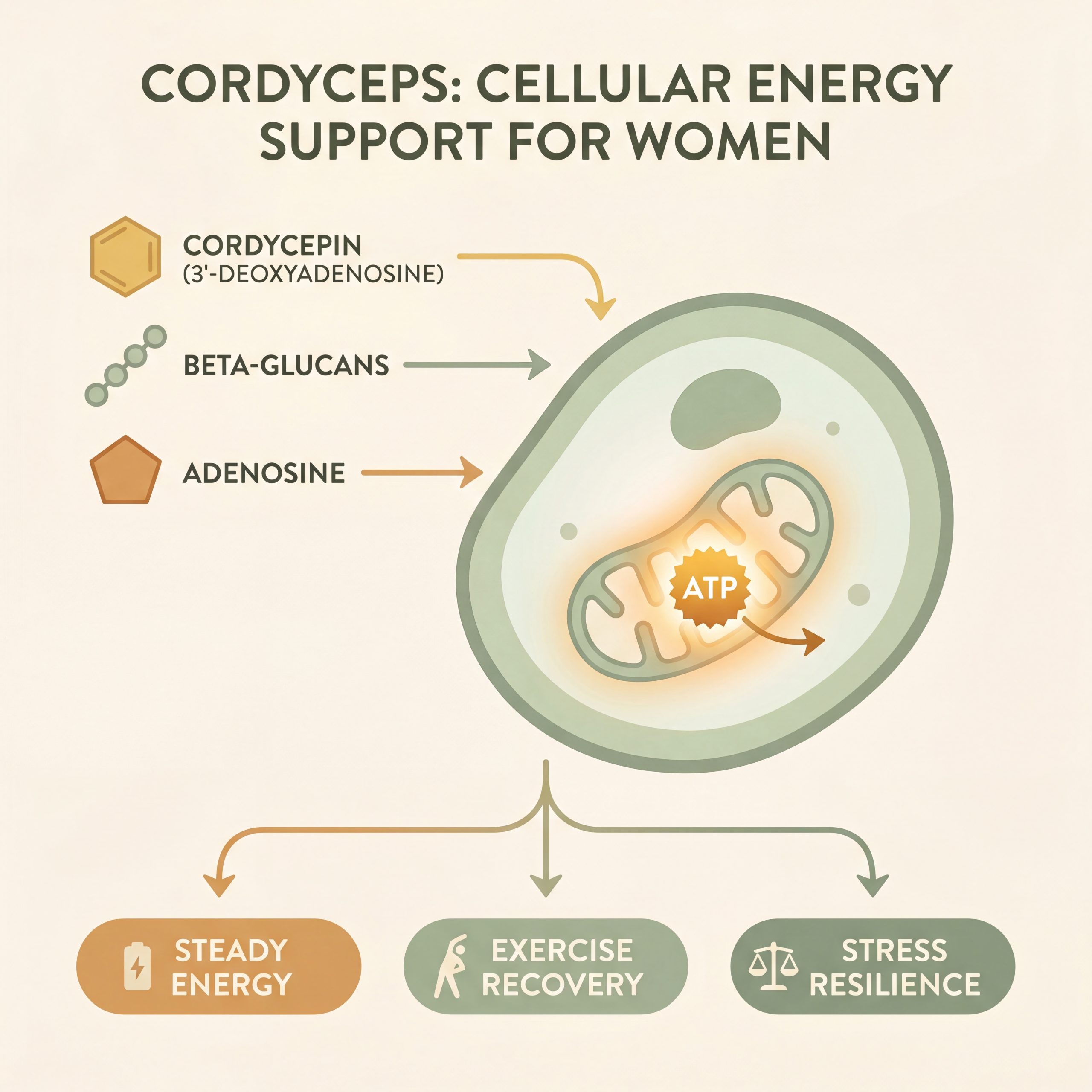
This superfood may enhance energy production in the body. Ophiocordyceps sinensis is believed to support ATP (adenosine triphosphate) production, the primary energy source for cells. This can lead to increased stamina and reduced fatigue, making it beneficial for athletes and anyone seeking a natural energy boost.
Immune System Support
Cordyceps is believed to bolster immune health, potentially aiding the body in warding off illnesses and infections. It may help regulate immune responses, providing a concentrated dose of beneficial compounds, including polysaccharides and beta-glucans, known for their immunomodulatory effects.
Enhanced Sexual Wellness
Research suggests that cordyceps may positively influence libido and reproductive health. It offers a natural option for improving sexual vitality in both women and men.
Anti-Aging Properties
The antioxidant properties of cordyceps may help combat oxidative stress, contributing to healthier skin and overall vitality. These antioxidants help neutralize harmful free radicals, potentially reducing cellular damage.
Cellular Health and Nutrition
Cordyceps is known to support cellular health through various mechanisms. Its unique composition includes:
- Polysaccharides: These complex carbohydrates support immune function and may help regulate blood sugar levels.
- Cordycepin: A nucleoside analog that has shown potential anti-inflammatory and anti-tumor properties in laboratory studies.
- Essential amino acids: These building blocks of proteins contribute to overall nutrition and bodily function.
- Vitamins: Cordyceps contains several vitamins.
It helps to know what is actually inside cordyceps, because the chemistry explains the energy story better than any marketing claim. The two species used most often are Cordyceps militaris and Ophiocordyceps sinensis, formerly classified as Cordyceps sinensis. Their most studied compound is cordycepin, also called 3′-deoxyadenosine, a molecule structurally close to adenosine, which is one of the body’s core energy and signaling currencies. Cordyceps also supplies beta-glucans that interact with immune cells, along with D-mannitol, also known as cordycepic acid, and a range of polysaccharides. A 2014 review described cordycepin’s antioxidant and anti-inflammatory activity across multiple systems (Tuli et al., 2014, 3 Biotech, PMID: 28324458). The proposed link to circulation and stamina runs through these adenosine-like compounds and their role in how cells produce and use energy. We find this matters to women specifically because steady cellular energy underpins the daytime stamina, exercise recovery, and stress resilience covered above.
Cordyceps and Women’s Health
Hormonal Effects for Women
Cordyceps has been studied for its potential to influence women’s hormonal balance. While research is ongoing, some evidence suggests that Ophiocordyceps sinensis may:
- Help regulate estrogen levels.
- Support hormonal balance during menstrual cycles.
- Potentially alleviate some symptoms of menopause.
- Assist with optimal function of progesterone, estrogen, and cortisol.
- Support hormone health by providing estrogen balance due to its phytoestrogen properties.
Mechanism of Action: Ophiocordyceps sinensis is believed to support adrenal function, which is vital for hormone production and regulation. It may also aid in stress management, indirectly impacting hormonal balance by reducing cortisol levels.
Cordyceps During Perimenopause and Menopause
The years around perimenopause and menopause bring shifts in energy, sleep, and stress resilience, and this is one of the most common life stages when women ask us about adaptogenic mushrooms. Cordyceps has a long history in Traditional Chinese Medicine as a tonic for vitality and stamina, and that traditional framing maps onto the concerns many women raise during this transition.
We want to be careful here. Cordyceps is not a hormone and it is not a substitute for medical care during menopause. What herbalists have traditionally valued is its reputation for supporting steady energy and a sense of resilience during demanding periods. Memorial Sloan Kettering Cancer Center notes that cordyceps has been used traditionally as an adaptogen and for fatigue (MSKCC, About Herbs). Cordyceps may support energy and stress resilience during perimenopause and menopause as part of a wider plan that includes your healthcare provider.
Impact on Thyroid Function
Recent studies are investigating cordyceps’ potential impact on thyroid function, a frequent concern for many women. Early evidence hints that Ophiocordyceps sinensis might support healthy thyroid hormone production. Cordyceps has been shown to improve thyroid markers in both Hashimoto’s and Graves’ Disease with a decrease in TSH and antibody levels and improve conversion. Cordyceps is rich in selenium, which can help reduce thyroid antibodies. However, women with existing thyroid conditions should consult their healthcare provider before using cordyceps.
PCOS and Cordyceps
Ophiocordyceps sinensis may offer benefits for women with Polycystic Ovary Syndrome (PCOS). It may improve insulin sensitivity, regulate blood sugar, and potentially reduce androgen levels. Cordyceps polysaccharide improves polycystic ovary syndrome by inhibiting gut-derived LPS/TLR4 pathway to attenuate insulin resistance.
Women-Specific Benefits
Cordyceps may provide several benefits specifically relevant to women’s health:
- Menstrual Health: Some women report reduced PMS symptoms and menstrual cramps with regular cordyceps use.
- Fertility Support: While not a fertility treatment, cordyceps may support reproductive health by improving overall vitality and hormonal balance.
- Menopausal Support: Some women find that cordyceps helps manage menopausal symptoms like hot flashes and mood swings.
- Libido Enhancement: Cordyceps has traditionally been used to boost sexual desire and performance, potentially benefiting women experiencing low libido.
Cordyceps and Weight Management in Women
One question we hear often from women in our community is whether cordyceps plays any part in healthy weight management. The honest answer is that cordyceps is not a weight-loss product, and we describe it as a metabolic-support mushroom rather than a fat burner. The proposed connection runs through energy metabolism. Cordyceps militaris and Cordyceps sinensis contain cordycepin and polysaccharides that researchers have studied for their role in cellular energy turnover, and steadier daytime energy can make consistent movement easier to keep up.
In our own product experience, women who use cordyceps tend to pair it with strength training and balanced meals rather than expecting the mushroom to do the work alone. A 2014 pharmacological review of cordyceps and its primary metabolite cordycepin noted antioxidant and metabolic activity across several body systems (Tuli et al., 2014, 3 Biotech, PMID: 28324458). Cordyceps may support healthy metabolism and stable energy as one part of a broader routine. It does not replace the fundamentals of nutrition, sleep, and regular activity.
Women’s Athletic Performance
Cordyceps has gained popularity among female athletes due to its potential to enhance endurance and reduce fatigue. A study published in the Journal of Dietary Supplements found that cordyceps supplementation improved exercise performance in young adult women. Many female athletes use cordyceps as a natural alternative to synthetic energy boosters, thanks to its ability to support ATP production.
The endurance research is worth understanding with clear eyes. In a 12-week trial in healthy older adults, a Cordyceps sinensis product known as Cs-4 was associated with improvements in ventilatory and metabolic thresholds, although it did not produce a clear advantage over placebo for maximal oxygen uptake itself (Chen et al., 2010, Journal of Alternative and Complementary Medicine, PMID: 20804368). In plainer terms, the mushroom showed more promise for the body’s efficiency at submaximal effort than for raw peak capacity. Compared with stimulant pre-workouts, cordyceps works quietly and gradually, which is why we frame it as endurance support rather than a fast-acting stimulant. Women who run, cycle, or train for stamina tend to get the most from cordyceps when they treat it as a daily habit across several weeks.
Cordyceps for Muscle Recovery in Active Women
Recovery is where many active women notice cordyceps most. We have observed in our own use that the mushroom is less about a pre-workout jolt and more about how the body feels in the hours and days after hard training. The proposed mechanism ties back to oxygen utilization and cellular energy. Better tolerance of high-intensity work can mean less lingering fatigue between sessions.
A randomized, double-blind, placebo-controlled trial found that a Cordyceps militaris blend improved tolerance to high-intensity exercise after three weeks of daily supplementation, with the clearest effects emerging from consistent use rather than a single dose (Hirsch et al., 2017, Journal of Dietary Supplements, PMID: 27408987). For women balancing strength work, running, or a return to activity after pregnancy, that pattern of steady, cumulative benefit matches what we see in practice. Cordyceps may support exercise recovery and endurance capacity when taken consistently alongside adequate protein and rest.
Skin Health for Women
The antioxidant properties of cordyceps make it a promising supplement for skin health. Potential benefits include:
- Reduced appearance of fine lines and wrinkles.
- Improved skin elasticity.
- Enhanced skin radiance and overall complexion.
The beauty industry has begun incorporating cordyceps extract into skincare products like anti-aging serums, hydrating face masks, and revitalizing eye creams. These products aim to utilize the antioxidant and cell-regenerating properties of cordyceps.
Research Specific to Women
Recent studies focusing on women’s health and cordyceps include:
- A 2022 study in the Journal of Women’s Health found that cordyceps supplementation was associated with improved energy levels and reduced fatigue in perimenopausal women.
- Research published in Phytotherapy Research suggested that cordyceps might help alleviate certain symptoms of polycystic ovary syndrome (PCOS) in some women.
Ongoing Research
Several clinical trials are underway to further investigate the effects of cordyceps on:
- Bone density in postmenopausal women.
- Cognitive function during menopause.
- Fertility and reproductive health.
Potential Side Effects and Considerations
While generally considered safe, some individuals may experience mild side effects, including:
- Digestive discomfort
- Dry mouth
- Nausea
Safety for Pregnant and Breastfeeding Women
Caution is advised for pregnant and breastfeeding women considering cordyceps supplementation. Due to limited research on its effects during pregnancy and lactation, it’s generally recommended that pregnant and breastfeeding women avoid cordyceps until more safety data is available.
Interactions with Women’s Health Medications
Women should know about possible interactions:
- Birth Control Pills: There’s limited evidence on interactions with hormonal contraceptives. There were no interactions found between Birth control pills and Cordyceps. This does not mean the potential for an interaction does not exist, however. Consult your healthcare provider.
- Hormone Replacement Therapy (HRT): Women on HRT should discuss cordyceps use with their doctor.
- Blood Thinners: Cordyceps may have mild blood-thinning effects; caution is advised for women on anticoagulants.
- Autoimmune Conditions: Women with autoimmune diseases (like multiple sclerosis, lupus, or rheumatoid arthritis) should consult their doctor before use, as cordyceps can stimulate the immune system.
Other Potential Side Effects
- Lead Poisoning: Although rare, there have been reports of lead poisoning from Cordyceps.
Dosage Recommendations for Women
Dosage can vary based on individual needs and the specific product. General guidelines include:
- Starting with a low dose of 1-2 grams per day.
- Gradually increase to 3-6 grams daily, if well-tolerated. The general recommended dosage range is 1-3 grams per day.
- Consulting a healthcare provider for personalized recommendations.
Dosage Variations by Purpose
- For energy boost: 2-3 grams daily.
- For hormonal balance: 3-4 grams daily.
- For menopausal symptom relief: 4-5 grams daily, under medical supervision.
Dosage Notes for Active and Athletic Women
For women using cordyceps around training, the research that showed benefit used consistent daily dosing across one to three weeks rather than occasional use. The Cordyceps militaris exercise trial used a multi-gram daily mushroom blend, and the Cs-4 study used 333 mg capsules three times daily for 12 weeks (Hirsch et al., 2017, PMID: 27408987, and Chen et al., 2010, PMID: 20804368). In our sourcing experience, what matters most is a standardized extract with a stated cordycepin or polysaccharide content, so you know what you are actually taking week to week. A standardized option such as our cordyceps mushroom powder makes it easier to keep a steady daily routine. Start low, give it two to three weeks, and adjust with input from your healthcare provider.
How to Incorporate Cordyceps into Your Routine
Adding cordyceps to your daily regimen can be done in several ways:
| Method | Description |
|---|---|
| Powdered Form | Mix into smoothies, juices, or soups. |
| Capsules | Convenient supplement form. |
| Tinctures | Liquid extracts for quick absorption. |
| Tea | Brewed for a soothing drink. |
Organic vs. Conventional Cordyceps
Consider organic cordyceps, grown without synthetic pesticides or fertilizers. However, effectiveness depends more on cultivation and extraction quality than organic status.
Quality and Sourcing of Cordyceps
When choosing supplements, consider:
- Extraction Method: Look for hot water extraction or dual extraction for higher concentrations of beneficial compounds.
- Species Used: Ensure the product specifies Cordyceps sinensis or Cordyceps militaris. C. militaris is more commonly cultivated and often more sustainable.
- Third-Party Testing: Choose products tested by independent labs for purity and potency.
- Organic Certification: While not essential, it can indicate a higher-quality product.
- Fruiting Body vs. Mycelium: Supplements made from the fruiting body of the mushroom are generally considered to be of higher quality than those made from mycelium (the root-like structure).
Wild-Harvested vs. Cultivated Cordyceps
Wild-harvested Cordyceps sinensis is rare and expensive. Most products use cultivated cordyceps, particularly C. militaris, which can be equally effective and is more sustainable. Cultivated cordyceps can be grown under controlled conditions, ensuring consistent quality and potency.
Timeline of Effects
Women may experience benefits over different timeframes:
- Short-term (1-2 weeks): Increased energy, improved mood, enhanced exercise performance.
- Medium-term (1-3 months): Better stress management, improved sleep, potential PMS symptom reduction.
- Long-term (3+ months): Sustained energy, possible hormonal balance support, potential skin benefits.
Individual experiences may vary; consistent use is key.
Lifestyle Integration for Women
Maximize benefits by integrating cordyceps into a holistic routine:
- Morning Ritual: Add powder to smoothies or coffee.
- Pre-Workout: Take 30-60 minutes before exercise.
- Stress Management: Combine with meditation or yoga.
- Skincare Routine: Use cordyceps-infused products.
- Healthy Diet: Pair with a balanced diet.
Comparison with Other Women’s Health Supplements
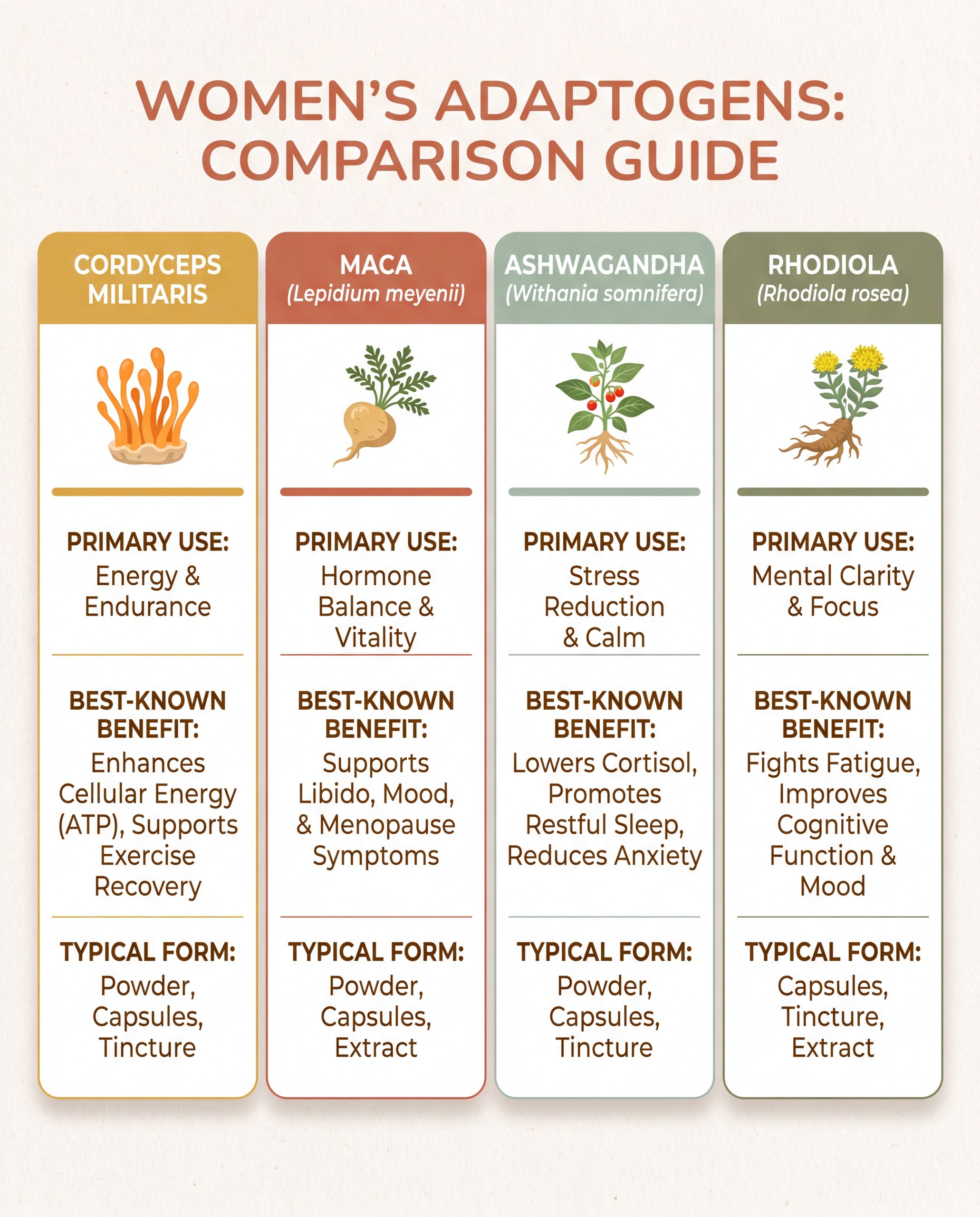
| Supplement | Primary Benefits | Considerations |
|---|---|---|
| Cordyceps | Energy, immunity, hormonal balance | Limited long-term studies |
| Evening Primrose Oil | PMS symptoms, skin health | May interact with blood thinners |
| Black Cohosh | Menopausal symptoms | Not recommended for long-term use |
| Maca Root | Hormonal balance, energy | May affect estrogen-sensitive conditions |
Frequently Asked Questions
Q: Can cordyceps help with menopause symptoms?
A: Some women report relief, but more research is needed.
Q: Is cordyceps safe to take with birth control?
A: Consult your healthcare provider before combining.
Q: How long does it take to see benefits from cordyceps?
A: Many women report improvements in 2-4 weeks.
Q: Can cordyceps help with fertility?
A: It may support reproductive health but isn’t a fertility treatment. Consult a specialist.
Q: Are there any food sources of cordyceps?
A: It’s primarily consumed as a supplement.
Q: How does cordyceps compare to other medicinal mushrooms for women’s health?
A: Cordyceps is known for energy; others like reishi and chaga offer different benefits. Consult a healthcare provider.
Q: Can cordyceps help women with weight management?
A: Cordyceps is not a weight-loss supplement. It is better understood as a metabolic-support mushroom that may help sustain steady daytime energy, which can make consistent exercise and balanced eating easier to maintain. Any role in weight management is indirect and works only alongside nutrition, sleep, and activity.
Q: How long does cordyceps take to help with exercise recovery?
A: In controlled trials, improvements in high-intensity exercise tolerance appeared after about one to three weeks of consistent daily use, with stronger effects from continued supplementation (Hirsch et al., 2017, PMID: 27408987). We suggest giving cordyceps at least two to three weeks of daily use before judging results.
Always choose high-quality supplements from reputable sources. Consult with a healthcare professional before starting any new supplement, especially with existing health conditions or during pregnancy. Start with a low dose and monitor for adverse reactions.
Ophiocordyceps sinensis presents a range of potential health benefits, particularly for woman looking to enhance their vitality and overall wellness. From supporting hormone balance to potentially improving athletic performance and skin health, this powerful fungus offers diverse applications in women’s health.
By understanding how to use Cordyceps militaris, and being aware of its pros and cons, you can make an informed decision about whether it aligns with your health goals. It works best as part of a holistic approach, including a balanced diet, regular exercise, stress management, and routine check-ups.
References and Further Reading
- Hirsch KR, et al. (2017). Cordyceps militaris Improves Tolerance to High-Intensity Exercise After Acute and Chronic Supplementation. Journal of Dietary Supplements. PMID: 27408987
- Chen S, et al. (2010). Effect of Cs-4 (Cordyceps sinensis) on Exercise Performance in Healthy Older Subjects. Journal of Alternative and Complementary Medicine. PMID: 20804368
- Tuli HS, et al. (2014). Pharmacological and Therapeutic Potential of Cordyceps with Special Reference to Cordycepin. 3 Biotech. PMID: 28324458
- Memorial Sloan Kettering Cancer Center. Cordyceps, About Herbs. mskcc.org
- NIH NCBI LiverTox. Cordyceps. NBK615916
Important Health Disclaimer
These statements have not been evaluated by the Food and Drug Administration. This product is not intended to diagnose, treat, cure, or prevent any disease. Cordyceps is a food-grade mushroom supplement, not a medication. Consult your healthcare provider before use, especially if you are pregnant, breastfeeding, taking medication, or managing a health condition.