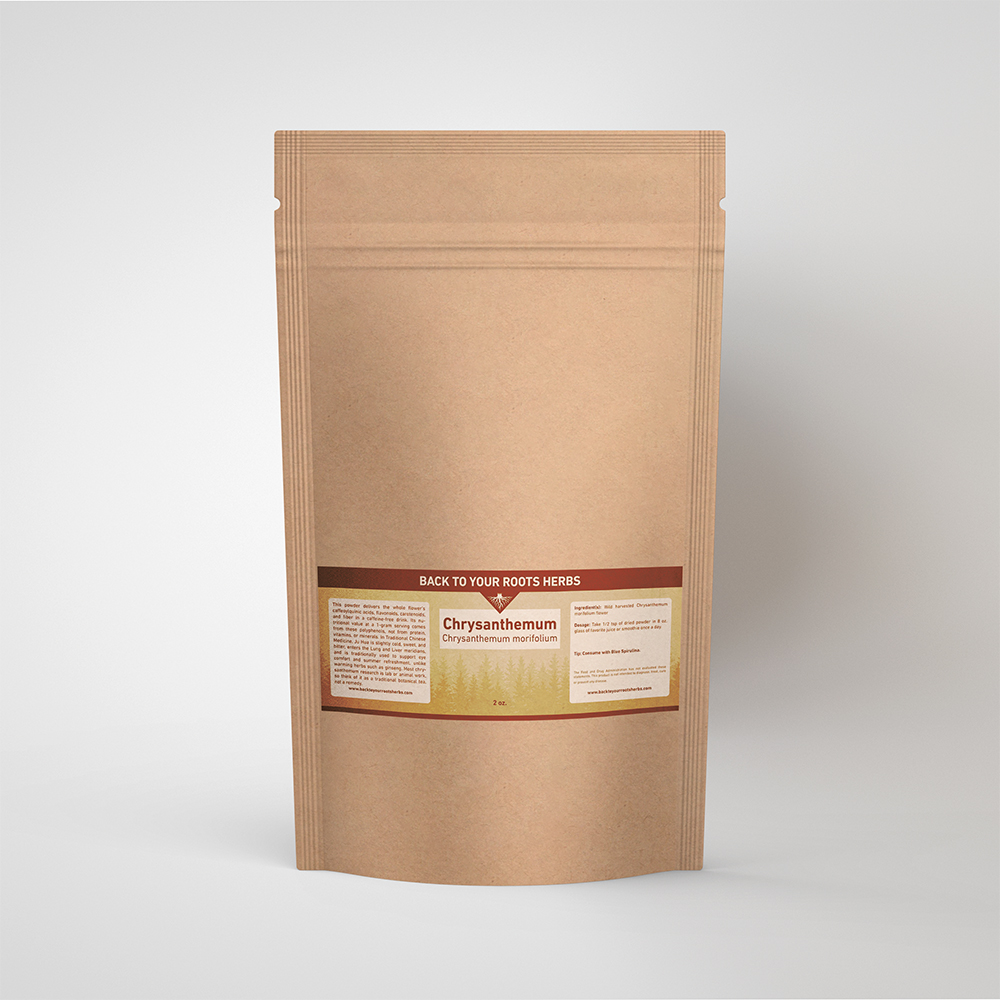
WHAT IS CHRYSANTHEMUM FLOWER POWDER?
Chrysanthemum flower powder is the whole dried flower head of Chrysanthemum morifolium (Ju Hua, 菊花) milled to a fine, pale gold powder, with nothing extracted and nothing added. Ours is grown in Zhejiang Province, China, the home of Hangzhou white chrysanthemum tea. Stir it into hot water for instant chrysanthemum tea, or bake with it. It is the edible chrysanthemum used for tea, not pyrethrum.
Each 2 oz (56.7 g) package holds 50 to 60 servings of natural chrysanthemum powder from a single botanical source, about a 2-month supply at one cup a day. Half a level teaspoon of powder makes a mellow, honey-scented, caffeine-free cup of chrysanthemum flower tea in about a minute. Free from preservatives, fillers, and added flavors.
THE VERDICT (INTERNAL QUALITY SCORE):
Grade A. A true whole-flower chrysanthemum powder: autumn-harvested Chrysanthemum morifolium flower heads from Zhejiang Province, China, the Hangbaiju (Hangzhou white chrysanthemum) growing region centered on Tongxiang (30.63° N, 120.53° E), dried and milled with no extraction step, no carrier and no filler. The color is even. The aroma is clean and honeyed with no sulfur note, and a hot cup turns soft gold in seconds. This premium chrysanthemum powder is a single-origin herb powder that tastes like the flower, not like a flavored tea mix.
– Back To Your Roots Herbs Research Group
SENSORY ANALYSIS:
Our bench notes from opening, tasting, and brewing this chrysanthemum powder:
- Look: A fine, soft powder in pale cream to light gold. Because the whole flower head is milled, not just the chrysanthemum flower petals, you see brighter yellow specks from the central disc florets and faint green flecks from the bracts at the base. The powder packs lightly when pinched, the way a well-dried flower powder should. Its gold comes from flavones and the yellow disc florets, not from the anthocyanins that color purple chrysanthemum cultivars.
- Smell: Honeyed and hay-like up front, then a cool, camphor-and-chamomile edge from the flower’s essential oils. A high-quality chrysanthemum powder smells clean. A sharp, matchstick note is a warning sign of sulfur-fumigated flowers.
- Taste: The raw powder starts lightly sweet on the tongue, turns pleasantly bitter mid-palate, and finishes cool and slightly drying. Brewed, the bitterness softens into a light floral cup with a faint honey aftertaste.
- In the cup: Whisked into water at about 85 °C (185 °F), it turns pale gold within seconds. This is whole flower powder, not a soluble chrysanthemum extract, so fine petal particles settle after a minute or two. Stir and sip, or pour it through a fine filter for a clear cup.
HOW DOES CHRYSANTHEMUM FLOWER POWDER WORK?
- The Herb: Chrysanthemum morifolium Ramat. (family Asteraceae), the classic Ju Hua of Traditional Chinese Medicine (TCM), sourced from Zhejiang Province, China. NCBI lists the species as Chrysanthemum × morifolium, Taxonomy ID 41568.
- The Mechanism: Acts as a polyphenol-dense flowering herb, supplying caffeoylquinic acids (chlorogenic acid and 3,5-dicaffeoylquinic acid) and flavonoids (luteolin, apigenin, and acacetin, mostly as glucosides, plus linarin) that work as free radical scavengers in lab assays, the measurable basis of the flower’s antioxidant activity. Essential oils, mostly terpenoids such as camphor and borneol, carry the aroma.
- The Evidence: Research by Gong et al. (2019) profiled 15 Hangbaiju chrysanthemum samples, identified 14 phenolic compounds, and confirmed that caffeoylquinic acid content tracked antioxidant activity in DPPH, ABTS, and FRAP tests (PMID 31434279).
Whole flower heads give you more than a strained tea. Hot water pulls out most of the phenols, chiefly caffeoylquinic acids and flavone glycosides. When you drink chrysanthemum powder, you also take in the fiber, carotenoids, and other less water-soluble parts that a strained cup or a water-based chrysanthemum extract leaves behind, along with the flower’s polysaccharides. That is the practical difference between a whole flower powder and a plant extract.
More of the research behind the bioactive compounds in this botanical:
- Bud vs. bloom: In the same study, unopened “Taiju” buds, picked before full flowering, held more caffeoylquinic acids and showed stronger antioxidant activity than fully opened “Duoju” blooms.
- New compounds: Kim and Lee (2005) isolated two new dicaffeoylquinic acids from Chrysanthemum morifolium flowers that scavenged DPPH radicals at IC50 values of 5.6 and 5.8 µg/mL (PMID 16206044).
- USDA profiling: USDA chemists Lin and Harnly (2010, Food Chemistry) mapped the phenolic components of chrysanthemum flowers (ScienceDirect).
- Processing matters: Sulfur fumigation of the flower heads destroyed about 60% of luteolin 7-O-glucoside and more than 47% of caffeoylquinic acids (Chen et al. 2015, PMID 25743191).
- Lab and animal work: A 2025 review in Frontiers in Pharmacology summarizes the biological activities of the tea and wild chrysanthemum species, including antioxidant, anti-inflammatory, and antimicrobial activity (Liang et al., PMID 40176916). These are lab and animal findings. Human clinical trials are still limited.
What the pharmacopeias set. The USP-NF Chrysanthemum Flower Powder monograph defines this botanical as the dried flower heads of Chrysanthemum × morifolium reduced to a fine or very fine powder, with at least 0.80% total caffeoylquinic acids and at least 1.0% total flavone glycosides. The Chinese Pharmacopoeia (2020) sets its own floor for the dried flower: chlorogenic acid at least 0.20%, luteolin-7-O-glucoside at least 0.080%, and 3,5-O-dicaffeoylquinic acid at least 0.70%. These marker phytochemicals separate well-kept chrysanthemum flowers from weak or exhausted ones. USP-NF monographs are the public quality standards for dietary supplements and nutraceuticals sold in the USA.
Tea Chrysanthemum vs. Pyrethrum, Feverfew and Snow Chrysanthemum
Not all chrysanthemums are edible, and the common name covers several different plants. Check the botanical name.
- Tea chrysanthemum, Chrysanthemum morifolium: the edible white and yellow flower in this powder, the same dried chrysanthemum sold in Chinese and Southeast Asian groceries.
- Wild chrysanthemum, Chrysanthemum indicum (Ye Ju Hua): a smaller, more bitter yellow flower with its own USP-NF monograph. It is not in this product.
- Pyrethrum, Tanacetum cinerariifolium, once named Chrysanthemum cinerariifolium: the Dalmatian daisy that supplies pyrethrin insecticides (Grdiša et al. 2024, PMID 38984155). It is not food and is not in this product.
- Feverfew, Tanacetum parthenium (formerly Chrysanthemum parthenium): a different medicinal daisy.
- Snow chrysanthemum, Coreopsis tinctoria: a Kunlun Mountain tea flower from another genus.
- Garland chrysanthemum leaves (tong ho, Glebionis coronaria): the hot pot green, also a separate plant.
Garden mums and florist chrysanthemums from a nursery are not grown as food. Use only food-grade flowers.
CHRYSANTHEMUM TEA AND OTHER USES:
Chrysanthemum tea is the classic beverage. Dried chrysanthemums have been steeped as tea in China for centuries, and the drink is a staple from Hangzhou to Singapore. Our dried and ground flower powder turns that into an instant cup and also adds a gentle floral note to food and simple DIY skin care. Here is how we use this botanical powder in our own kitchen.
Chrysanthemum Tea in One Minute
As an instant tea powder, it makes chrysanthemum flower tea with no teapot and no strainer.
Hot Chrysanthemum Tea
- Heat 8 oz (240 mL) of water to about 85 °C (185 °F), or let boiling water rest for one minute.
- Add 1/2 level teaspoon of the powder (about 1 g), or up to 1 teaspoon for a stronger cup.
- Whisk for 10 seconds so the powder disperses, wait one minute, then stir again and sip.
- Sweeten with a little honey or rock sugar if you like. Drop in 3 to 5 goji berries for the classic Ju Hua and goji cup.
Iced Tea and Lattes
For iced chrysanthemum tea, brew a double-strength cup, cool it, and pour it over ice with a slice of Asian pear. For a latte, whisk 1 teaspoon of chrysanthemum powder into warm oat milk with honey and one crushed green cardamom pod (Elettaria cardamomum). For a caffeine-free flower blend, pair it with rooibos or a fresh mint leaf. We like it as a quiet relaxation ritual after dinner.
Baking, Gourmet Desserts and DIY Masks
This flower powder is great for baking, and as a single ingredient with no gluten-containing grains, it also suits gluten-free recipes. Use 1 to 2 teaspoons of chrysanthemum powder per cup of flour in shortbread, chiffon cake, or steamed buns for a soft floral aroma and a pale gold tint. Heat dulls the aroma, so stir the powder into custards, jellies, and sweet soups near the end of cooking.
Flavor Pairings: Goji Berries, Pear, Mint and Green Cardamom
Our favorite gourmet pairings are chrysanthemum jelly studded with goji berries, poached pear in honey syrup, vanilla panna cotta, lemon shortbread, and a pinch of powder in clear chicken or tofu soup. It also sits well beside warm spices such as ginger, cinnamon, and turmeric (Curcuma longa).
DIY Clay Mask
Natural chrysanthemum powder is a pantry and apothecary staple for a simple clay mask. Mix 1 teaspoon of the powder with 1 tablespoon of kaolin clay and enough water to form a smooth paste. Leave it on for 10 minutes, then rinse with cool water.
Patch Test First
Like chamomile flower, chrysanthemum belongs to the Asteraceae (daisy) plant family, a well-known source of contact allergy. Dab a little paste on your inner forearm and wait 24 hours before using it on your face.
What a Reaction Looks Like
Redness, itching, swelling, or a rash means stop. Chrysanthemum has also been linked to sun sensitivity, so use masks in the evening and wear sunscreen the next day.
CRITICAL USAGE:
Suggested use: Stir 1/2 level teaspoon (about 1 g) of chrysanthemum powder into 8 oz of hot water once daily. You can take up to 3 servings a day. Even 3 servings, about 3 g of powder, stays below the 5 to 10 g daily range that the Chinese Pharmacopoeia lists for the dried flower head.
Contraindications (who should not use it):
- Allergies: Skip it if you react to ragweed, chamomile, feverfew, tansy, marigold, or other Asteraceae plants, or to chrysanthemum pollen. Patch testing of 190 Danish Compositae-allergic patients found chrysanthemum among the most important sensitizers, with cross-reactions to feverfew, tansy, and chamomile (Paulsen et al. 2001, PMID 11683829). Memorial Sloan Kettering Cancer Center advises people with ragweed allergies to avoid this herb.
- Medications: Do not use chrysanthemum with ciclosporin, sirolimus, or other transplant medicines. After a kidney transplant patient developed toxic drug levels from a “24-flavours” herbal tea, chrysanthemum proved the strongest CYP3A4 inhibitor of the tea’s six plant ingredients in lab testing (Dufay et al. 2014, PMID 24824478). If you take any prescription drug or other herbal supplements, especially anything processed by CYP3A4 or P-glycoprotein, ask your healthcare professional first.
- Pregnancy and breastfeeding: Reliable safety data are limited. Avoid it unless your healthcare professional approves.
- Sun sensitivity: MSKCC lists photosensitivity among reported reactions. Take care with strong sun after skin use.
- Children: Not for children unless a healthcare professional advises it.
Stop use and talk to a healthcare professional if you notice a rash, itching, swelling, or stomach upset, or if you have an ongoing health condition.
CLINICAL SPECS:
| Spec | Detail |
|---|---|
| Serving Size | 1/2 level teaspoon (about 1 g) |
| Frequency | Once daily, up to 3 servings a day |
| Active Marker | Caffeoylquinic acids (chlorogenic acid, 3,5-dicaffeoylquinic acid) and flavone glycosides (luteolin-7-O-glucoside, apigenin-7-O-glucoside, linarin), the markers named in the USP-NF monograph |
| Processing | Whole flower heads picked at full blossom during the chrysanthemum flowering season (harvest time September to November), dried and milled to a fine powder. No extraction, no carrier. |
| Safety | Heavy Metal Tested (Pass) |
| Ingredients | 100% chrysanthemum (Chrysanthemum morifolium) whole flower head powder |
| Other Ingredients | None (single botanical, no fillers) |
| Purity | Non-GMO, Vegan |
| Free From | Wheat, Gluten, Soy, Dairy, Binders, Fillers |
| Net Weight | 2 oz (56.7 g), 50 to 60 servings (2-month supply) |
| Origin | Zhejiang Province, China (Hangbaiju growing area around Tongxiang, 30.63° N, 120.53° E) |
| Manufactured | Packed in Virginia Beach, VA, USA |
COMPARISON TABLE:
Most instant chrysanthemum tea powders are extract powders, not flower powders. Here is how a whole flower powder compares.
| Feature | BTYRH Chrysanthemum Flower Powder | Generic Chrysanthemum Extract Powder |
|---|---|---|
| Species | Chrysanthemum morifolium, as named on the label | Often not stated |
| Origin | Zhejiang Province, China (30.63° N, 120.53° E) | Unspecified |
| Preparation | Whole flower heads, dried and milled. Nothing removed, nothing added. | Chrysanthemum flower extract, spray-dried and often on a carrier such as maltodextrin |
| Taste | Honeyed, floral, and lightly bitter with a cool finish | Flat or sweetened instant tea flavor |
| Safety | Heavy metal tested, single ingredient | Unknown/Untested |
FREQUENTLY ASKED QUESTIONS (FAQ):
What does chrysanthemum do for your body?
This powder delivers the whole flower’s caffeoylquinic acids, flavonoids, carotenoids, and fiber in a caffeine-free drink. Its nutritional value at a 1-gram serving comes from these polyphenols, not from protein, vitamins, or minerals. In Traditional Chinese Medicine, Ju Hua is slightly cold, sweet, and bitter, enters the Lung and Liver meridians, and is traditionally used to support eye comfort and summer refreshment, unlike warming herbs such as ginseng. Most chrysanthemum research is lab or animal work, so think of it as a traditional botanical tea, not a remedy.
Is chrysanthemum flower powder the same as a chrysanthemum extract powder?
No. Ours is the whole dried flower, ground. A chrysanthemum extract is made by steeping the heads in water or alcohol, concentrating the liquid and drying it, often onto a carrier. An extract dissolves fully. Whole flower powder leaves a fine sediment, and it is more than a petal powder: the green bracts and golden disc florets are milled in too.
Is chrysanthemum tea caffeine free?
Yes. Chrysanthemum contains no caffeine, so tea made from pure chrysanthemum powder is naturally caffeine-free. Blend it with green or black teas and the cup will contain caffeine from the tea leaves.
How long does chrysanthemum powder keep, and how should you store it?
Keep it in an airtight glass jar, away from light, heat, and moisture. The Chinese Pharmacopoeia advises storing chrysanthemum cool, dry, airtight, and protected from mold and moths. Like all botanical powders, it loses aroma faster than whole dried flowers, so use the powder within 12 months of opening and by the date on the label.
Who should not take chrysanthemum?
Skip it if you are allergic to ragweed or other daisy-family plants, if you take ciclosporin, sirolimus, or other CYP3A4-sensitive medicines, or if you are pregnant or breastfeeding without your doctor’s approval. The Critical Usage section above lists the details and sources.
Where is chrysanthemum native to?
The cultivated chrysanthemum, Chrysanthemum morifolium, is a perennial flowering plant developed in China over centuries of cultivation, and its name is Greek for golden flower. The Chinese Pharmacopoeia names five classic regional types: Boju, Chuju, Gongju, Hangju and Huaiju. Our chrysanthemum powder comes from Zhejiang, the home of Hangju and the famous Hangbaiju tea.
DISCLAIMER:
These statements have not been evaluated by the Food and Drug Administration. This product is not intended to diagnose, treat, cure, or prevent any disease. Consult your healthcare provider before use.
Reviews
There are no reviews yet.