What is Bulbine Natalensis?
Bulbine Natalensis is a succulent plant native to South Africa, distinguishable by its aloe-like features. Every part of this plant, from the root to the leaf and stem, has been traditionally used for various medicinal purposes, signifying its immense beneficial properties. It is also known by other names, including ibhucu, rooiwortel, and ingcelwane. Traditionally, the leaf sap and root infusions have been used for a variety of ailments.
Traditional Uses Beyond Sexual Health
While Bulbine natalensis is gaining recognition for its potential effects on male hormones, its traditional uses extend far beyond sexual health. These uses include:
- Wound Healing: The leaf gel has been applied topically to treat wounds, burns, rashes, itches, ringworm, and cracked lips.
- Digestive Issues: Root infusions have been used to address diarrhea and vomiting.
- Other Conditions: Traditional uses also encompass rheumatism and some reports suggest its use in managing diabetes.
Bulbine Natalensis and Testosterone: Examining the Research
Bulbine natalensis has drawn attention in men’s wellness circles for its traditional association with supporting healthy testosterone levels. Much of the current understanding of its hormonal effects comes from animal study models, primarily in rats, which observed a correlation between aqueous stem extract and increased serum testosterone. These are animal-model findings, not human clinical outcomes.
The most cited evidence comes from two controlled animal studies. In the first, an aqueous extract of Bulbine natalensis stem dosed at 25 and 50 mg/kg body weight produced significant increases in serum testosterone and luteinizing hormone alongside measurable changes in male rat sexual behaviour (Yakubu & Afolayan, 2009, International Journal of Andrology, PMID: 18710410). A companion study reported anabolic and androgenic activity from the same stem extract in male Wistar rats, including effects on testosterone and reproductive-organ weights (Yakubu & Afolayan, 2010, Pharmaceutical Biology, PMID: 20645801).
A third study from the same group examined the haematological and serum lipid profile of male rats given the aqueous stem extract, which is relevant both to the plant’s traditional blood-health uses and to its safety picture (Yakubu & Afolayan, 2009, PMID: 19382725). In our editorial review of this literature, one limitation stands out: every one of these results is from rodents over short dosing windows. No large-scale human clinical trial has confirmed a testosterone effect in people, so these findings describe biological plausibility, not a demonstrated human outcome.
The Science Behind the Potential: Proposed Mechanisms
While the exact mechanisms are still under research, several hypotheses have been proposed to explain how Bulbine natalensis might influence testosterone levels:
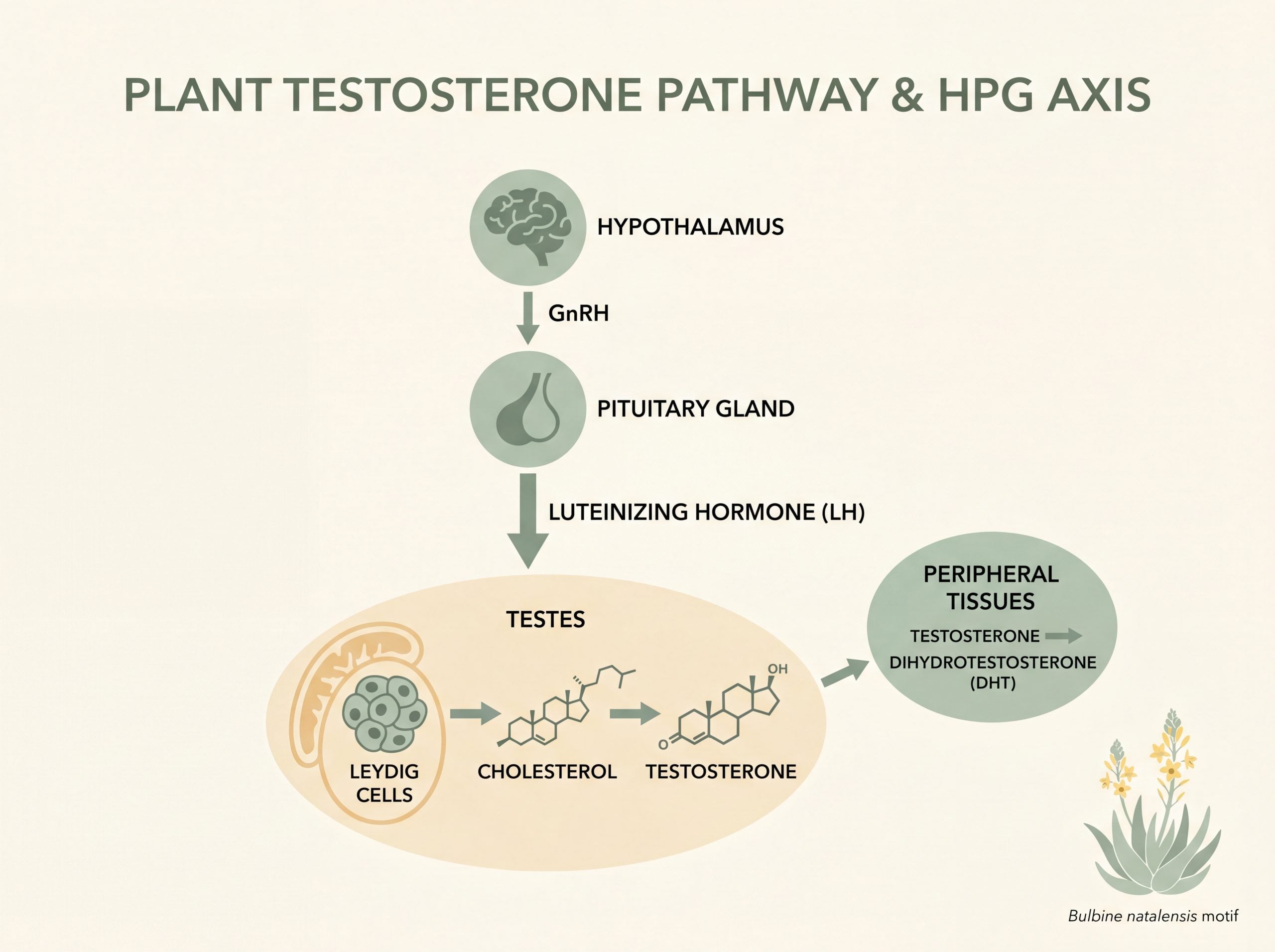
- Stimulation of Luteinizing Hormone (LH): It’s believed that certain compounds in Bulbine natalensis, particularly saponins, may stimulate the pituitary gland to release luteinizing hormone (LH). LH, in turn, travels to the testes and signals Leydig cells to produce testosterone.
- Influence on Follicle-Stimulating Hormone (FSH): Some research suggests that Bulbine natalensis may also affect follicle-stimulating hormone (FSH), which plays a role in sperm production.
- Decrease Estrogen: Studies have also found that compounds within Bulbine natalensis have also decreased estrogen levels.
- Active Compounds: Besides saponins, other potentially active compounds in Bulbine natalensis include anthraquinones, tannins, cardiac glycosides, and alkaloids. Their specific roles in hormonal modulation are still being investigated.
The leading hypothesis centers on the hypothalamic-pituitary-gonadal (HPG) axis. In the rat data, the rise in serum testosterone tracked with a rise in luteinizing hormone (Yakubu & Afolayan, 2009, PMID: 18710410). Luteinizing hormone is the pituitary signal that tells the Leydig cells of the testes to carry out steroidogenesis, the multi-step conversion of cholesterol into testosterone. A plant compound that nudges luteinizing hormone upward could, in principle, raise downstream testosterone without the body sensing the externally added hormone it would detect from synthetic testosterone.
Researchers have credited the plant’s saponin, alkaloid, and anthraquinone constituents as the likely active fraction. Some of the circulating testosterone is also converted peripherally to dihydrotestosterone (DHT), the more potent androgen tied to libido and other male characteristics, which may help explain the behavioural changes seen in the animal models. We want to be clear that this pathway is a proposed mechanism observed in rodents, and the human steroidogenic response to Bulbine natalensis has not been mapped.
The Limitations of Current Research: Animal Studies vs. Human Evidence
It is crucial to understand that the vast majority of evidence supporting the testosterone-boosting effects of Bulbine natalensis comes from animal studies. There is a significant lack of robust, large-scale human clinical trials.
Key Considerations:
- Extrapolation Caution: Results from animal studies cannot be directly applied to humans. Differences in metabolism, body composition, dosage requirements, and other factors must be considered.
- Need for Human Trials: Further research, specifically well-designed human clinical trials, is urgently needed to confirm these effects and establish safe and effective dosage guidelines for human use.
- Anabolic and Androgenic Properties: Studies in rats have demonstrated both anabolic and androgenic effects, meaning it may promote muscle growth and enhance male characteristics. However, these effects need to be confirmed in humans.
Potential Benefits of Bulbine Natalensis
Bulbine Natalensis has been traditionally used for its various health benefits, which go beyond its impact on hormones.
Improved Sexual Function and Arousal
As an aphrodisiac and potential testosterone booster, Bulbine Natalensis may enhance sexual behavior. This property makes it a subject of interest for those wanting to explore natural solutions to sexual health concerns and increase their libido.
Wound Healing and Haematological Profile
Historically, Bulbine Natalensis has been used for wound healing, owing to its beneficial properties on skin health. Studies suggest potential benefits to the hematological profile, improving overall health. The mechanism behind its wound-healing properties appears to involve:
- Increased collagen production.
- Faster wound contraction.
- Increased tensile strength of healed tissue.
Metabolic Health and Diabetes Management
Bulbine Natalensis may also be beneficial for metabolic health, potentially aiding in the management of diabetes. While the scientific evidence in this domain is still emerging, early indicators from animal studies are promising.
Dosage, Cycling, and Safety Considerations for Bulbine Natalensis
As with all supplements, the dosage of Bulbine Natalensis may vary based on individual needs and health conditions. A definitive, universally safe maximum starting dosage has not yet been established for humans.
Dosage Information from Animal Studies
Animal studies have used dosages ranging from 25 mg/kg to 50 mg/kg of body weight. It is essential to reiterate that these are animal dosages and cannot be directly translated into human use. Converting animal doses to human equivalent doses (HED) is a complex process.
The Importance of Cycling
Cycling Bulbine natalensis is considered crucial to minimize potential side effects, particularly on the liver and kidneys. Cycling involves taking the supplement for a specific period, followed by a break.
Common Cycling Protocols:
- 8 weeks on, 4 weeks off
- 2 weeks on, 1 week off
- 5 days on, 2 days off
Starting Low and Monitoring
It is always recommended to start with the lowest possible dose of Bulbine natalensis and gradually increase it only if needed and well-tolerated, under the strict guidance of a healthcare provider.
How Long Until You Notice Effects? A Realistic Timeline
There is no established human timeline for Bulbine natalensis, and any source promising results by a fixed day is overstating what the evidence supports. The most useful reference point is the animal research: the testosterone and behavioural changes reported by Yakubu and Afolayan were measured across short dosing windows of roughly one to two weeks in rats (PMID: 18710410). Rodent metabolism does not translate directly to humans, so that window is context, not a promise.
In our editorial view, the practical takeaway is patience paired with the cycling approach described above. Give any single cycle several weeks before judging it, track how you feel rather than chasing a number, and treat the absence of human trial data as a reason to start low and keep expectations modest. Anyone considering Bulbine for a specific concern should set that timeline with a healthcare provider.
Can You Combine Bulbine Natalensis With Other Herbs?
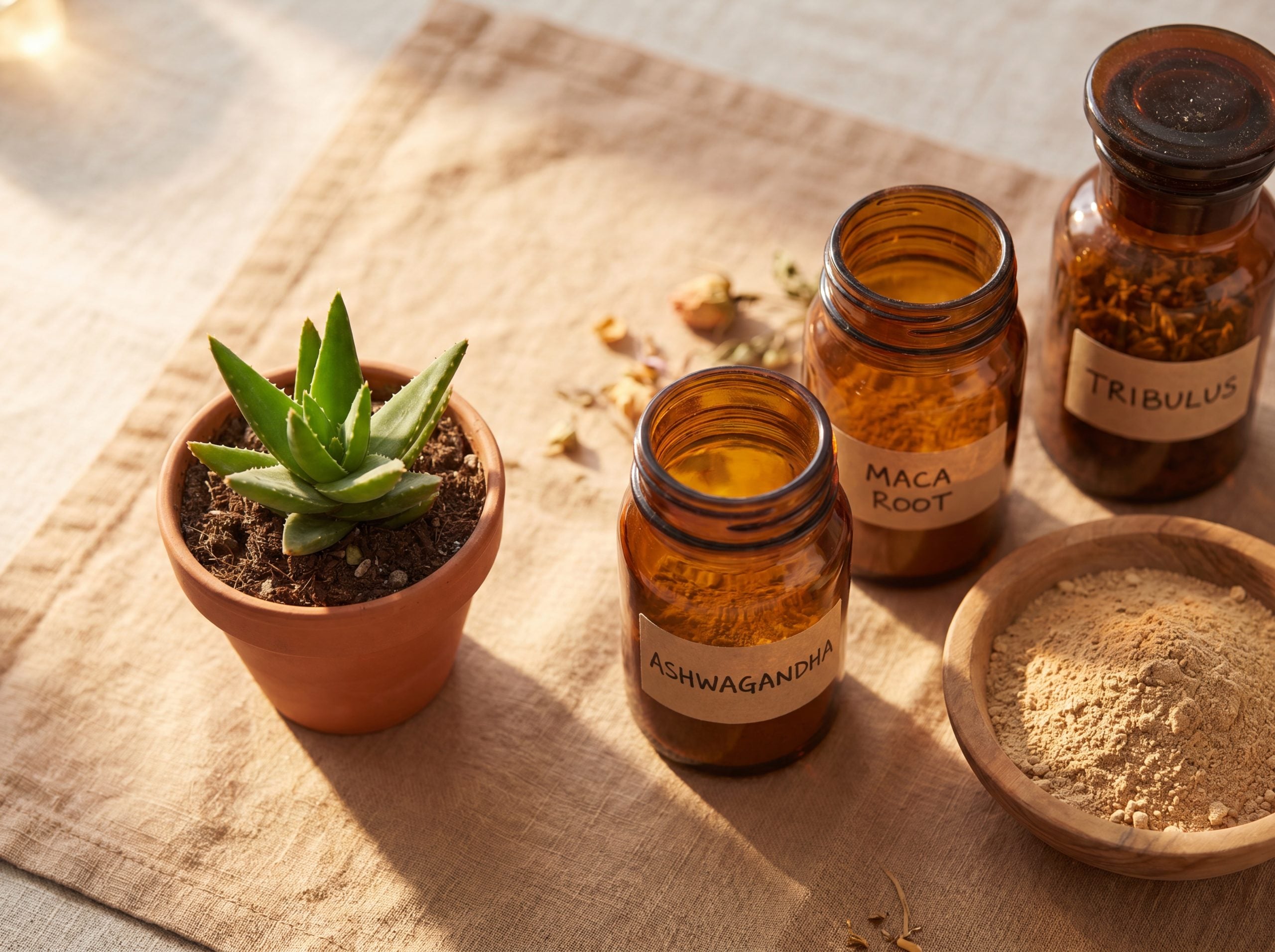
A common question is whether Bulbine natalensis is better used on its own or stacked with other men’s-wellness botanicals. The honest answer is that no human combination trials exist for Bulbine, so any pairing is based on traditional practice and individual experimentation rather than proven additive effects. With that caveat, men interested in the broader category often look at it alongside herbs studied in the same space.
- Fadogia agrestis – another traditionally used African botanical associated in animal research with luteinizing hormone activity, sometimes paired with Bulbine by users exploring the testosterone-support category.
- Tongkat Ali (Eurycoma longifolia) – a Southeast Asian root traditionally associated with male vitality and stress-related hormone balance.
- Zinc – an essential mineral and a cofactor in normal testosterone production, often used to cover a common dietary gap rather than as a stimulant.
If you do combine herbs, the cycling and start-low principles matter even more, because stacking makes it harder to tell which input is doing what and harder to spot a reaction early. From our sourcing experience, single-herb quality is the foundation of any sensible stack. For readers who want to start with a clean, traceable single-ingredient option, our Bulbine natalensis extract is the same species discussed throughout this article. Talk with a healthcare provider before combining supplements, especially if you take medication or have a medical condition.
Potential Side Effects, Interactions, and Contraindications
Like any other supplement, it’s crucial to understand the potential side effects and safety profile of Bulbine Natalensis.
Potential Side Effects
- Liver and Kidney Concerns: Some studies, primarily in animals, have shown potential adverse effects on the liver and kidneys, including elevated liver enzymes (ALT, AST, GGT, ALP) and histological changes.
- Gastrointestinal Issues: Mild gastrointestinal discomfort (e.g., upset stomach) may occur.
- Headaches: Some individuals may experience headaches.
- Mood Changes: Changes in mood or irritability have been reported.
- Allergic Reactions: Although rare, allergic reactions are possible.
Potential Drug Interactions
Bulbine natalensis may interact with certain medications:
- Anticoagulants/Antiplatelets: It may slow blood clotting, increasing the risk of bleeding when taken with these medications.
- Medications Metabolized by the Liver (CYP450 Substrates): Bulbine natalensis might affect how the liver processes certain drugs, potentially altering their levels in the body. Specifically, it may interact with medications changed by Cytochrome P450 1A2 (CYP1A2) substrates, Cytochrome P450 2C9 (CYP2C9) substrates, and those moved by pumps in cells (P-glycoprotein substrates).
- Digoxin: Caution is advised when using concurrently with Digoxin.
- Testosterone: Caution is advised. It may interact with testosterone replacement therapy.
Contraindications
Bulbine natalensis should be avoided in the following situations:
- Pregnancy and Breastfeeding: Due to potential risks, it should not be used during pregnancy or breastfeeding.
- Surgery: Discontinue use at least two weeks before any scheduled surgery due to its potential to slow blood clotting.
- Pre-existing Liver or Kidney Conditions: Individuals with liver or kidney problems should avoid Bulbine natalensis due to the potential for adverse effects on these organs.
Disclaimer: These statements have not been evaluated by the Food and Drug Administration. This product is not intended to diagnose, treat, cure, or prevent any disease. This article is for informational purposes only and is not a substitute for professional medical advice. Consult your healthcare provider before use, especially if you are pregnant, nursing, taking medication, or have a medical condition.