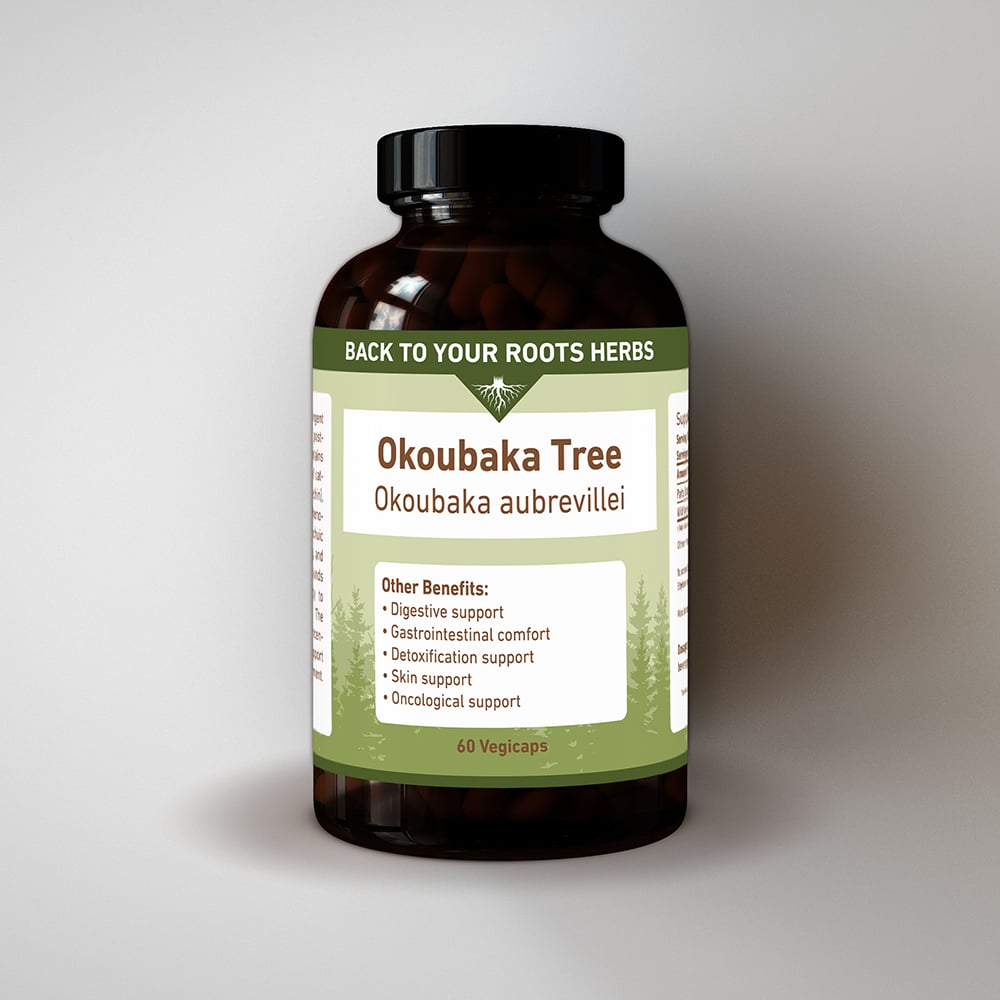
Okoubaka Aubrevillei Capsules: The Rare West African Botanical for Digestive Comfort
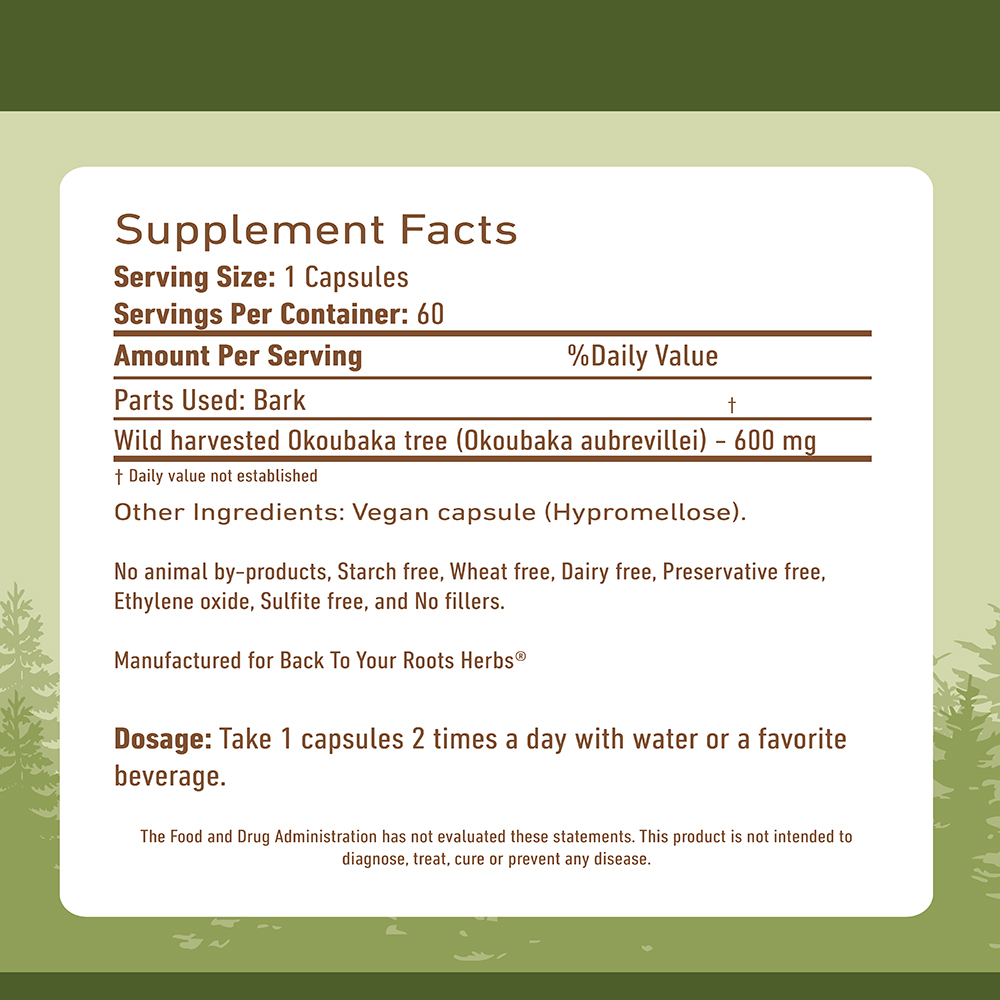
Okoubaka capsules deliver 100% whole powder from the rare West African tree Okoubaka aubrevillei, processed as full-spectrum herbal capsules without extraction or concentration. Each capsule contains 550-600mg of this traditionally valued botanical remedy. Back To Your Roots Herbs sources premium okoubaka bark from Ghana’s Ashanti Region (6.5 N, 1.5 W), then carefully prepares and capsulates the powder using only vegetable cellulose.
Okoubaka Quality Verdict
Grade A. Okoubaka capsules earn top marks for their pharmaceutical-grade preparation, exceptionally high tannin concentration (1,741.82 mg/100g confirmed by third-party batch analysis), transparent sourcing from one of West Africa’s rarest medicinal trees, and third-party heavy metal testing. The Ashanti Region terroir produces bark with one of the highest documented tannin profiles among botanical remedies. The only mark against it is the assertive bitter taste profile, which some customers prefer to minimize by taking capsules with full meals rather than with water alone.
– Back To Your Roots Herbs Research Group
SENSORY ANALYSIS:
We physically handle every batch during preparation. Here’s what you’re actually receiving:
Look: Fine tan-to-brown powder, consistent with traditionally dried okoubaka bark. The powder reveals subtle color variation, indicating minimal processing and preservation of whole-plant constituents.
Smell: Distinctly woody and earthy, with undertones characteristic of aged botanical bark. The aroma is subtle but unmistakable to those familiar with West African herbal remedies.
Taste: Assertively bitter and astringent, as expected from a tannin-rich botanical (1,741.82 mg per 100g). This bitter profile reflects the active catechins, tannins, and polyphenolic compounds responsible for okoubaka’s traditional use in West African herbalism.
HOW DO OKOUBAKA CAPSULES WORK?
The Herb: Okoubaka aubrevillei is sourced from Ghana’s Ashanti Region (6.5 N, 1.5 W). A rare, hemiparasitic tree from West Africa’s Santalaceae family. It is the largest known parasitic plant species, and conservation surveys estimate only 100-2,500 mature trees exist globally. West African traditional healers valued okoubaka bark as a digestive support tool for centuries.
The Mechanism: Acts as a tannin-rich botanical astringent to trigger digestive comfort and post-meal wellness. Okoubaka bark contains exceptionally high concentrations of catechins ((+)-Catechin and (-)-Epicatechin), EGCG (Epigallocatechin gallate), phenolic acids (Gallic acid and Protocatechuic acid), tannins at 1,741.82 mg/100g, and saponins at 33.80%. These compounds support the body’s natural ability to maintain gastrointestinal comfort. The high tannin content and saponin concentration work together to support traditional use as a digestive supplement.
The Evidence: A peer-reviewed 2021 study, In vitro evaluation of the anti-pathogenic activity of Okoubaka aubrevillei on the human gastrointestinal tract (PMID 33979845, DOI 10.1055/a-1404-3344), used the SHIME human gut-simulator model and reported that okoubaka mother tincture reduced ETEC by 2.0 log-units and Salmonella by 1.1 log-units in vitro, while increasing butyrate production. Back To Your Roots Herbs further confirms the bark’s catechin and tannin concentrations through third-party batch analysis, consistent with the polyphenol-rich profile documented for Okoubaka aubrevillei bark.
Traditional West African Context
Traditional healers throughout West Africa valued okoubaka bark as a digestive support tool, particularly among those facing dietary challenges. The botanical remedy held such cultural significance that West African diplomatic chiefs would consume okoubaka bark before extended meetings and negotiations, reflecting confidence in its digestive comfort benefits. This rare tree exists primarily in West Africa’s remaining tropical forests, with fewer than 2,500 mature specimens estimated globally.
Full-Spectrum Preparation
The full-spectrum preparation preserves okoubaka’s complete profile of catechins, tannins, saponins, and phenolic acids. This whole-plant approach honors traditional herbalism while meeting modern supplement manufacturing standards. The 1,741.82 mg/100g tannin concentration gives okoubaka disproportionate potency compared to many common herbal remedies. Back To Your Roots Herbs partners with suppliers committed to sustainable harvesting practices from Ghana’s Ashanti Region.
CRITICAL USAGE:
Recommended Dosage:
Take 1-2 okoubaka capsules daily with meals. For best results, space dosing throughout the day (one with lunch, one with dinner) rather than taking both at once. The food-based timing supports optimal absorption of the catechins, tannins, and saponins.
Who Benefits Most:
Okoubaka herbal capsules are ideal for individuals seeking traditional West African botanical support for digestive wellness, particularly those interested in whole-plant, full-spectrum supplements rather than extracts or concentrates.
Okoubaka Side Effects & Tolerability
Are there side effects from okoubaka? Whole-bark okoubaka is generally well-tolerated by healthy adults at the suggested serving. The most common feedback is simply the assertively bitter, astringent taste of the raw bark, which is normal for a tannin-rich botanical and softens when capsules are taken with a full meal. Because okoubaka bark is exceptionally tannin-rich (1,741.82 mg/100g), tannins can bind non-heme iron and reduce the absorption of some minerals and medications taken at the same time. Space okoubaka capsules at least 1-2 hours apart from iron supplements or prescription medications. For general background on non-heme iron and the dietary factors that affect its absorption, the U.S. National Institutes of Health Office of Dietary Supplements (NIH ODS) is a reliable resource. The cautions below still apply.
- Medications: Because of okoubaka’s tannin-rich profile, individuals taking certain medications should consult a healthcare provider before use. Tannins may interact with iron absorption and certain pharmaceuticals.
- Pregnancy & Nursing: If you are pregnant, nursing, or taking prescription medications, speak with your healthcare practitioner before beginning this supplement.
- Tannin Sensitivity: Those with tannin sensitivity should start with a single capsule taken with food.
Storage:
Keep okoubaka capsules in a cool, dry place away from direct sunlight. The vegetable cellulose capsules maintain their integrity for 2-3 years when stored properly.
CLINICAL SPECS:
| Spec | Detail |
|---|---|
| Serving Size | 1 Capsule (550-600mg whole powder) |
| Frequency | 1-2 capsules daily with meals |
| Active Marker | Catechins & Tannins (1,741.82 mg/100g), Saponins (33.80%) |
| Processing | Full Spectrum Whole Powder (No Extraction, No Concentration) |
| Safety | Heavy Metal Tested (Pass) |
| Ingredients | Okoubaka aubrevillei bark powder (100% pure) |
| Other Ingredients | Vegetable Cellulose (Capsule) |
| Purity | Organic, Non-GMO, Vegan |
| Free From | Wheat, Gluten, Soy, Dairy, Binders, Fillers |
| Origin | Ashanti Region, Ghana, West Africa (6.5 N, 1.5 W) |
| Manufactured | Virginia Beach, VA, USA |
COMPARISON TABLE:
| Feature | BTYRH Okoubaka Capsules | Generic Okoubaka Supplements |
|---|---|---|
| Origin | Ashanti Region, Ghana (6.5 N, 1.5 W) | Unspecified or generic “West Africa.” |
| Preparation | Full-Spectrum Whole Powder, 550-600mg per capsule | Often extracted/concentrated, 300-400 mg per capsule |
| Taste | Assertively bitter/astringent (confirms genuine high-tannin bark) | Mild or tasteless (may indicate dilution or extraction) |
| Safety | Heavy Metal Tested (Pass), Organic, Non-GMO, vegan-certified | Unknown/Untested, certifications vary |
Okoubaka vs Other Digestive & Cleanse Botanicals
How does okoubaka compare to other natural remedies in the cleanse and digestive category? Each botanical keeps its own traditional lane. Activated charcoal is traditionally used to bind and carry substances through the gut. Ginger root (Zingiber officinale) is traditionally used to support post-meal comfort and settle the stomach. Slippery elm (Ulmus rubra) is a demulcent traditionally used to coat and soothe the digestive lining. Triphala, the Ayurvedic three-fruit blend, is traditionally used for gentle regularity. Okoubaka aubrevillei sits apart as a rare West African hemiparasitic tree bark, set off by its exceptionally high tannin and catechin density and its centuries-long use among West African healers for digestive comfort and post-meal wellness. Many people rotate or combine these botanicals rather than relying on a single one. Okoubaka’s signature is its provenance, its whole-bark full-spectrum form, and its astringent tannin profile.
Frequently Asked Questions About Okoubaka Capsules
What is the difference between okoubaka capsules and an okoubaka tincture?
Okoubaka capsules contain the whole, dried bark powder in convenient capsule form, preserving the full-spectrum botanical profile. Tinctures are alcohol-extracted concentrations that may isolate certain compounds while losing others. Our whole-powder approach maintains okoubaka’s complete botanical identity, including tannins, saponins, catechins, and phenolic acids in their natural ratios.
How long does it take an okoubaka supplement to show benefits?
Individual responses to herbal remedies vary. Some people report noticing digestive comfort improvements within a few days of consistent use, while others benefit from several weeks of regular okoubaka dosage. The traditional West African approach involved daily use over weeks to months. We recommend a consistent 30-day trial with 1-2 capsules daily before evaluating effectiveness.
Are these real okoubaka capsules or a substitute?
These are 100% pure okoubaka (Okoubaka aubrevillei) bark powder from Ghana’s Ashanti Region. No substitutes, fillers, or adulterations. Each batch is tested for heavy metals and verified for botanical authenticity. The rare, bitter, astringent taste confirms you’re receiving genuine okoubaka, not a diluted or artificial alternative.
Can I take okoubaka capsules with other herbal supplements?
Okoubaka’s tannin content may reduce the absorption of certain nutrients and supplements if taken simultaneously. We recommend spacing okoubaka capsules at least 1-2 hours apart from iron supplements, vitamin supplements, or other botanical remedies. When in doubt, consult your healthcare provider about combining dietary supplements. Taking okoubaka with meals (as recommended) rather than on an empty stomach naturally creates spacing from other supplement use.
Quality Assurance & Transparency Standards
Every bottle of Back To Your Roots Herbs okoubaka capsules undergoes rigorous testing. Heavy Metal Testing (Pass) ensures safety for long-term use. Organic Certification guarantees no synthetic pesticides. Non-GMO Verification confirms botanical integrity. Vegan Certification confirms vegetable cellulose capsules. Third-party verification supports all label claims. We believe transparency builds trust. If you want detailed testing reports, certificates of analysis, or sourcing documentation, contact our customer service team.
DISCLAIMER:
These statements have not been evaluated by the Food and Drug Administration. This product is not intended to diagnose, treat, cure, or prevent any disease. Always consult with a qualified healthcare practitioner before beginning any new supplement regimen, particularly if you are pregnant, nursing, taking prescription medications, or have existing health conditions. Individual results may vary.
Reviewed by the Back To Your Roots Herbs Editorial Team. Last Reviewed: June 2026.
Reviews
There are no reviews yet.