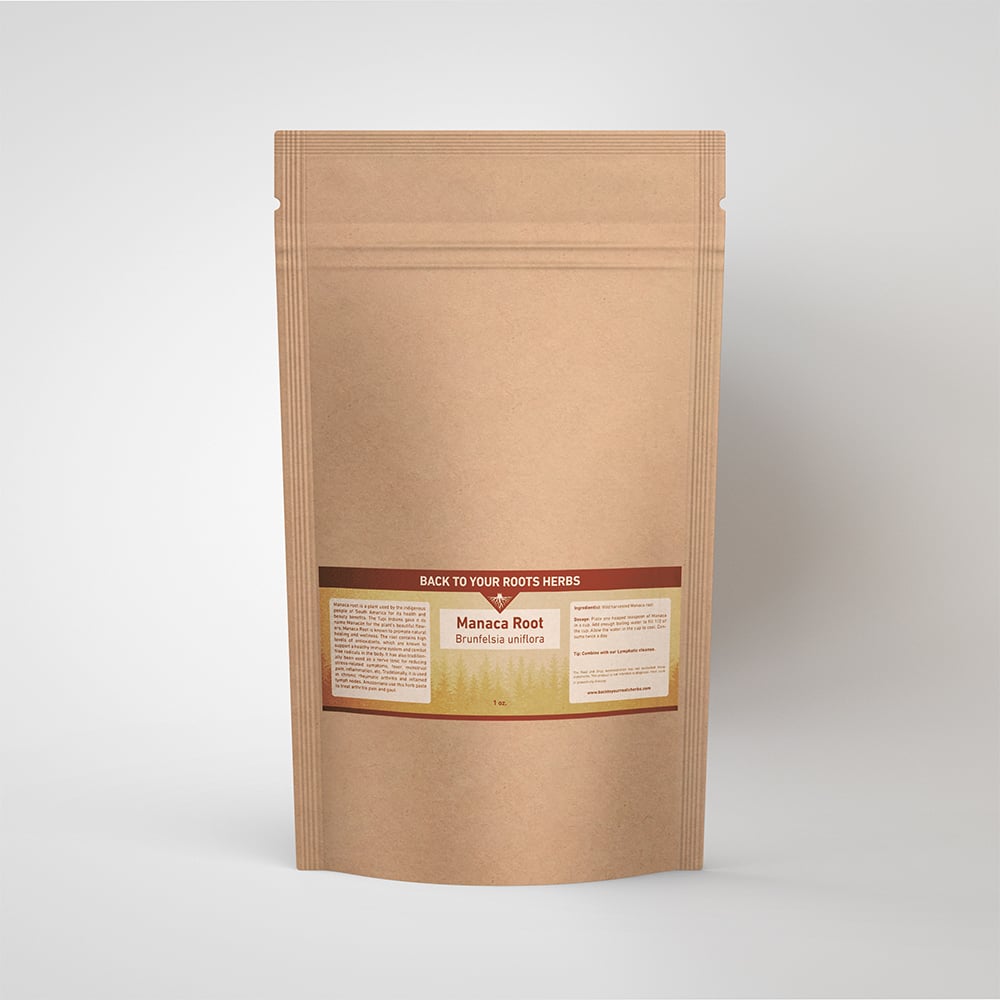
Grade A “Lymphatic Mover.” Our analysis confirms this is authentic Brunfelsia uniflora root, wild-harvested in the Brazilian Amazon. Unlike mild teas, Manaca is a heavy-hitting Depurative (Blood Cleanser) rich in Scopoletin. It is traditionally used to move stagnant fluid out of the joints and the lymphatic system.
– Back To Your Roots Herbs Editorial Team
SENSORY ANALYSIS: The Physical Profile
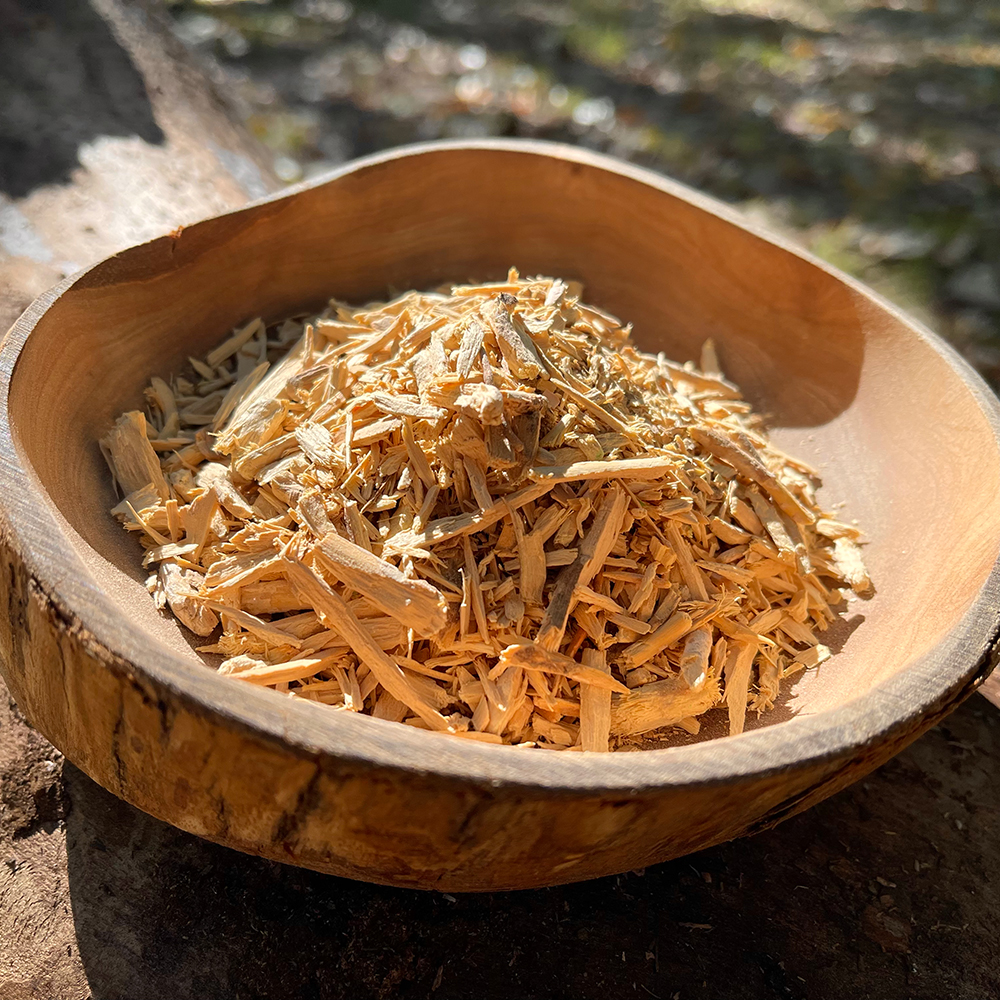
We analyzed the raw root cut to verify the species.
- The Look: Coarse, fibrous woody chips (Cut and Sifted). Color ranges from light tan to yellowish-brown.
- The Aroma: A distinct earthy and woody scent, similar to dried bark or ginseng.
- The Taste: When brewed, the tea is bitter and acrid. This bitterness is the hallmark of the active alkaloids (Manacine) and coumarins (Scopoletin).
How does Manaca Root support Joint Comfort?
Research points to the coumarin Scopoletin as the root’s marker compound.
- The Herb: Manaca (Brunfelsia uniflora), known in Brazil as “Manacá.”
- The Compound: Scopoletin, a naturally occurring coumarin.
- The Mechanism: Scopoletin has been observed to modulate inflammatory signaling, which traditional herbalists associate with easing the sensation of heat and stiffness in stagnant joints.
- The Evidence: A phytochemical study of Brunfelsia uniflora root by Weimer and colleagues (2021) identified scopoletin as the marker compound and recorded an 89.1% reduction in edema in an animal model (PMID 32998575).
Traditionally used to support comfort in rheumatic conditions where joints feel swollen or stagnant.
Traditional Use for Fevers, Chills, and Seasonal Wellness
Amazonian and Eclectic herbal traditions reached for Manaca beyond the joints.
- Diaphoretic: A root decoction was traditionally taken to promote sweating during fevers and chills.
- Seasonal Support: The same decoction appears in historical recipes for colds and seasonal congestion.
- Context: These are traditional folk uses, recorded in botanical references such as theFerns Useful Tropical Plants database and the Rain-Tree Tropical Plant Database.
Why is it called “Vegetable Mercury”?
A history of potent purification.
In the 1800s this root was named Mercurio Vegetal because it was considered as effective as mercury (the standard remedy of that era) for “cleansing the blood” of deep-seated impurities, yet it came from a plant source.
- Lymphatic Support: Traditionally used to stimulate the lymphatic system, helping to reduce water retention (edema), clear excess uric acid, and filter metabolic waste.
Manaca Is Not Maca (Read Before You Buy)
These two herbs sound alike and are constantly confused. They are not the same plant.
- Manaca: Brunfelsia uniflora. Family: Solanaceae (Nightshade). An Amazonian depurative root used for joint and lymphatic support. Potent, and it requires careful dosing.
- Maca: Lepidium meyenii. Family Brassicaceae. An Andean food-grade tuber used for energy and stamina. Gentle.
- Sister species: Manaca is also distinct from Brunfelsia grandiflora (the Peruvian “chiric sanango”) and from the ornamental Brunfelsia shrubs sold as “Yesterday-Today-and-Tomorrow.” This product is true Brunfelsia uniflora (syn. Franciscea uniflora, Brunfelsia hopeana).
CRITICAL USAGE: Brewing and Safety
Manaca is a potent Nightshade relative. Respect the dose.
- Preparation (Decoction): Do not just steep. Simmer 1 teaspoon of root in 2 cups of water for 10 to 15 minutes. Strain well.
- Dosage: Drink 1 cup daily. Maximum 2 cups for short-term acute use.
- Cycle: Use for 1 to 2 weeks, then take a break.
- Signs you have exceeded the traditional dose: Stop use and consult your healthcare provider if you notice excessive salivation, dizziness or vertigo, a swollen or tingling tongue, blurred vision, profuse sweating, facial numbness or limpness, or loose green-tinged stool. These are recognized signs of taking too much of this root.
Who should NOT take Manaca Root?
Strict contraindications apply.
- Pregnancy and Nursing: Absolutely not. Manaca is a traditional abortifacient, and it stimulates the uterus.
- Blood Thinners: Contains coumarins. Do not combine with Warfarin, Aspirin, or other anticoagulants.
- Aspirin or Salicylate Sensitivity: The root contains natural salicylates. Avoid it if you are aspirin-sensitive.
- MAOI Antidepressants and Sedatives: Scopoletin has shown MAO-inhibiting activity. Avoid combining Manaca with MAOI antidepressants, sedatives, or anti-anxiety medication.
- Always: Speak with your healthcare provider before use, especially if you take prescription medication or have a medical condition.
CLINICAL SPECS and ORIGIN
Wild-harvested from the Brazilian Amazon.
| Specification | Detail |
|---|---|
| Botanical Name | Brunfelsia uniflora (syn. Franciscea uniflora, Brunfelsia hopeana) |
| Plant Part | Root, Cut and Sifted |
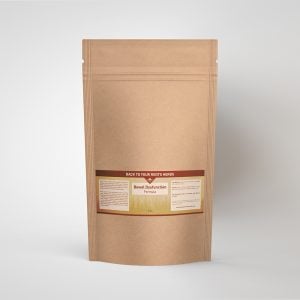
| Net Weight | 1 oz |
| Format | For Tea / Decoction |
| Key Compounds | Scopoletin, Manacine, Coumarins, Salicylates |
| Marker Compound | Scopoletin |
| Primary Action | Lymphatic Depurative (Cleanser) |
| Taste Profile | Bitter / Acrid |
| Botanical Family | Solanaceae (Nightshade) |
| Origin | Brazil (Amazon Basin, Amazonas) |
| Manufactured | Virginia Beach, VA, USA |
COMPARISON: Manaca vs. Cat’s Claw
| Feature | Manaca Root (Brunfelsia) | Cat’s Claw (Uncaria) |
|---|---|---|
| Primary Target | Lymphatic / Fluid Stagnation | Immune / Viral Defense |
| Mechanism | Depurative (Cleansing) | Immunomodulator (Boosting) |
| Best Use Case | Swollen Joints / Edema | Chronic Inflammation |
| Safety | High Caution (Nightshade) | Moderate Caution |
| Action Speed | Fast (Diuretic effect) | Slow (Cumulative) |
References and Further Reading
- Weimer P, Spies LM, Haubert R, et al. Anti-inflammatory activity of Brunfelsia uniflora root extract: phytochemical characterization. Nat Prod Res. 2021. Vol 35(24):6122-6128. PubMed PMID 32998575.
- Antimicrobial activity and chemical composition of Brunfelsia uniflora flower oleoresin. PubMed PMID 28407186.
- Mateos R, Ramos-Cevallos N, et al. Phenolic fraction of Brunfelsia grandiflora (sister species), in-vitro antioxidant capacity. PMC9572177.
- Grieve M. “Manaca.” A Modern Herbal. botanical.com.
DISCLAIMER
These statements have not been evaluated by the Food and Drug Administration. This product is not intended to diagnose, treat, cure, or prevent any disease. Consult your healthcare provider before use, especially if you are pregnant, nursing, taking medication, or have a medical condition.
Written by the Back To Your Roots Herbs Editorial Team. Last Reviewed: June 2026. Fact-checked against peer-reviewed and ethnobotanical sources.
Reviews
There are no reviews yet.