THE VERDICT (INTERNAL QUALITY SCORE):
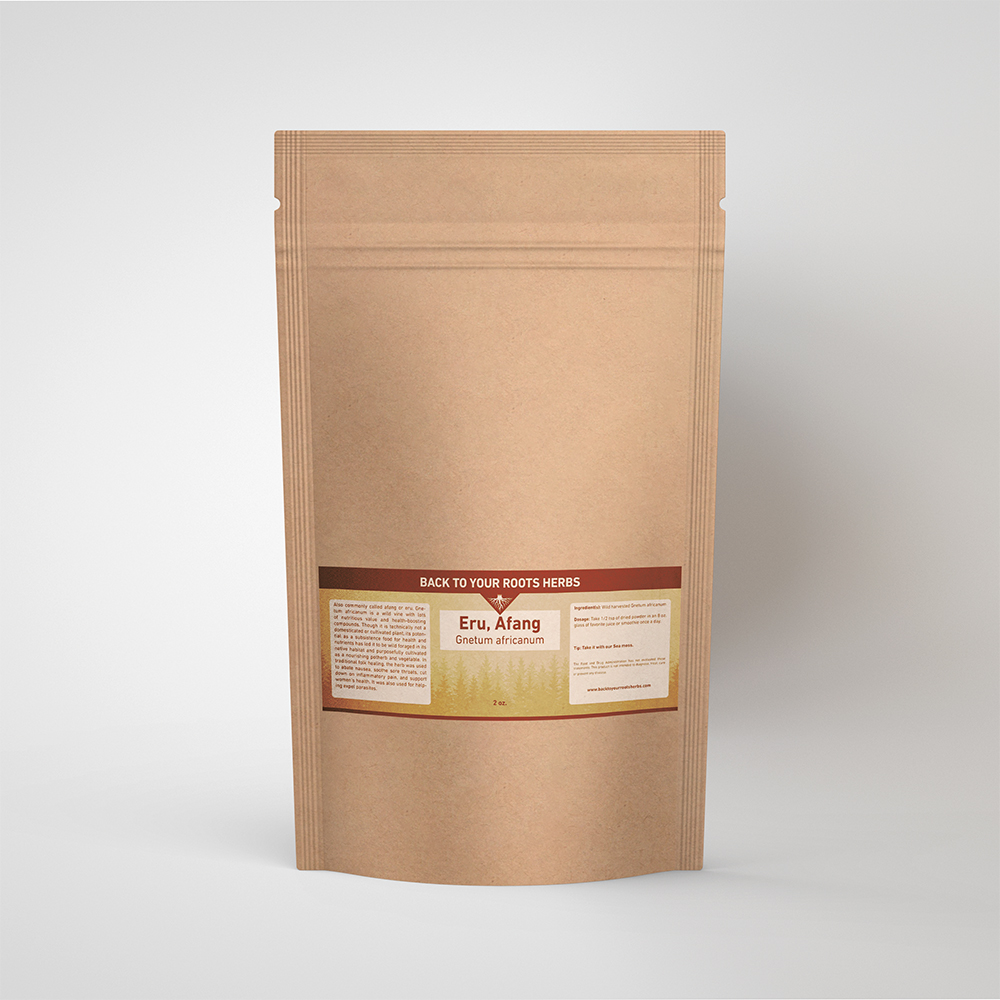
Grade A (Wild-Harvested). Sourced directly from the humid tropical rainforest belt of Ikom, Cross River State (5°57′40″N). This specimen retains the dense fibrous integrity characteristic of wild vines, unlike the diluted profile of farm-monocultured alternatives. High retention of essential amino acids.
– Back To Your Roots Herbs Research Group
SENSORY ANALYSIS:
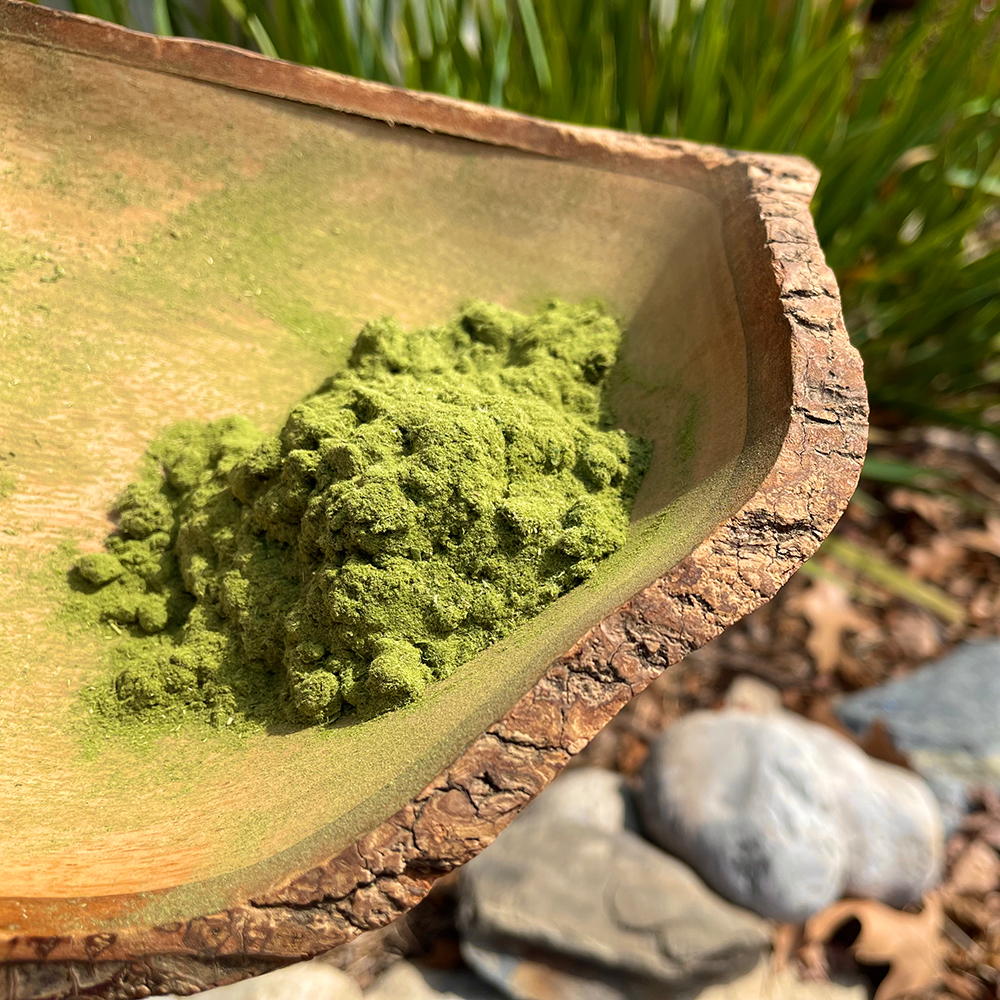
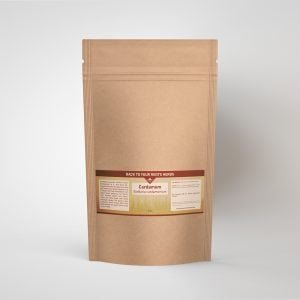
Upon unsealing the pouch, we detected a heavy, vegetal aroma reminiscent of damp forest floor and dried kale. The powder is a deep, mossy green.
- Look: Fine, dense powder with visible fibrous micro-particles. Dark olive hue.
- Smell: Deeply earthy, slightly smoky, with notes of dried tea leaves.
- Taste: The raw powder presents an immediate, robust bitterness that transitions into a savory, umami-like finish. It does not dissolve instantly; it swells, indicating high insoluble fiber content.
HOW DOES GNETUM AFRICANUM WORK?
- The Herb: Gnetum africanum (African Jointfir) is harvested from the Cross River Basin.
- The Mechanism: Contains unique Stilbenes (resveratrol derivatives) that act as potent free radical scavengers. The high concentration of essential amino acids supports protein synthesis and tissue repair.
- The Evidence: Research by Ali et al. (2011) confirmed the plant’s status as a critical source of minerals and proteins for combating malnutrition in Central Africa.
CRITICAL USAGE:
Dosage: Add 1-2 tablespoons to soups or stews during the final 10 minutes of cooking.
Contraindications: Contains Oxalates. Individuals with a history of calcium-oxalate kidney stones should consume in moderation or ensure proper hydration. Not intended for raw consumption; heat activation is recommended to soften fibers.
CLINICAL SPECS:
| Spec | Detail |
|---|---|
| Serving Size | 1 Tablespoon (approx. 5g) |
| Active Compounds | Stilbenes, Glycosylflavones, Cysteine |
| Origin | Ikom, Nigeria (Wild-Harvested) |
| Processing | Sun-dried, Micro-milled |
| Safety | Heavy Metal Tested, Non-GMO |
COMPARISON TABLE:
| Feature | BTYRH Gnetum Africanum | Generic “Okazi” Powder |
|---|---|---|
| Source | Wild Rainforest Vine | Farmed Monoculture |
| Fiber Content | High (Whole Leaf) | Low (Stalk Fillers) |
| Flavor Profile | Robust & Bitter | Bland/Grassy |
| Additives | None | Maltodextrin/Flow Agents |
What Is Gnetum Africanum? (Okazi, Eru, and Afang Leaf)
Gnetum africanum is a wild forest vine native to the rainforests of Central and West Africa. Botanists classify it as a gymnosperm, which makes this leafy green a distant relative of pine and conifer trees rather than a typical flowering vegetable. The common name shifts by region. Nigerians know it as okazi or ukazi. The Efik and Ibibio call it afang. Across the Congo Basin, it is fumbwa or koko. English speakers call it eru or African jointfir.
Our leaf comes from the Cross River rainforest belt around Ikom. Harvesters cut the mature vines by hand. We then sun-dry and micro-mill the whole leaf into powder. One plant, many names, single origin.
Nutritional Profile of Gnetum Africanum Powder
The okazi leaf earns its reputation through density, not marketing. Laboratory analysis of Gnetum africanum leaves reports roughly 16.6% protein, 7.3% fat, and 18% total carbohydrates, delivering about 204 kcal per 100 g (Nutritional Quality of Gnetum africanum Welw Leaves, HAL, 2024). For a leafy green, that protein figure is unusually high.
The powder carries essential amino acids, including cysteine, alongside minerals that earlier work flagged as nutritionally significant (Ali et al., 2011). Two plant-compound families stand out. Stilbenes, the same chemical class as resveratrol, act as free radical scavengers. Glycosylflavones add further antioxidant capacity. Whole-leaf insoluble fiber rounds out the profile.
| Nutrient (per 100 g leaf) | Reported Value |
|---|---|
| Protein | ~16.6% |
| Fat | ~7.3% |
| Total Carbohydrates | ~18% |
| Energy | ~204 kcal |
| Key Compounds | Stilbenes, Glycosylflavones, Cysteine |
Health Benefits of Gnetum Africanum (Okazi/Eru)
Traditional cooks reach for okazi as a nourishing green, and its chemistry explains the appeal. The stilbene and glycosylflavone content supports the body’s antioxidant defense against free radicals. Plant protein and essential amino acids support tissue maintenance and everyday repair. Insoluble fiber supports digestive regularity and a feeling of fullness. These are the structure and function roles of a nutrient-dense food, not a substitute for a varied diet.
Traditional and Culinary Uses: Afang Soup and Eru Soup
Okazi powder is a kitchen staple long before it is a supplement. In southeastern Nigeria, the leaf builds the backbone of afang soup, often paired with waterleaf. In Cameroon and Equatorial Guinea, the same plant becomes eru, simmered with palm oil, leafy greens, and smoked fish. Across the Congo Basin it cooks down into fumbwa. Cooks stir the powder into soups and stews during the final ten minutes so the leaf softens and releases its savory, umami depth.
Authentic whole-leaf okazi powder is hard to find on a standard grocery shelf. Most jars labeled “okazi” overseas lean on farmed monoculture leaf or stalk fillers. We ship wild-harvested Ikom leaf direct, so the powder you cook with is the same green Central African families have used for generations.
Side Effects, Tolerability, and Who Should Use Caution
As a traditional leafy vegetable, Gnetum africanum is generally well tolerated when eaten as food. A few practical cautions apply. The leaf contains oxalates, so anyone with a history of calcium-oxalate kidney stones should use it in moderation and stay well hydrated. The powder is not intended for raw consumption. Heat activation during cooking softens its dense fibers and improves digestibility. As with any new food or supplement, consult your healthcare provider before use, especially if you are pregnant, nursing, or managing a medical condition.
Scientific Evidence and Authoritative Sources for Gnetum Africanum
The nutritional reputation of okazi rests on published analysis. Ali and colleagues documented the leaf as a meaningful source of minerals and protein for communities across Central Africa (Ali et al., 2011, PMID 21864089). A separate study measured the health-promoting compounds and in vitro antioxidant activity of the raw leaf and its decoctions (Ogbonnaya and Chinedum, 2013). Later compositional work quantified its macronutrient and energy profile in detail (HAL, 2024).
- Ali F, et al. (2011). Gnetum africanum: a wild food plant with nutritional and medicinal properties. J Med Food. PubMed (PMID 21864089)
- Ogbonnaya EC, Chinedum EK (2013). Health-promoting compounds and in vitro antioxidant activity of Gnetum africanum. NIH PMC
- Nutritional Quality of Gnetum africanum Welw Leaves (2024). HAL open archive
- National Center for Complementary and Integrative Health. nccih.nih.gov
Reviewed by the Back To Your Roots Herbs Editorial Team. Last Reviewed: June 2026.
DISCLAIMER:
The Food and Drug Administration has not evaluated these statements. This product is not intended to diagnose, treat, cure, or prevent any disease.
Reviews
There are no reviews yet.