For many women, menopause is a period of significant change, both physically and emotionally. The decline in estrogen levels can trigger a range of uncomfortable symptoms, including hot flashes, night sweats, mood swings, anxiety, and sleep disturbances. While hormone replacement therapy (HRT) is a common treatment option, some women seek natural alternatives to manage their symptoms.
One such alternative that has gained increasing attention is Withania somnifera, an adaptogenic herb with a long history of use in traditional Ayurvedic medicine. Withania somnifera is believed to help the body manage stress and maintain balance, which can be particularly beneficial during menopause when hormonal fluctuations can disrupt the body’s systems.
This article reviews the scientific evidence supporting Withania somnifera’s use for managing menopausal symptoms, discusses its potential benefits and drawbacks, and provides practical guidance for incorporating it into a complete wellness plan.
Understanding Menopause and Its Challenges
Menopause is officially defined as the cessation of menstruation for 12 consecutive months, marking the end of a woman’s reproductive years. This transition, typically occurring between the ages of 45 and 55, is primarily driven by a significant decline in estrogen production by the ovaries. Perimenopause, the transitional phase leading up to menopause, can last for several years and is also characterized by fluctuating hormone levels. Postmenopausal is after a woman goes through menopause.
The perimenopausal years deserve their own attention, because hormone levels swing rather than simply decline, and two of the clinical studies on ashwagandha and menopausal symptoms were run specifically in perimenopausal women (PMID: 34553463). If you are still cycling but noticing the first stress, sleep, and mood changes, our dedicated guide on ashwagandha for perimenopause covers dosing and timing for that earlier stage in more detail.
These hormonal shifts, particularly the drop in estrogen and often accompanied by an increase in follicle-stimulating hormone (FSH) and luteinizing hormone (LH), can trigger a wide array of symptoms, including:
- Hot flashes and night sweats (vasomotor symptoms)
- Sleep disturbances (insomnia, frequent awakenings)
- Mood changes (irritability, anxiety, depression)
- Cognitive difficulties (brain fog, memory problems)
- Vaginal dryness and discomfort
- Decreased libido
- Joint pain and stiffness
- Fatigue and low energy
- Weight changes
These symptoms can significantly impact a woman’s daily life, affecting her work, relationships, and overall well-being.
Ashwagandha: An Adaptogen for Menopausal Support
Withania somnifera, commonly known as ashwagandha, is classified as an adaptogen. Adaptogens are a unique class of plant-based substances that help the body resist various stressors – physical, chemical, and biological. This is particularly relevant to menopause, where chronic stress can exacerbate hormonal imbalances.
How Withania somnifera may offer relief during the menopausal transition is multifaceted:
- Hormonal Balance: Research suggests that Withania somnifera may gently influence estrogen levels. Some studies indicate it can increase estradiol (a form of estrogen) and decrease FSH and LH in menopausal women. It’s vital to understand that, unlike its effects in men, Withania somnifera does not significantly affect testosterone levels in women.
- Stress Reduction (Cortisol): Withania somnifera helps regulate the hypothalamic-pituitary-adrenal (HPA) axis, the body’s central stress response system. By lowering cortisol, which is often elevated during menopause and contributes to many symptoms, it promotes a greater sense of calm.
- Neurotransmitter Support: Withania somnifera may influence neurotransmitters like GABA (gamma-aminobutyric acid), which has calming effects and may help with anxiety and hot flashes.
- Anti-inflammatory Properties: Chronic inflammation can contribute to joint pain, a common menopausal complaint. Withania somnifera’s anti-inflammatory effects may offer some relief.
Scientific Evidence for Ashwagandha and Menopause
While traditional use and anecdotal accounts suggest Withania somnifera can be beneficial for menopausal symptoms, scientific research is ongoing. However, several studies lend support to its potential role in managing menopause-related issues.
| Study | Participants | Duration | Key findings |
|---|---|---|---|
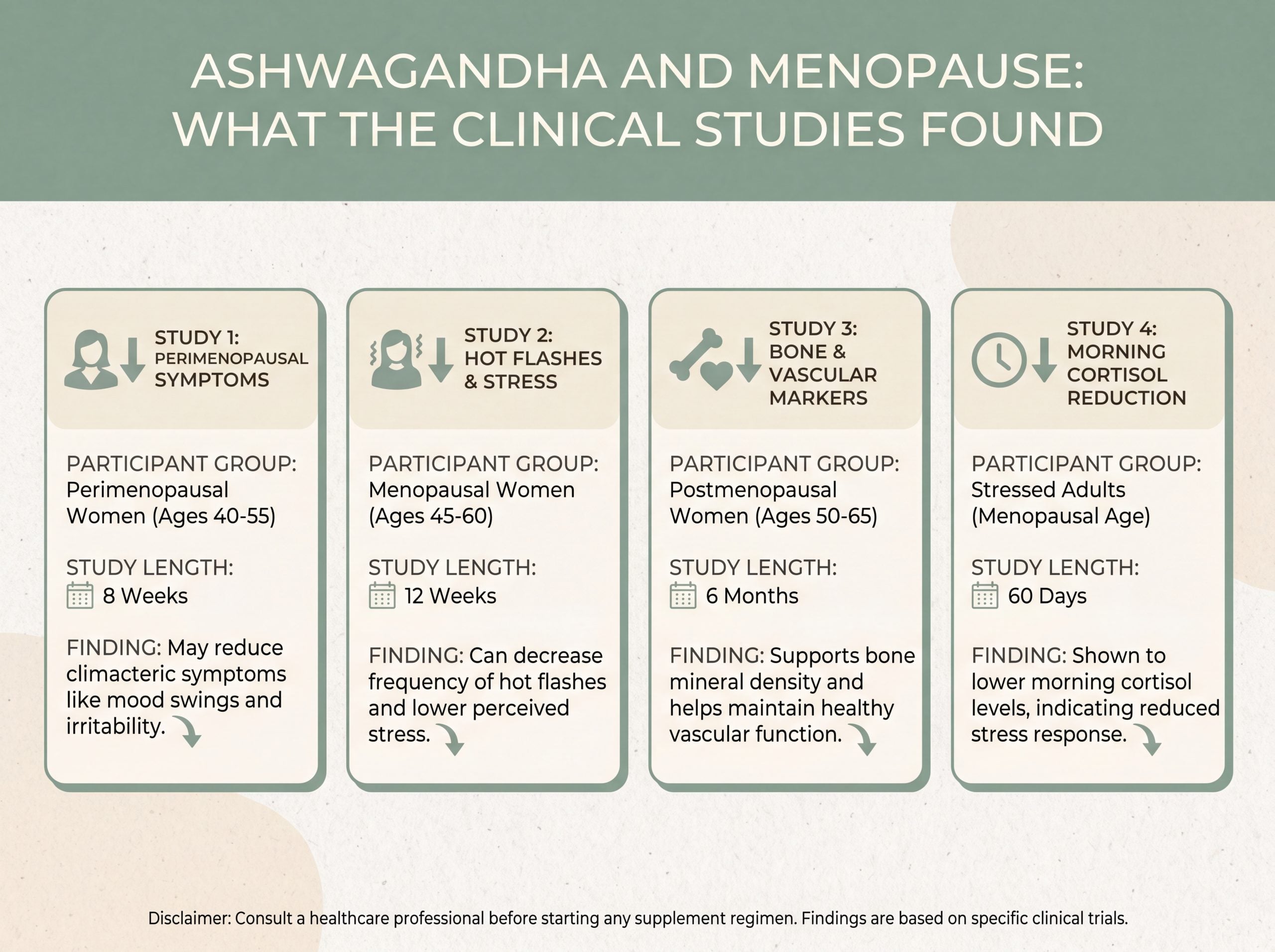
| Gopal S, et al. (2021), J Obstet Gynaecol Res. PMID: 34553463 | 100 perimenopausal women | 8 weeks | Reported improvement in menopause-related quality of life and a reduction in reported hot-flash and mood scores versus placebo, alongside changes in estradiol, FSH, and LH. |
| Prospective RDBPC (women 45-55). PMID: 41561822 | Menopausal women, 45-55 | 56 days | Reported reduced hot-flash events and lower perceived-stress scores versus placebo, with the extract reported as well tolerated. |
| Ashwagandha and shatavari extracts (2025), RDBPC. PMID: 40347163 | Postmenopausal women | Dose-ranging | Reported dose-dependent reductions in menopause symptom scores along with measured changes in markers of vascular function and bone resorption. |
| Lopresti AL, et al. (2019), cortisol mechanism. PMID: 31517876 | 60 stressed healthy adults | 60 days | Reported greater reductions in morning serum cortisol versus placebo, supporting the proposed stress-axis mechanism relevant to menopausal symptom load. |
| Sources: peer-reviewed records indexed on PubMed (pubmed.ncbi.nlm.nih.gov). Individual responses vary. These statements describe research findings and are not a promise of results. | |||
It is important to acknowledge the need for more extensive, long-term research to confirm these findings and fully understand the mechanisms of action.
Benefits of Ashwagandha for Specific Menopausal Symptoms
Withania somnifera’s potential benefits can be broken down by specific menopausal symptoms:
- Hot Flashes & Night Sweats: By potentially helping regulate body temperature and reducing stress, Withania somnifera may decrease the frequency and intensity of these vasomotor symptoms.
- Sleep Disturbances: Its calming and sleep-promoting properties can contribute to improved sleep quality and reduced nighttime awakenings.
- Mood Swings, Anxiety, & Depression: Its stress-reducing and cortisol-lowering effects can help stabilize mood and alleviate feelings of anxiety and depression.
- Brain Fog & Cognitive Function: Withania somnifera may improve focus, memory, and mental clarity, addressing the cognitive difficulties some women experience during menopause.
- Fatigue: By supporting the body’s stress response and promoting overall well-being, it can help combat fatigue and boost energy levels.
- Low Libido: Some research indicates potential benefits for sexual function and arousal, although more studies are needed in this area.
- Joint Pain: Its anti-inflammatory properties may offer some relief from joint pain and stiffness.
Ashwagandha and Postmenopausal Bone and Vascular Health
Most discussion of menopause focuses on hot flashes and sleep, but the postmenopausal years also bring changes in bone turnover and vascular function as estrogen declines. In our review of the recent literature, this is where newer research on Withania somnifera has started to look beyond symptom relief.
A 2025 randomized, double-blind, placebo-controlled study of ashwagandha combined with shatavari (Asparagus racemosus) in postmenopausal women reported dose-dependent reductions in menopause symptom scores alongside measured changes in markers of vascular function and bone resorption (PMID: 40347163). The researchers framed these as early, mechanism-level signals rather than a substitute for established bone-health care.
This research is preliminary and the bone and vascular findings need replication in larger, longer trials before any firm conclusions can be drawn. For women whose main concern is bone density or cardiovascular risk, ashwagandha may be studied as one supportive input within a plan, and bone and heart health should be managed directly with a healthcare provider. The National Center for Complementary and Integrative Health maintains a current overview of ashwagandha research and safety for readers who want the primary-source view.
Dosage, Forms, and Usage of Ashwagandha
The optimal dosage of Withania somnifera for menopausal symptoms can vary depending on individual needs and the severity of symptoms. However, most studies have used doses ranging from 300 to 600 mg per day of a standardized extract, typically divided into two doses. Some studies have used higher doses under medical supervision.
Withania somnifera is available in several forms:
- Capsules and Tablets: These offer a convenient and precise way to take a standardized dose.
- Powder: Withania somnifera powder can be mixed into water, smoothies, or other beverages. The taste can be somewhat bitter.
- Tincture: This liquid form is absorbed quickly and can be added to water or juice.
It’s advisable to start with a lower dose and gradually increase it as needed while monitoring for any potential side effects. Taking it with meals can improve absorption. It may take several weeks or even months of consistent use to experience noticeable improvements in menopausal symptoms. Choosing a high-quality supplement from a reputable manufacturer is essential to ensure purity and potency. Look for products standardized to contain a specific percentage of withanolides, the active compounds.
KSM-66 vs Sensoril: Choosing a Standardized Ashwagandha Extract
When a label says “standardized ashwagandha,” it usually means one of two branded extracts. They are made differently and behave differently, so the choice matters for menopausal use.
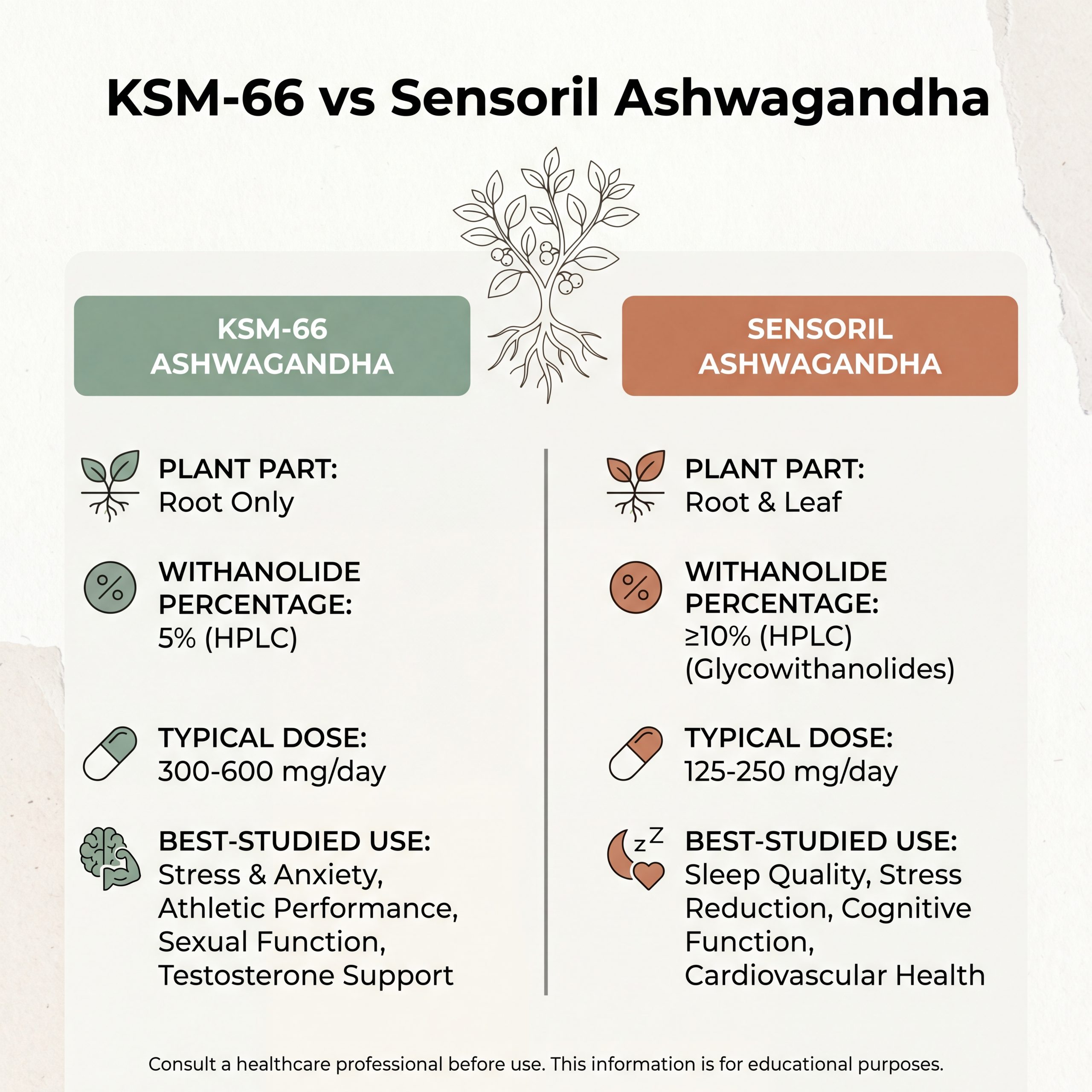
| Feature | KSM-66 | Sensoril |
|---|---|---|
| Plant part | Root only | Root and leaf |
| Withanolide standardization | About 5 percent | About 10 percent or higher |
| Typical study dose | Higher milligram dose, often 300 to 600 mg | Lower milligram dose, often around 125 to 250 mg |
| Most-studied angle | Daytime stress resilience and general vitality | Evening calm and sleep support |
| General formulation information. Always follow the dose on your specific product and confirm suitability with your healthcare provider. | ||
For menopausal women whose priority is daytime stress and energy, a root-only KSM-66 type extract is the more-studied fit. For those whose main complaint is nighttime restlessness, a higher-withanolide Sensoril type extract taken in the evening may suit better. In our sourcing experience, the more useful label question is not the brand name but whether the withanolide percentage and the plant part are stated plainly, because that is what lets you compare a dose honestly across products.
Potential Side Effects and Precautions
Withania somnifera is generally considered safe for most healthy adults when used appropriately. However, it’s essential to be aware of potential side effects and precautions, especially for women going through menopause.
Some possible side effects include:
- Stomach Upset: This is the most common side effect, which can manifest as nausea, diarrhea, or stomach cramps. Starting with a lower dose and taking it with food can help minimize these effects.
- Drowsiness: Withania somnifera can have a calming effect, which may lead to drowsiness in some individuals. Avoid taking it before driving or operating heavy machinery if you experience this effect.
- Headache and Dizziness: These are less common side effects but can occur.
Precautions:
- Pregnancy and Breastfeeding: Withania somnifera is not recommended for pregnant or breastfeeding women due to a lack of safety data.
- Thyroid Disorders: Withania somnifera may increase thyroid hormone levels, so it should be used with caution in individuals with thyroid disorders, especially hyperthyroidism. Individuals with hypothyroidism should only use it under the supervision of a healthcare provider.
- Autoimmune Diseases: Withania somnifera may stimulate the immune system, which could potentially worsen autoimmune conditions like rheumatoid arthritis, lupus, or multiple sclerosis.
- Medication Interactions: Withania somnifera may interact with certain medications, including:
- Sedatives: It can enhance the effects of sedatives, leading to excessive drowsiness.
- Diabetes Medications: It may lower blood sugar levels, potentially requiring adjustments to diabetes medication dosages.
- Blood Pressure Medications: It may lower blood pressure, potentially requiring adjustments to blood pressure medication dosages.
- Immunosuppressants: It may counteract the effects of immunosuppressants.
- Thyroid Hormones: It may increase thyroid hormone levels.
- Anti-seizure medications: It may interfere with anti-seizure medication.
- Liver Disease: Individuals with liver conditions should avoid using ashwagandha.
- Surgery: Discontinue Withania somnifera use at least two weeks before any scheduled surgery.
It’s crucial to discuss using Withania somnifera with your healthcare provider to ensure it’s safe for you, especially if you have any underlying health conditions or are taking medications.
A Holistic Approach to Menopause Management
While Withania somnifera can be a helpful tool for managing menopause symptoms, it’s most effective when integrated into a comprehensive approach that addresses various aspects of well-being.
Other strategies that can complement the use of Withania somnifera include:
- Diet: A balanced diet rich in fruits, vegetables, whole grains, and lean protein is essential. Limiting processed foods, sugar, and alcohol can help manage symptoms like hot flashes and mood swings. Consider incorporating phytoestrogens (plant compounds that mimic estrogen) like soy products, flaxseeds, and legumes, but discuss this with your doctor, as there are some potential concerns for certain individuals.
- Exercise: Regular physical activity (both cardio and strength training) improves mood, sleep quality, bone health, and overall well-being. Aim for at least 30 minutes of moderate-intensity exercise most days of the week.
- Stress Management Techniques: Stress can exacerbate menopausal symptoms. Techniques like yoga, meditation, deep breathing exercises, and spending time in nature can help manage stress and promote relaxation.
- Sleep Hygiene: Establishing good sleep habits is vital. Maintain a regular sleep schedule, create a relaxing bedtime routine, and ensure your bedroom is dark, quiet, and cool.
Other supplements women discuss for menopause. Several nutrients and herbs come up alongside Withania somnifera in a menopause plan. Discuss any addition with your provider, especially if you take medication.
- Magnesium: traditionally associated with sleep quality, muscle relaxation, and stress resilience.
- Vitamin D: commonly low in midlife and important for bone health, which matters more after menopause.
- Omega-3 fatty acids: studied for mood and general cardiovascular and joint comfort.
- Black cohosh (Actaea racemosa): traditionally used specifically for hot flashes and night sweats, a different lane from ashwagandha’s stress-axis role.
- Support System: Connecting with other women going through menopause can provide valuable emotional support and a sense of community. Consider joining a support group or online forum.
How Ashwagandha Compares With Other Menopause Herbs
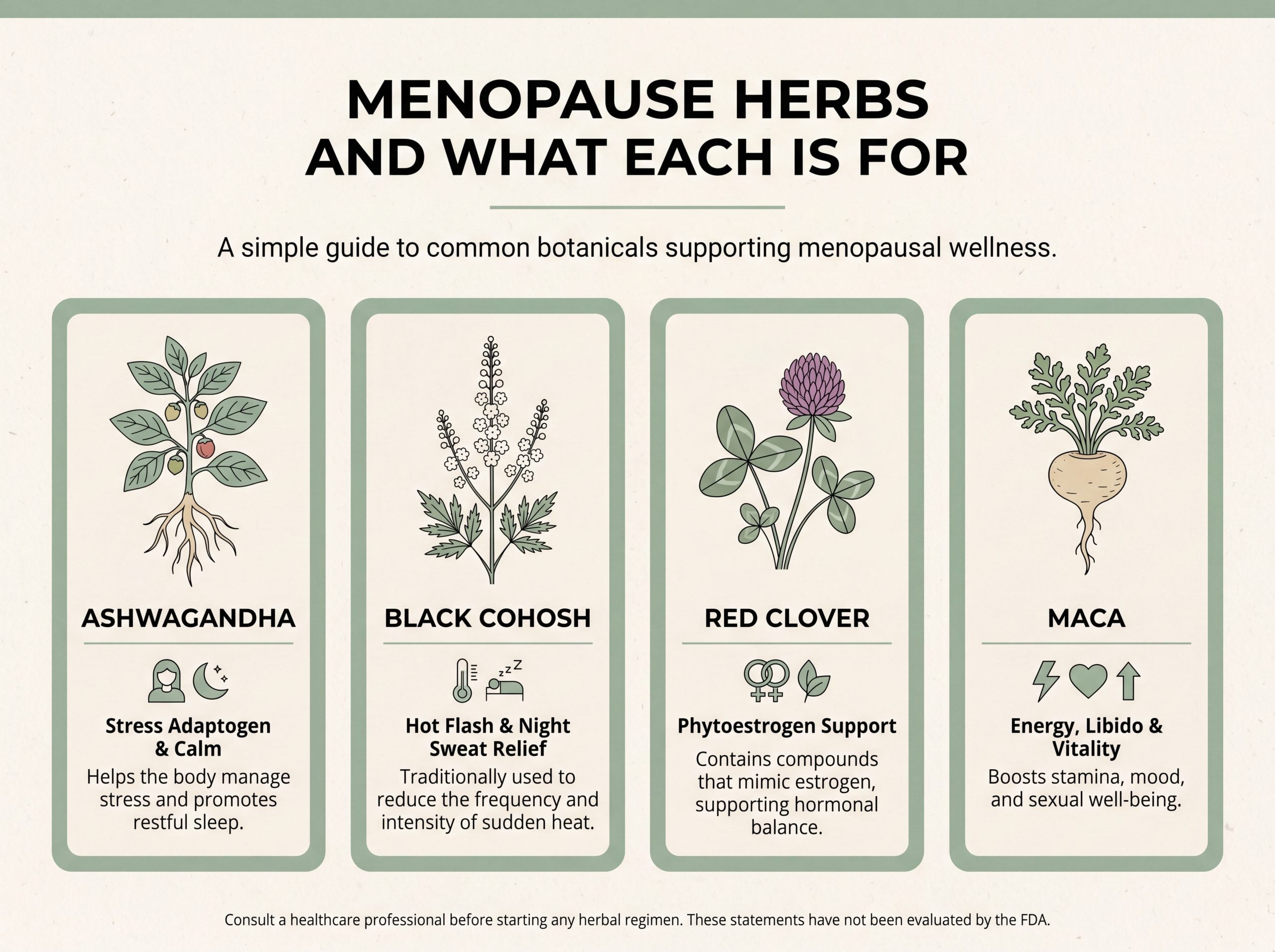
Ashwagandha is a stress-axis adaptogen, which is a different job from the phytoestrogen herbs many women try first for hot flashes. Understanding the lane each herb works in makes it easier to build a plan rather than stacking herbs at random.
| Herb | Traditional role | Most-discussed for |
|---|---|---|
| Ashwagandha (Withania somnifera) | Adaptogen, stress-axis support | Stress load, sleep, mood, energy |
| Black cohosh (Actaea racemosa) | Traditionally used for vasomotor symptoms | Hot flashes and night sweats |
| Red clover (Trifolium pratense) | Isoflavone phytoestrogen | Hot flashes |
| Maca (Lepidium meyenii) | Non-hormonal energy and libido herb | Energy, mood, libido |
| Traditional-use descriptions. Herbs can interact with medications and with each other. Confirm any combination with your healthcare provider. | ||
Because ashwagandha works on the stress response rather than acting as a phytoestrogen, some women use it alongside a vasomotor-focused herb rather than instead of one. Our team has written more on the phytoestrogen options in our guide to dong quai and black cohosh for women, on non-hormonal energy support in our maca powder profile, and on the broader picture in herbs that help regulate hormones.
Working with a Healthcare Provider
It’s essential to work with a healthcare provider to create a personalized treatment plan for managing menopausal symptoms. They can assess your individual needs, monitor your progress, and ensure that Withania somnifera is safe and appropriate for you, given your medical history and any medications you may be taking. They can also discuss other treatment options, including hormone replacement therapy (HRT), and help you weigh the benefits and risks of each approach.
FAQ:
- How long does it take for Withania somnifera to work for menopause symptoms? Many individuals notice changes within two to four weeks, but this timeline can vary based on factors like overall health, dosage, and consistency of use.
- Can Withania somnifera replace HRT? No, Withania somnifera is not a replacement for HRT. It may be a complementary or alternative option for some women, under medical supervision, but it does not provide the same level of hormone replacement as HRT.
- Is Withania somnifera safe to take with other menopause supplements? Some individuals use it alongside other herbs and vitamins without difficulties. However, consulting a healthcare professional is recommended to rule out potential interactions.
- Can Withania somnifera cause weight gain? Withania somnifera is not typically associated with weight gain. Its primary action is to help the body manage stress, and by reducing cortisol levels, it may indirectly support healthy weight management. Some studies even suggest it may help with weight loss in the context of stress-related eating.
- What is the best form of Withania somnifera to take for menopause? There’s no single “best” form. Capsules offer convenience and standardized dosing, while powders can be added to beverages. Tinctures are absorbed quickly. The best form depends on individual preference and tolerance.
- Does Withania somnifera increase estrogen? Withania somnifera may have a mild estrogen-modulating effect. Some studies suggest it can slightly increase estradiol levels in menopausal women, but it’s not a potent phytoestrogen like soy or black cohosh. It’s best described as helping to balance hormones rather than drastically increasing estrogen.
If you want to try Withania somnifera as part of a menopause plan, our team offers it in convenient standardized ashwagandha root capsules and as organic ashwagandha root powder for those who prefer to mix it into a drink. Start low, take it with food, and give it several weeks.
Disclaimer. These statements have not been evaluated by the Food and Drug Administration. This product is not intended to diagnose, treat, cure, or prevent any disease. The information here is educational and is not medical advice. Consult your healthcare provider before use, especially if you are pregnant, breastfeeding, taking medication, or managing a thyroid, autoimmune, or liver condition.