Understanding PCOS and Its Challenges
PCOS is more than just a condition with ovarian cysts; it’s a multifaceted endocrine and metabolic disorder. Key features include:
- Hormonal Imbalances: Elevated androgens (like testosterone and DHEA-S), often an elevated ratio of luteinizing hormone (LH) to follicle-stimulating hormone (FSH), and sometimes, elevated prolactin.
- Insulin Resistance: A significant percentage of women with PCOS, regardless of weight, experience insulin resistance. This means their bodies don’t respond efficiently to insulin, leading to higher blood sugar levels and further hormonal disruption.
- Irregular Menstrual Cycles: A hallmark of PCOS, often due to disrupted ovulation.
- Other Symptoms: These can include hirsutism (excess hair growth), acne, hair loss (androgenic alopecia), weight gain, anxiety, depression, and sleep disturbances.
- Infertility: Is another symptom that women with PCOS can experience.
How Ashwagandha May Help Manage PCOS Symptoms
Ashwagandha is classified as an adaptogen. Adaptogens are substances that help the body resist various stressors – physical, chemical, and biological. This is particularly relevant to PCOS, where chronic stress can exacerbate hormonal imbalances.
Ashwagandha and Hormonal Balance
One of the primary ways Withania somnifera may benefit women with PCOS is by supporting hormonal balance.
- Reducing androgens. Research suggests that Withania somnifera may help support balanced androgen levels in women with PCOS. This matters because elevated androgens drive many of the condition’s most distressing features. As androgen activity eases, three symptoms tend to improve together. Menstrual regularity often returns as ovulation becomes less disrupted. Acne calms as excess sebum production settles. Excess hair growth, known clinically as hirsutism, becomes less pronounced over weeks of consistent use. Ashwagandha has traditionally been used in Ayurveda to support reproductive wellness in women, which is why it appears so often in formulas built around hormonal balance.This is significant because elevated androgens are responsible for many of the distressing symptoms, such as hirsutism, acne, and irregular periods.
- Ashwagandha has traditionally been used to help treat and improve fertility in women.
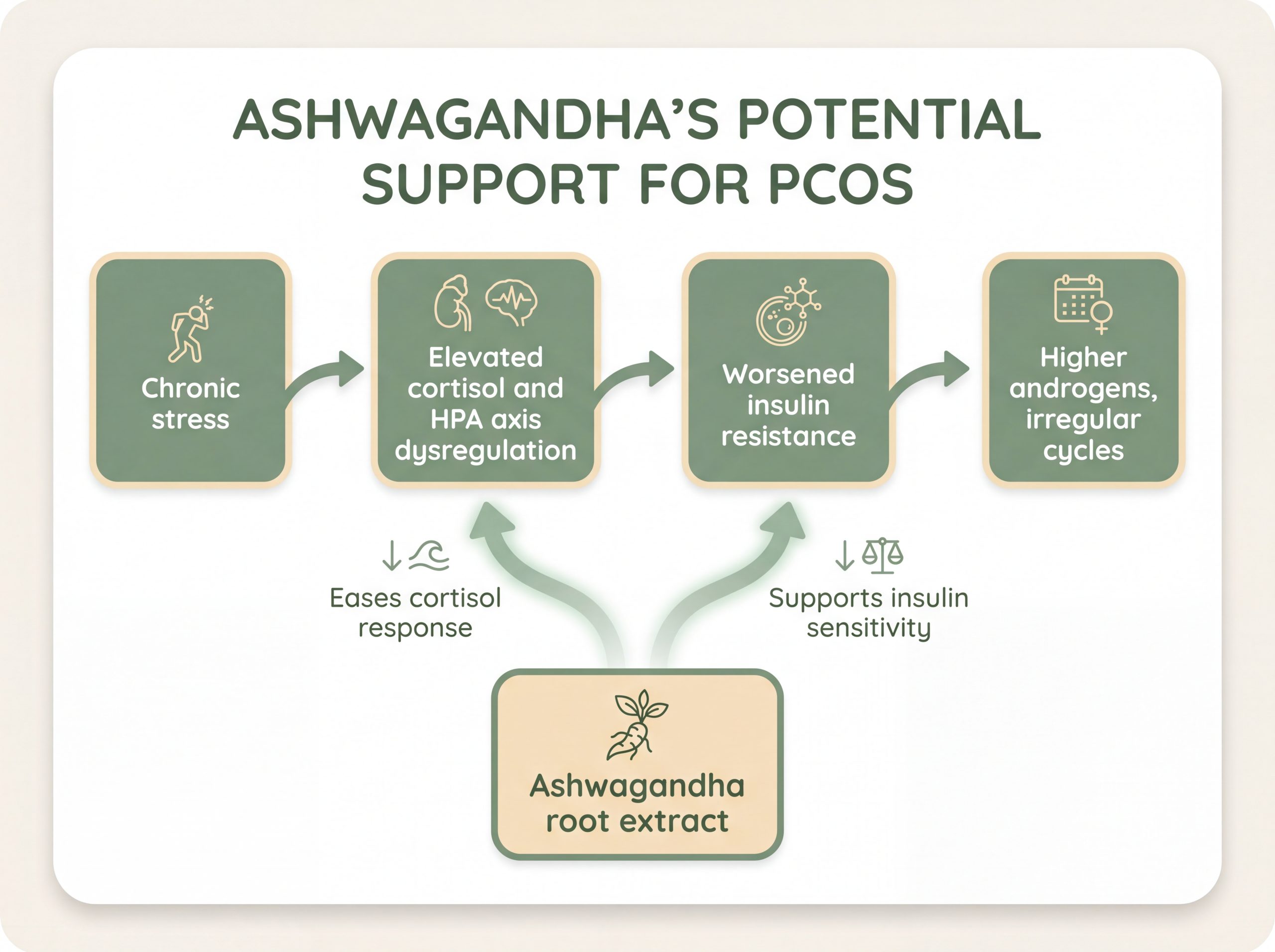
- Regulating the HPA Axis: The hypothalamic-pituitary-adrenal (HPA) axis plays a crucial role in the stress response. Chronic stress can dysregulate the HPA axis, leading to elevated cortisol levels. Ashwagandha may help modulate the HPA axis, promoting a more balanced stress response.
- Supporting Thyroid Function: Women with PCOS are at higher risk for thyroid disorders, particularly hypothyroidism (underactive thyroid). Ashwagandha may support healthy thyroid hormone production, although it’s contraindicated in hyperthyroidism (overactive thyroid).
Ashwagandha and Insulin Sensitivity
Insulin resistance is a core feature of PCOS, contributing to both metabolic and reproductive issues. Ashwagandha may improve insulin sensitivity through several mechanisms:
- Enhancing Insulin Secretion: Some studies suggest that ashwagandha may help the pancreas secrete insulin more effectively.
- Improving Muscle Cell Sensitivity: Ashwagandha may also improve the ability of muscle cells to take up glucose in response to insulin.
- Reducing Inflammation: Chronic low-grade inflammation is associated with insulin resistance. Ashwagandha’s anti-inflammatory properties may contribute to improved insulin sensitivity.
Ashwagandha for Stress Reduction and Improved Well-being
The connection between stress and PCOS is well-established. Chronic stress elevates cortisol, which can worsen insulin resistance and hormonal imbalances.
- Lowering Cortisol: Ashwagandha has demonstrated cortisol-lowering effects in numerous studies. By reducing cortisol, it may help break the cycle of stress and hormonal disruption in PCOS.
- Improving Sleep Quality: Sleep disturbances are common in PCOS and can further exacerbate hormonal imbalances and insulin resistance. Ashwagandha may promote better sleep, contributing to overall well-being.
- Reducing Anxiety and Depression: Ashwagandha’s adaptogenic properties may help relieve symptoms of anxiety and depression, which are frequently experienced by women with PCOS.
Scientific Evidence Supporting Ashwagandha for PCOS
Direct trials on ashwagandha in PCOS are still limited, so the strongest evidence comes from research on the hormonal pathways PCOS involves. Here is what the peer-reviewed literature currently shows.- Cortisol and the stress axis. In a 60-day randomized, double-blind, placebo-controlled trial, a standardized ashwagandha root extract lowered serum cortisol by roughly 27.9 percent relative to placebo (Chandrasekhar et al., 2012, Indian Journal of Psychological Medicine, PMID: 23439798).
- Dose-related stress response. An eight-week randomized, placebo-controlled study reported measurable reductions in perceived stress and serum cortisol at both 250 mg and 600 mg per day, with the higher dose showing the larger effect (Salve et al., 2019, Cureus, PMID: 31728244).
- Glucose and insulin signaling. A 2023 systematic review and meta-analysis found that Withania somnifera significantly improved fasting blood glucose and HbA1c across controlled studies, the same metabolic markers that often run high in insulin-resistant PCOS (Durg et al., 2023, Journal of Ethnopharmacology, PMID: 36463991).
Recommended Dosage and Usage
The optimal dosage of ashwagandha for PCOS can vary depending on individual needs and the specific product used. It’s essential to choose a standardized extract to ensure consistent levels of withanolides, the active compounds.- Typical Dosage Range: A common dosage range is 250-600mg per day of a standardized extract, although some studies have used higher doses safely under medical supervision.
- Forms: Ashwagandha is available in capsules, powders, and liquid extracts. Capsules offer convenience, while powders can be added to smoothies or other beverages.
- Timing: Ashwagandha can be taken with meals to improve absorption.
- Duration: It may take several weeks or months of consistent use to see noticeable improvements in PCOS symptoms.
Which Form of Ashwagandha Is Best for PCOS?
The form matters more than most labels admit. The active compounds in ashwagandha are a group of steroidal lactones called withanolides, and the goal is a product that delivers a known, consistent withanolide amount in every dose. Here is how the common options compare.| Form | What it is | Practical note |
|---|---|---|
| Standardized root extract | Root-only extract standardized to a stated withanolide percentage | The most studied format in the cortisol and stress trials. Easiest to dose consistently. |
| Branded extracts (for example KSM-66, Sensoril) | Patented, clinically studied root or root-and-leaf extracts with defined withanolide content | KSM-66 is a root-only extract used in many stress studies. Sensoril is a root-and-leaf extract standardized to a higher withanolide percentage. |
| Raw root powder | Whole dried root, ground | Traditional and budget-friendly, but withanolide content varies, so the effective dose is harder to pin down. |
Potential Side Effects and Precautions
Ashwagandha is generally considered safe for short-term use, but certain precautions are necessary:- Autoimmune Diseases: Individuals with autoimmune diseases (e.g., Hashimoto’s thyroiditis, rheumatoid arthritis, lupus) should generally avoid ashwagandha, as it may stimulate the immune system.
- Thyroid Disorders: Ashwagandha is contraindicated in hyperthyroidism. It may be used with caution in hypothyroidism, but only under the supervision of a healthcare provider.
- Medication Interactions: Ashwagandha can interact with medications for diabetes, high blood pressure, immunosuppressants, sedatives, anti-seizure medications, and thyroid hormones. Consult your doctor before using ashwagandha if you take any medications.
- Pregnancy and Breastfeeding: Ashwagandha is not recommended during pregnancy or breastfeeding due to insufficient safety data.
- Surgery: Discontinue ashwagandha use at least two weeks before any scheduled surgery.
- Liver Disease: Those with liver conditions should avoid using ashwagandha.
Other Natural Remedies and Lifestyle Changes
A holistic approach to PCOS management involves incorporating other natural remedies and lifestyle modifications:- Diet: A low-glycemic index (low-GI) diet is crucial for managing insulin resistance. Focus on whole, unprocessed foods, lean protein, fiber, and healthy fats. Minimize added sugars and refined carbohydrates.
- Exercise: Regular physical activity (both cardio and strength training) improves insulin sensitivity, helps manage weight, and reduces stress.
- Supplements:
- Inositol (Myo-inositol and D-chiro-inositol): Highly relevant to PCOS; supports insulin signaling and ovarian function.
- Berberine: Helps improve insulin sensitivity and metabolic function.
- Magnesium: Supports stress management, sleep, and insulin sensitivity.
- Omega-3 Fatty Acids: Anti-inflammatory and beneficial for overall health.
- Vitamin D: Often deficient in women with PCOS; important for hormone balance.
- Stress Reduction Techniques: Is important for regulating hormones.