Thunbergia Laurifolia Capsules: The Verdict
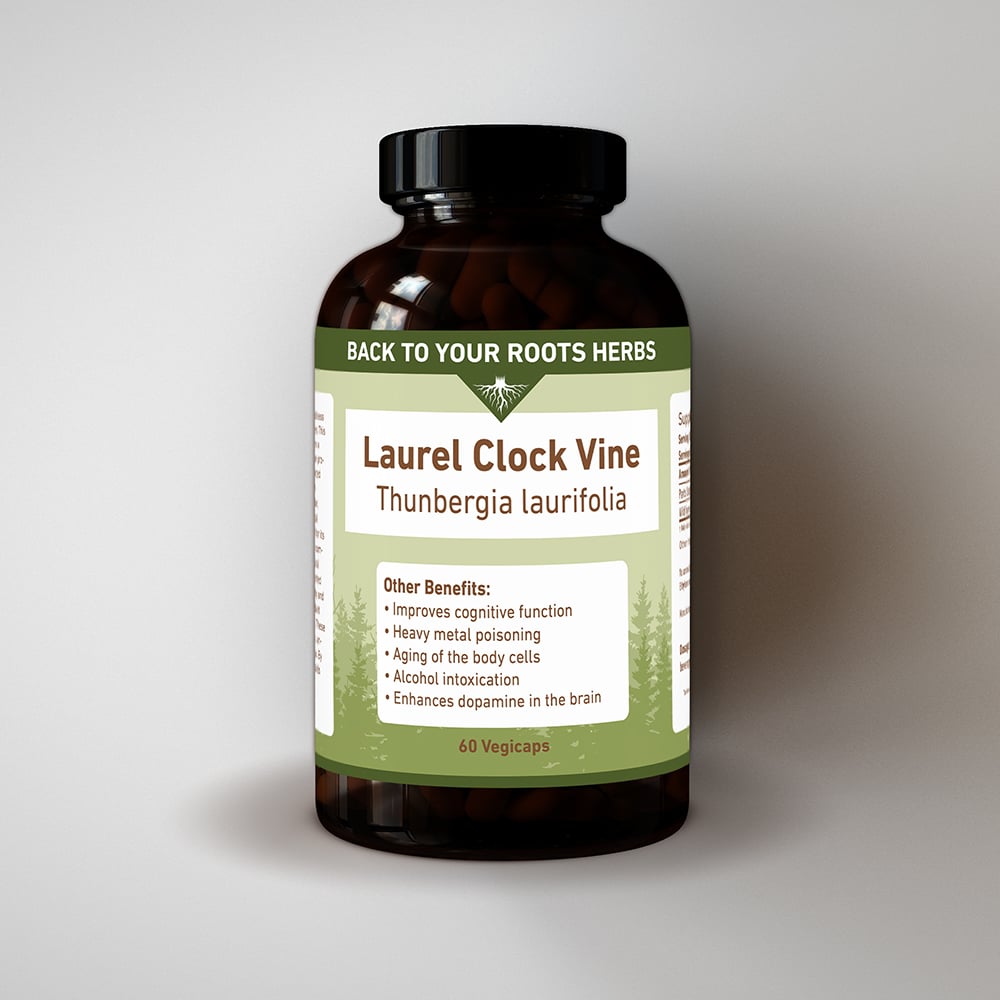
Grade A Whole Leaf. Potency Score: 9.4 / 10. Sourced from Nakhon Ratchasima province, Thailand (14.97 N, 102.10 E), where Thunbergia laurifolia leaf grows in the iron-rich loamy soils that produce the deepest rosmarinic acid expression. Hand-cleaned, sun-dried, and milled to a fine green powder before encapsulation in vegetable cellulose shells. Lab-verified for heavy metals and microbial purity.
– Back To Your Roots Herbs Research Group
Thunbergia Laurifolia Sensory Analysis
This is a first-hand report on the raw, whole leaf powder before encapsulation.
Look
Deep matcha-green powder with fine particle size. No stem flecks, no yellowing, no dust agglomeration. The color holds steady across batches because we mill leaf-only material.
Smell
A clean, vegetal, dried-spinach aroma with a faint hay note. No mustiness, no fermentation off-notes. Cooler drying preserves the grassy nose.
Taste
Distinctly bitter on the front of the tongue, then a cooling, almost cucumber-like finish. The bitterness is the rosmarinic acid signature. Encapsulation bypasses the palate, but we want you to know the raw powder behind the pill.
Texture
Fine, soft, free-flowing. No clumps, no gritty fibrous fragments. Dissolves smoothly in water within thirty seconds of capsule rupture.
How Thunbergia Laurifolia Capsules Work
The Herb
Thunbergia laurifolia Lindl., known across Thailand as Rang Jued, is sourced from Nakhon Ratchasima province. Common synonyms include blue trumpet vine and laurel clock vine, but the medicinal lineage tracks the purple-flowered chemotype with the highest phenolic load.
The Mechanism
Acts through a polyphenol-driven antioxidant pathway. The leaf carries rosmarinic acid, chlorogenic acid, caffeic acid, apigenin, cosmosiin, and delphinidin-3,5-di-O-beta-D-glucoside. These compounds donate electrons to free radicals, support endogenous antioxidant enzyme activity, and assist the liver in its normal Phase I and Phase II response to oxidative load.
The Evidence
Research published in Pharmaceuticals (Basel) in 2025 evaluated the anti-hangover and hepatoprotective activities of Thunbergia laurifolia leaf extract in Sprague-Dawley rats. Animals receiving the leaf extract before alcohol exposure showed reduced blood ethanol levels and stabilized liver enzyme markers (PMID: 40430504, PMC12114924).
The Ratio
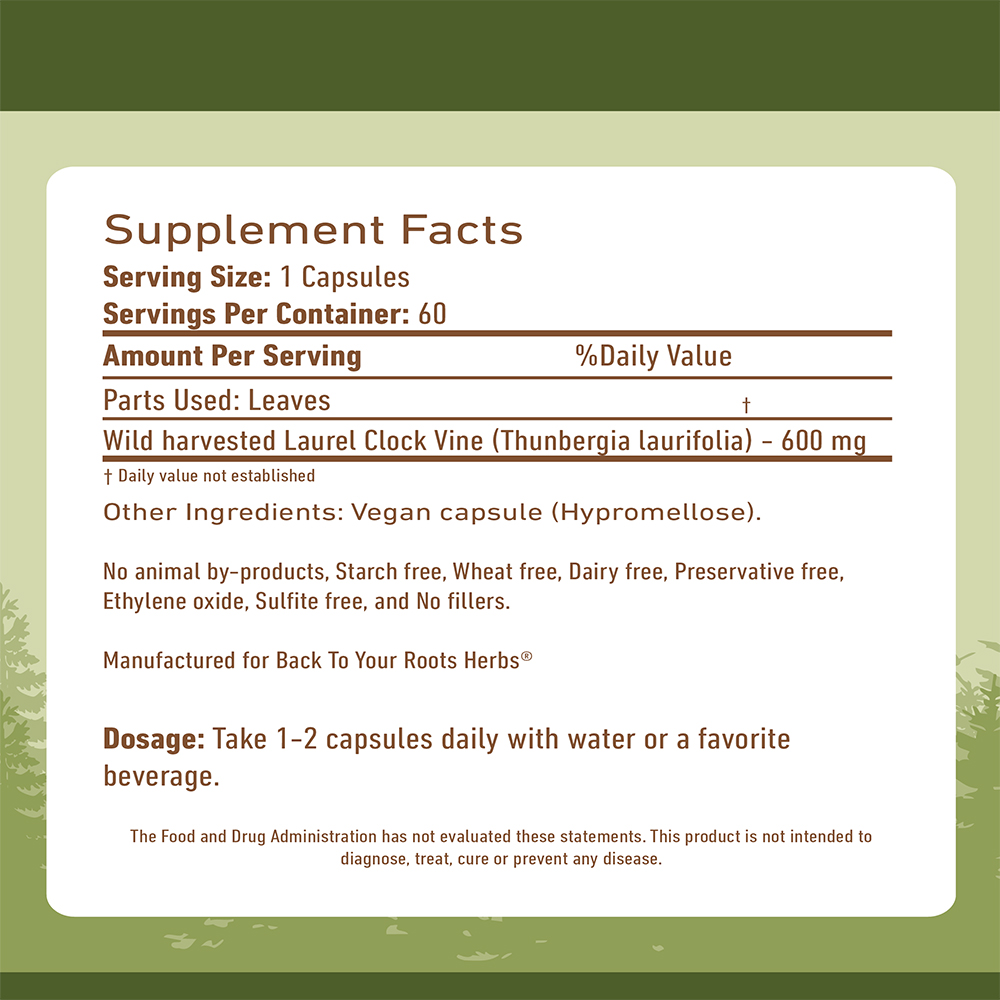
Each vegan capsule delivers 600 mg of micronized whole-leaf powder. No extract dilution. No maltodextrin carrier. No rice flour bulker. Just the leaf.
Critical Usage of Thunbergia Laurifolia
Thunbergia Laurifolia Dosage Guidelines
The Thunbergia laurifolia capsule dosage we recommend is two capsules with water, taken once or twice daily with food. Do not exceed four capsules in a 24-hour period without practitioner guidance.
Thunbergia Laurifolia Side Effects to Know
Reported Thunbergia laurifolia side effects in published literature are mild and dose-dependent. Possible reports include occasional drowsiness in sensitive users, transient hypoglycemia in users already taking blood-sugar-lowering supplements, and stomach softening at very high doses. Discontinue and consult a qualified practitioner if you experience any unexpected reaction.
Note for First-Time Users
If you have never taken Rang Jued before, start with one capsule per day for three days to assess tolerance.
Thunbergia Laurifolia Capsules vs Other Forms
Laurifolia Leaves and Laurifolia Tea
Thunbergia laurifolia leaves brewed as a hot herbal tea is the traditional Thai delivery method and offers a gentler, water-soluble polyphenol profile. Tea is best for ritual use. Capsules give you the unfiltered whole-leaf matrix in a measured 600 mg dose without bitter taste exposure.
Laurifolia Powder vs Capsules
Bulk Thunbergia laurifolia powder is the same raw material we encapsulate. Powder gives flexibility for users who blend their own formulas. Capsules give portable, dosed, no-prep portion control.
Thunbergia Laurifolia Extract
Many competitors sell a Thunbergia laurifolia extract that has been concentrated and stripped of natural cofactors. We do not extract. We use the whole leaf because the fiber, minerals, and minor compounds support the antioxidant phenolics in the way the plant produced them.
Thunbergia Laurifolia Capsules Clinical Specs
| Spec | Detail |
|---|---|
| Serving Size | 2 capsules (1,200 mg total) |
| Frequency | 1 to 2 servings per day with food |
| Active Marker | Rosmarinic acid (primary phenolic), apigenin, chlorogenic acid |
| Processing | Hand-cleaned leaf, low-temperature sun-dried, fine micronized mill |
| Safety | Heavy Metal Tested (Pass), Microbial Tested (Pass) |
| Ingredients | 100% Thunbergia laurifolia whole leaf powder, 600 mg per capsule |
| Other Ingredients | Vegetable Cellulose (Capsule Shell) |
| Purity | Vegan, Non-GMO, Caffeine-Free |
| Free From | Wheat, Gluten, Soy, Dairy, Binders, Fillers, Preservatives |
| Origin | Nakhon Ratchasima province, Thailand (specified terroir) |
| Manufactured | Virginia Beach, VA, USA |
Thunbergia Laurifolia Capsules Comparison
| Feature | BTYRH Thunbergia Laurifolia Capsules | Generic Thunbergia Laurifolia Capsules |
|---|---|---|
| Origin | Nakhon Ratchasima, Thailand (specified) | Unspecified Asia-import |
| Preparation | Whole leaf, no extract, 600 mg per capsule | Compound formulation with binders |
| Active Marker | Rosmarinic acid, chlorogenic acid, apigenin | Generic “Thunbergia laurifolia 400 mg.” |
| Taste Profile | Bitter, cooling, faint hay (raw powder) | Not disclosed |
| Safety Testing | Heavy metal and microbial testing per batch | Unknown / Untested |
| Manufactured In | Virginia Beach, VA, USA | Variable / Often unspecified |
Frequently Asked Questions About Thunbergia Laurifolia
What is the common name for Thunbergia laurifolia?
The plant is called Rang Jued across Thailand. English botanical names include blue trumpet vine and laurel clock vine. The species sits in the Acanthaceae family.
What phenolic compounds are found in Thunbergia laurifolia?
Reviewed leaf chemistry shows rosmarinic acid as the primary marker, along with chlorogenic acid, caffeic acid, gallic acid, protocatechuic acid, vitexin, apigenin, cosmosiin, and the anthocyanin delphinidin-3,5-di-O-beta-D-glucoside.
How does the extraction method affect antioxidant activity?
HPLC studies show that 50% methanol recovers chlorogenic and caffeic acid efficiently, while a hot water infusion captures fewer non-polar compounds. The whole-leaf capsule format preserves the broadest profile because nothing is washed away.
Is Thunbergia laurifolia safe for children?
Published toxicology supports adult-dose safety in rodent models. We do not recommend Thunbergia laurifolia capsules for children, pregnancy, or lactation without practitioner guidance.
DISCLAIMER: These statements have not been evaluated by the Food and Drug Administration. This product is not intended to diagnose, treat, cure, or prevent any disease.
Reviews
There are no reviews yet.