The Verdict (Internal Quality Score)
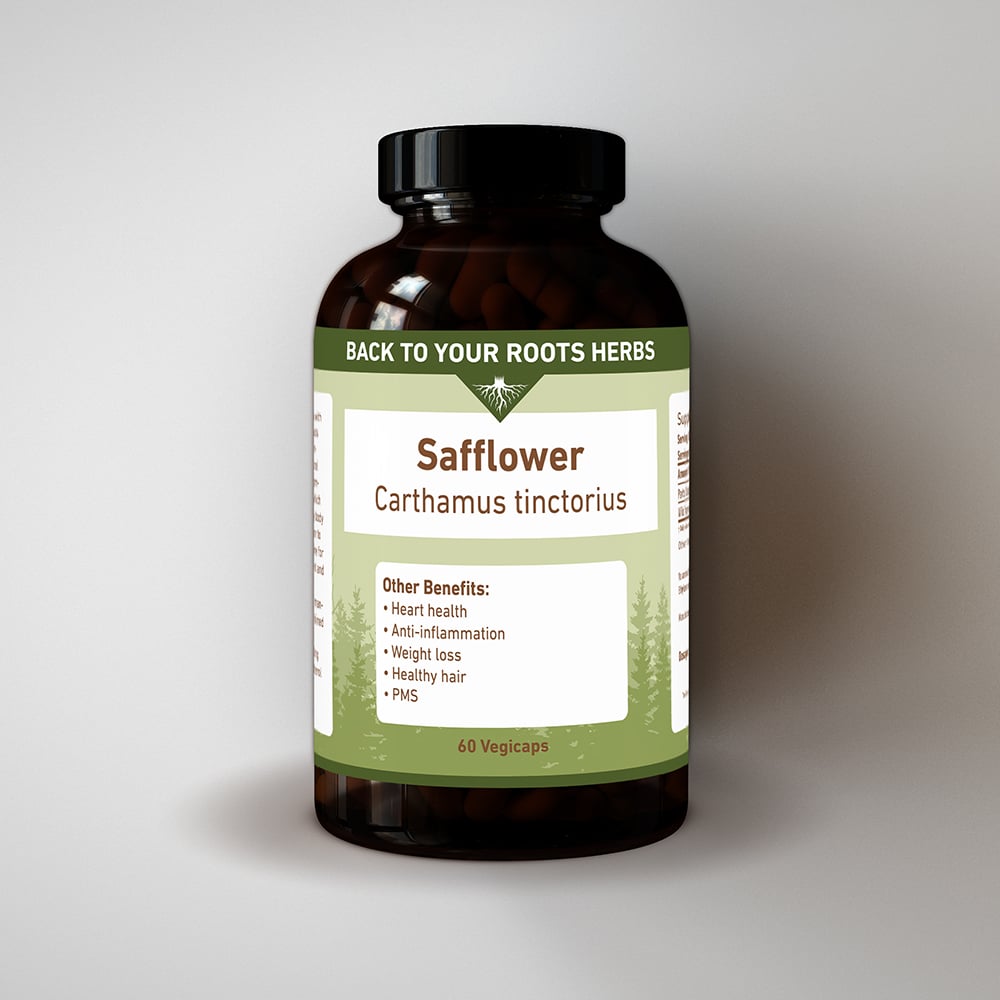
Grade A safflower seed oil. Sourced from Carthamus tinctorius cultivated on the high plains of Montana, USA, where dry summers concentrate the linoleic acid fraction in the safflower seeds. This is whole-seed oil pressed cold, not a chemical extract. Purity panel passed for heavy metals, solvents, and adulterant oils.
– Back To Your Roots Herbs Research Group
Sensory Analysis of the Safflower Oil
Field report from our QA bench. We pop a capsule and pierce it. The oil is pale gold, almost straw-colored. Aroma is faint. A clean, slightly grassy nuttiness, no rancid notes. Taste is mild and oily on the front of the tongue with a subtle bitter finish that fades quickly. The capsule itself is a clear vegetarian softgel that swallows easily with water.
- Look: Pale gold, transparent oil inside a clear vegetarian capsule
- Smell: Faint, grassy, lightly nutty
- Taste: Mild, oily, with a quick bitter after-note
How Do Safflower Capsules Work?
Our safflower capsules concentrate the most studied fraction of the safflower seed: its fatty acid profile. The oil from Carthamus tinctorius is one of the richest plant sources of linoleic acid, an essential omega-6 fatty acid, and a meaningful source of conjugated linoleic acid (CLA).
Active Compounds in Safflower Seed Oil
- Linoleic acid: The dominant fatty acid in high-linoleic safflower varieties. USDA germplasm data show linoleic acid content in safflower seed ranges from 11% to 83.1% across varieties (Phytochemical variation within Carthamus tinctorius). Our supplier uses a high-linoleic genotype consistently above 75%.
- Conjugated linoleic acid (CLA): Naturally present and concentrated through our processing. CLA is the active marker most associated with safflower oil’s role in body composition support.
- Oleic acid & vitamin E: Co-factors that round out the safflower oil profile and protect the unsaturated fats during shelf life.
The Mechanism
Linoleic acid and CLA work as substrate-level fatty acids that the body uses for cell membrane structure, hormone synthesis, and fat metabolism signaling. Daily safflower oil supplementation supplies these fats in a concentrated, easy-to-take form.
The Evidence
A 2011 randomized, double-masked, crossover study by Asp, Norris, and Belury (PMID: 21295383) found that 8 grams of safflower oil daily over 16 weeks improved glycemia, inflammation markers, and blood lipid profile in obese, post-menopausal women with type 2 diabetes. This is one of the better-controlled human trials on safflower oil for metabolic health.
Why Buy Safflower Capsules from Back To Your Roots Herbs
Sourcing
Our safflower seeds come from the US safflower country in central Montana (47.5°N, 109.5°W). Hot, dry summers and cold winters force the plant to concentrate linoleic acid in the safflower seeds. We avoid imported safflower oil from unknown supply chains.
Processing
Cold-pressed safflower seed oil. No hexane, no heat refinement, no bleaching. The oil goes from press to capsule with minimal handling, so the linoleic and oleic fatty acids stay intact.
Independent Lab Testing
Every batch of our safflower capsules is third-party tested for heavy metals, residual solvents, and oxidation. Certificates of analysis are available on request.
Critical Usage and Contraindications
Our safflower capsules are food-grade safflower seed oil in a vegetarian softgel. Read this section before your first dose.
Suggested Daily Use
Take one to two safflower capsules with a meal. Daily use over several weeks is typical for users tracking body composition and weight management goals. Pair with a balanced diet and regular exercise.
Who Should Not Take These Safflower Capsules
- Pregnant or breastfeeding individuals
- Anyone with a bleeding disorder or scheduled for surgery within two weeks
- Anyone allergic to the Asteraceae family (ragweed, marigold, daisy, chrysanthemum)
- Anyone taking anticoagulants such as warfarin or diabetes medications (consult your physician about possible drug interactions before use)
Possible Side Effects
Most users tolerate safflower oil capsules well. Mild digestive upset can occur. Discontinue use if any adverse reaction appears.
Clinical Specs
| Spec | Detail |
|---|---|
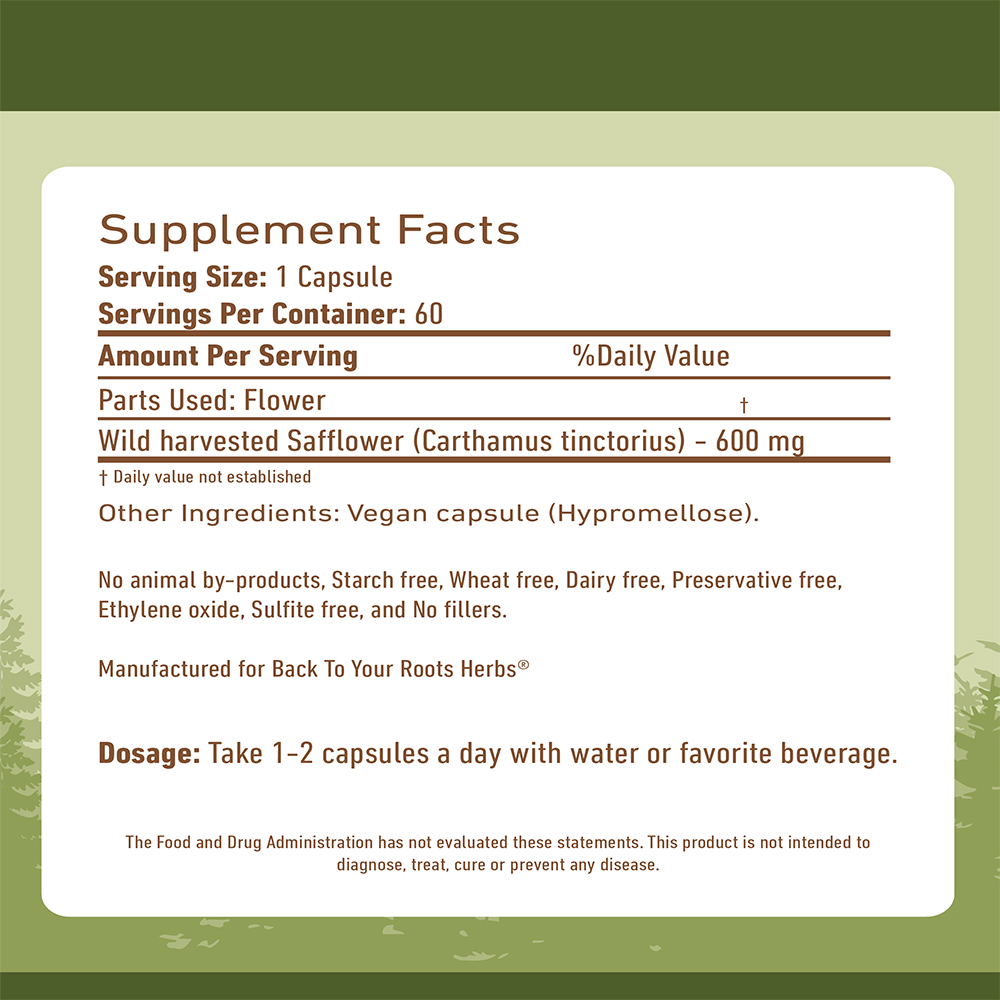
| Serving Size | 1 capsule (600 mg safflower seed oil) |
| Frequency | 1 to 2 capsules daily, taken with a meal |
| Active Marker | Conjugated linoleic acid (CLA) and linoleic acid |
| Processing | Cold-pressed safflower seed oil, no solvent extraction |
| Safety | Heavy metal tested (Pass) |
| Ingredients | 100% Carthamus tinctorius (safflower) seed oil |
| Other Ingredients | Vegetable cellulose (vegetarian capsule shell) |
| Purity | Non-GMO, vegetarian, vegan, gluten-free |
| Free From | Wheat, gluten, soy, dairy, binders, fillers, animal products |
| Origin | Central Montana, USA (47.5°N, 109.5°W) |
| Manufactured | Virginia Beach, VA, USA |
Safflower Capsules Comparison Table
| Feature | BTYRH Safflower Capsules | Generic Drugstore Safflower Oil Capsules |
|---|---|---|
| Origin | Central Montana, USA (47.5°N, 109.5°W) | Unspecified, often imported |
| Preparation | Cold-pressed whole safflower seed oil | |
| Capsule Shell | Vegetarian, vegan, non-GMO | Bovine or porcine gelatin softgel |
| Linoleic Acid Profile | High-linoleic genotype, >75% LA | Usually undisclosed |
| Taste | Mild, grassy, faintly bitter finish | Generic “neutral oil” claim |
| Safety Testing | Third-party heavy metal and oxidation tested | Unknown, often untested |
Frequently Asked Questions About Safflower Capsules
How long does it take for safflower capsules to work?
Most users in published trials took daily safflower oil for 8 to 16 weeks before measurable changes in body composition or blood lipid markers were recorded. Consistency matters more than dose for this herb.
Is plain safflower oil better than CLA supplements?
Whole safflower seed oil delivers linoleic acid, oleic acid, naturally occurring CLA, and trace vitamin E together. Isolated CLA pills strip out the cofactors. We prefer the whole-oil approach for that reason.
What are the side effects of safflower capsules?
Mild digestive upset is the most commonly reported side effect. Anyone on anticoagulants, diabetes medications, or pregnant should consult a physician before adding safflower oil capsules to their routine.
Who should not take safflower oil capsules?
Avoid if you are pregnant, breastfeeding, allergic to the Asteraceae family, scheduled for surgery, or taking warfarin or related anticoagulants. Always read the safety section above before your first dose.
Made in the USA. Virginia Beach, Virginia.
DISCLAIMER: These statements have not been evaluated by the Food and Drug Administration. This product is not intended to diagnose, treat, cure, or prevent any disease.
Reviews
There are no reviews yet.