THE VERDICT (INTERNAL QUALITY SCORE)
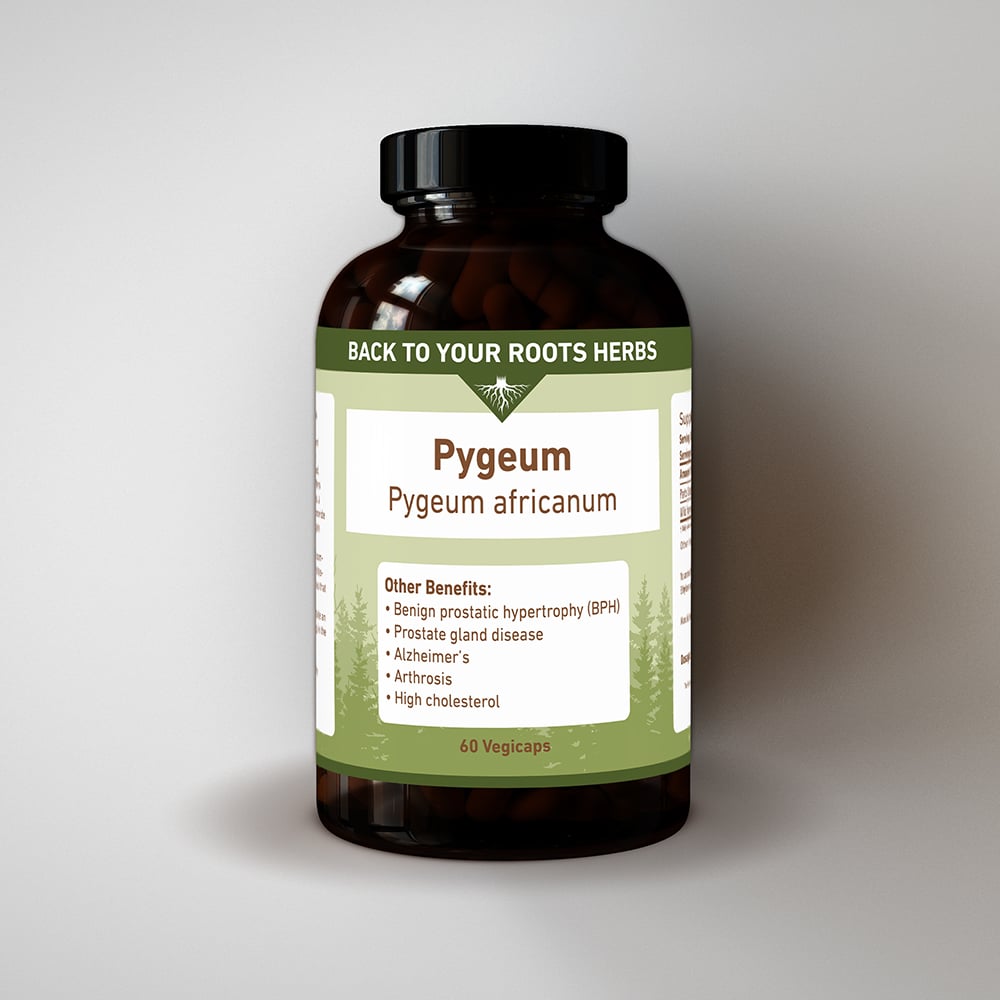
Grade A. Traditional Integrity. Whole, unadulterated bark of the Prunus africana tree, sustainably hand-harvested from Mount Cameroon’s Afromontane forest belt at 4.21°N, 9.17°E. Standardized to 100% raw whole bark. No solvents. No fillers. No marker isolation. Pygeum the way West and Central African herbalists have used it for over 300 years.
– Back To Your Roots Herbs Research Group
SENSORY ANALYSIS: PYGEUM AFRICANUM BARK
This is our first-hand bench report on the raw, whole bark powder before encapsulation.
Look
Light tan to woody brown powder. Fibrous, not silky. Visible bark grain under magnification.
Smell
Fresh sawdust and dried root, with a faint cherry-pit note from the Prunus genus. No mustiness. No sweetness.
Taste
Mildly astringent. Bitter on the back of the tongue. Trace woody afternote. The flavor of real bark, not a deodorized extract.
HOW DOES PYGEUM AFRICANUM BARK WORK?
Pygeum africanum capsules deliver the full chemistry of the bark, not a single isolated marker. The plant’s activity comes from a combination of phytosterols, pentacyclic triterpenes, fatty alcohols, and ferulic acid esters working together.
The Herb: Prunus africana from Mount Cameroon
Prunus africana (also called the African plum tree, African cherry tree, or African pygeum) is an evergreen Afromontane tree growing 30 to 40 meters tall. Wikipedia entity Q959738. The species ranges from Cameroon and Ethiopia southward to South Africa and Madagascar at elevations of 900 to 2,500 meters. Our pygeum bark is sourced from Mount Cameroon (4.21°N, 9.17°E), the historic primary supply region for the world’s pygeum trade since the early 1970s.
The Mechanism: Phytosterols and Triterpenes
The bark contains beta-sitosterol, beta-sitosteryl glucoside, beta-sitostenone, ursolic acid, oleanolic acid, n-docosanol, linear acetogenins, and esters of ferulic acid. These compounds act on lipid metabolism in the prostate gland and on inflammatory mediators studied in cell-culture pharmacology and toxicology research. In traditional men’s wellness use, whole bark pygeum is associated with support for a healthy inflammatory response in the prostate and comfortable, normal urinary flow already within a healthy range.
Whole Bark vs Pygeum Extract: The Information Gain
Most pygeum supplements on the market are concentrated lipophilic pygeum bark extract products standardized to 13% total sterols. A 2018 chemistry comparison by Engel and colleagues (PMID 30316061) measured raw bark at roughly 680 micrograms of beta-sitosterol per gram, with 33% in the free form. Commercial pygeum africanum extract products measured above 10,000 micrograms per gram, with nearly 100% in the free form. The opposite was true for ferulic acid. Bark contained roughly 450 micrograms per gram, four times more than processed extracts. Whole bark pygeum keeps the original ratios. Pygeum extract does not.
Active Compounds in Pygeum Africanum Bark
Phytosterols (beta-sitosterol, beta-sitosteryl glucoside, beta-sitostenone), pentacyclic triterpenes (ursolic and oleanolic acids), n-docosanol, ferulic acid esters, and linear acetogenins. This is the chemistry profile that traditional pygeum africanum bark preparations preserve.
The Evidence: Clinical Research
Pygeum africanum extract has been the subject of clinical investigation in men with lower urinary tract symptoms associated with benign prostatic hyperplasia (BPH). Wilt, Ishani, MacDonald, Stark, and Mulrow conducted a systematic review and quantitative meta-analysis published in The American Journal of Medicine in 2000 (PMID 11099686), reviewing 18 randomized controlled trials covering 1,562 men. A separate randomized double-blind dosage trial by Chatelain, Autet, and Brackman in 1999 (PMID 10475357) reported equivalent outcomes between 50 mg twice daily and 100 mg once daily of standardized pygeum extract over a two-month comparative phase, followed by a 10-month open extension. For independent consumer summaries of pygeum, see the Memorial Sloan Kettering About Herbs database and the NIH National Center for Complementary and Integrative Health.
PYGEUM BENEFITS AND USES
The pygeum benefits documented across centuries of African herbal supplements have made the African cherry tree one of the most studied phytotherapy botanicals for men’s wellness in the modern materia medica.
Traditional Uses of Pygeum
In central African ethnobotany, pygeum bark decoction was used for what elders called “old man’s complaint.” Common uses of pygeum also included herbal remedies for chest pain, malaria fever, and as a general bitter tonic. Across sub-Saharan Africa, the tree is also known as red stinkwood and African cherry, and its bark has been prepared by traditional healers for men’s wellness for generations. Pygeum was introduced to European phytotherapy in the 1960s and remains a registered phytotherapeutic in France, Germany, and Italy.
Pygeum for Prostate Support
Modern pygeum supplement research focuses on the herb’s role in supporting normal prostate function and male urinary comfort. Pygeum is frequently formulated alongside saw palmetto extract and stinging nettle root in combination prostate herbal supplements. As a single-herb pygeum capsule, our formula leaves the bark unblended so each ingredient can be evaluated on its own merits. We sell the full Pygeum product line as single-herb capsules so you can stack them on your own terms.
Pygeum Africanum Bark for Urinary Function
Whole bark pygeum supports normal urinary flow and post-void comfort already within a healthy range. As a pygeum herbal supplement, it remains one of the foundational pygeum supplements in our men’s wellness category, alongside saw palmetto, stinging nettle, beta-sitosterol, and lycopene single-herb products.
CRITICAL USAGE
Read this section before taking pygeum africanum capsules. This is the negative knowledge most pygeum websites omit.
Recommended Pygeum Dosage
One (1) capsule of 500 mg whole bark, taken twice daily with food and water, for a total daily dose of 1,000 mg whole bark. Whole bark dosing differs from concentrated pygeum extract dosing of 100 mg per day. Do not interchange the two. Use consistently for 8 to 12 weeks before evaluating the results.
Pygeum Side Effects, Contraindications, and Drug Interactions
Pygeum is generally well tolerated in clinical trials, with mild gastrointestinal upset, nausea, or loose stool reported in a small percentage of cases versus placebo. Pygeum may interact with anticoagulant medicines, antiplatelet drugs, hormone-modulating dietary supplement protocols, and prescription drugs metabolized through CYP450. Speak with your physician before adding pygeum to a regimen that already contains saw palmetto extract, stinging nettle, beta-sitosterol, or 5-alpha-reductase inhibitor drugs. Discuss kidney disease, depression, or any prior history with your provider before use.
Pregnancy and Pygeum
Pygeum africanum is a male-targeted phytotherapy. It is not intended for use during pregnancy, lactation, or by women of childbearing potential. Keep out of reach of children. Do not use if the seal is broken.
CLINICAL SPECS
| Spec | Detail |
|---|---|
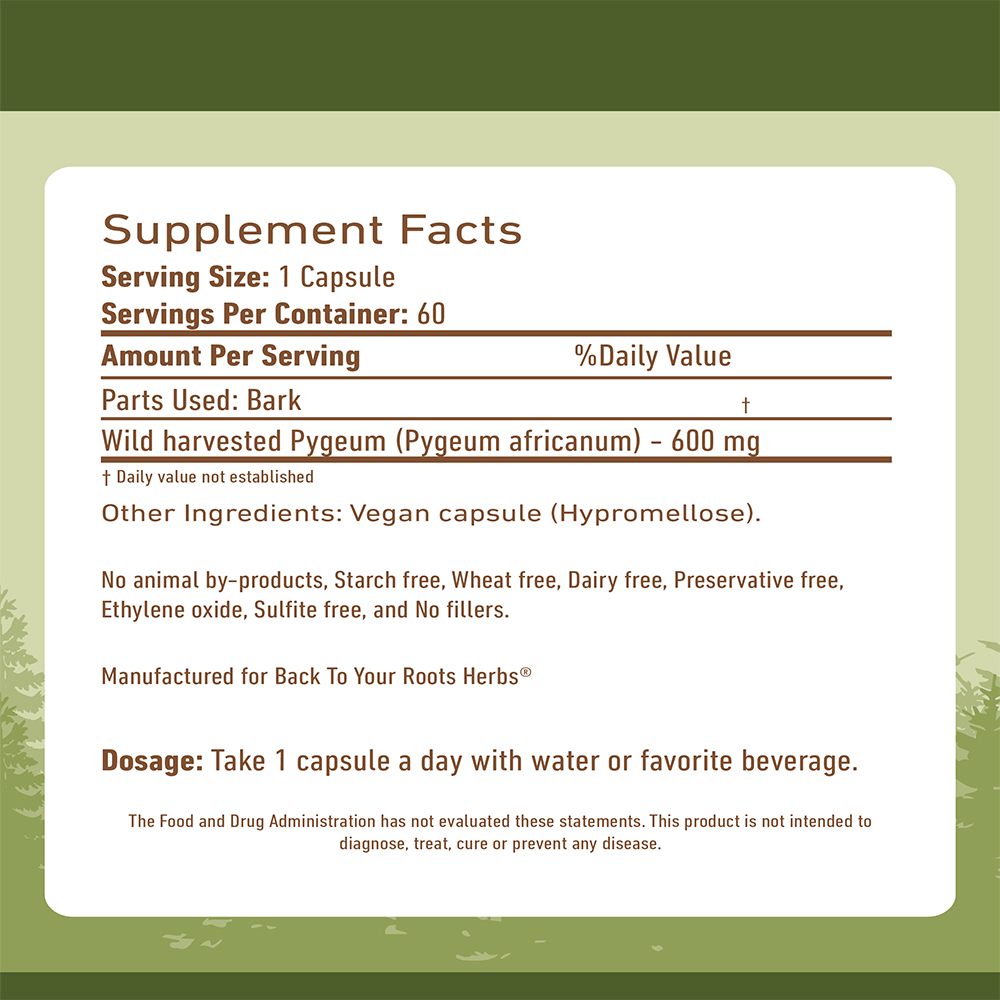
| Serving Size | 1 vegicap (500 mg whole bark) |
| Frequency | 2 times daily (1,000 mg total daily dose) |
| Active Marker | Native beta-sitosterol, ferulic acid, n-docosanol, ursolic acid |
| Processing | Milled and sifted whole bark, no solvent extraction |
| Safety | Heavy Metal Tested (Pass), non-irradiated, GMP-manufactured |
| Ingredients | 100% Prunus africana bark (whole, not extract) |
| Other Ingredients | Vegetable Cellulose (capsule) |
| Purity | Vegan, Non-GMO, gluten-free |
| Free From | Wheat, gluten, soy, dairy, binders, fillers, magnesium stearate |
| Origin | Mount Cameroon, Cameroon (4.21°N, 9.17°E) |
| Manufactured | Virginia Beach, VA, USA |
COMPARISON TABLE
| Feature | BTYRH Pygeum Africanum Capsules | Generic Pygeum Extract Brand |
|---|---|---|
| Origin | Mount Cameroon (4.21°N, 9.17°E) | Unspecified |
| Preparation | Whole bark, milled and sifted, no solvent | Lipophilic solvent extract, 13% sterols |
| Beta-Sitosterol Form | Native ratio (33% free, 67% bound) | Concentrated free form (over 95%) |
| Ferulic Acid | Preserved (about 450 micrograms per gram) | Reduced fourfold during extraction |
| Taste | Astringent, bitter, woody | Neutral or refined |
| Safety | Heavy metal tested, non-irradiated | Unknown / Untested |
| Sustainability | CITES Appendix II compliant sourcing | Often unverifiable |
Sourcing and Sustainability Note
Prunus africana has been listed on CITES Appendix II since 1995 and is classified as Vulnerable on the IUCN Red List. We work with Cameroon cooperatives operating under non-detriment-finding sustainable harvest plans verified by national and CITES authority audits.
Conservation Note
Bark is harvested in vertical strips on a rotation that allows the tree to regenerate. We do not source from clear-cut or felled trees.
FREQUENTLY ASKED QUESTIONS
What is pygeum and how does it work?
Pygeum is the bark of the Prunus africana tree, an evergreen African plum tree native to Afromontane forests. The active compounds include phytosterols (beta-sitosterol, beta-sitosteryl glucoside, beta-sitostenone), pentacyclic triterpenes (ursolic acid, oleanolic acid), n-docosanol, and ferulic acid esters that support normal prostate function.
Why choose whole bark pygeum over pygeum extract?
Whole bark pygeum preserves the original chemistry profile of the plant, including ferulic acid (four times higher in bark than in extract), bound beta-sitosterol forms, and minor cofactors that solvent extraction strips out. Pygeum extract gives you a single concentrated marker. Whole bark gives you the full pygeum bark chemistry.
How should I take pygeum africanum capsules?
Take one (1) capsule twice daily with food and water for a total of 1,000 mg whole bark per day. Use consistently for 8 to 12 weeks before evaluating. Drink plenty of water throughout the day.
What are the benefits of pygeum?
The traditional benefits of pygeum in herbal supplements include support for normal prostate function, urinary comfort, and male wellness. Pygeum is one of the most studied African herbal supplements in the men’s health category and is often paired with saw palmetto, stinging nettle, and lycopene.
Is this pygeum supplement vegan and GMO-free?
Yes. Vegan vegicaps, non-GMO, gluten-free, soy-free, and dairy-free. No magnesium stearate or anti-caking agents. Manufactured in a GMP-certified, FDA-registered facility.
Pygeum vs Saw Palmetto vs Stinging Nettle
Saw palmetto extract, stinging nettle root, and pygeum africanum are the three most studied prostate herbal supplements. Each works through different chemistry. Many men stack all three. We sell each as a single-herb dietary supplement, so you can evaluate ingredient by ingredient.
How long does it take to see results from pygeum?
Traditional whole bark pygeum regimens, and the clinical studies behind the research, generally run 8 to 12 weeks of consistent daily use before results are evaluated. Take one capsule twice daily with food and water, stay consistent, and give it the full window. Individual responses vary.
Can women take pygeum africanum capsules?
Pygeum africanum is a male-targeted phytotherapy traditionally used for prostate and urinary wellness. It is not intended for use during pregnancy, lactation, or by women of childbearing potential. Anyone with a medical condition should consult a healthcare provider before use.
Can pygeum africanum capsules help with erectile dysfunction?
Pygeum africanum is traditionally used to support normal prostate function and male urinary comfort, not as a treatment for erectile dysfunction. Some benign prostatic hyperplasia research has recorded sexual-function quality of life only as a secondary measure. Pygeum is not an ED remedy. If erectile dysfunction is your main concern, speak with a qualified healthcare provider, because it can signal underlying conditions that need proper evaluation.
DISCLAIMER: These statements have not been evaluated by the Food and Drug Administration. This product is not intended to diagnose, treat, cure, or prevent any disease. Consult your healthcare provider before use, especially if you are taking prescription drugs, planning surgery, or managing a medical condition. Keep out of reach of children.
Reviewed by the Back To Your Roots Herbs Editorial Team. Last reviewed: June 2026.
Reviews
There are no reviews yet.