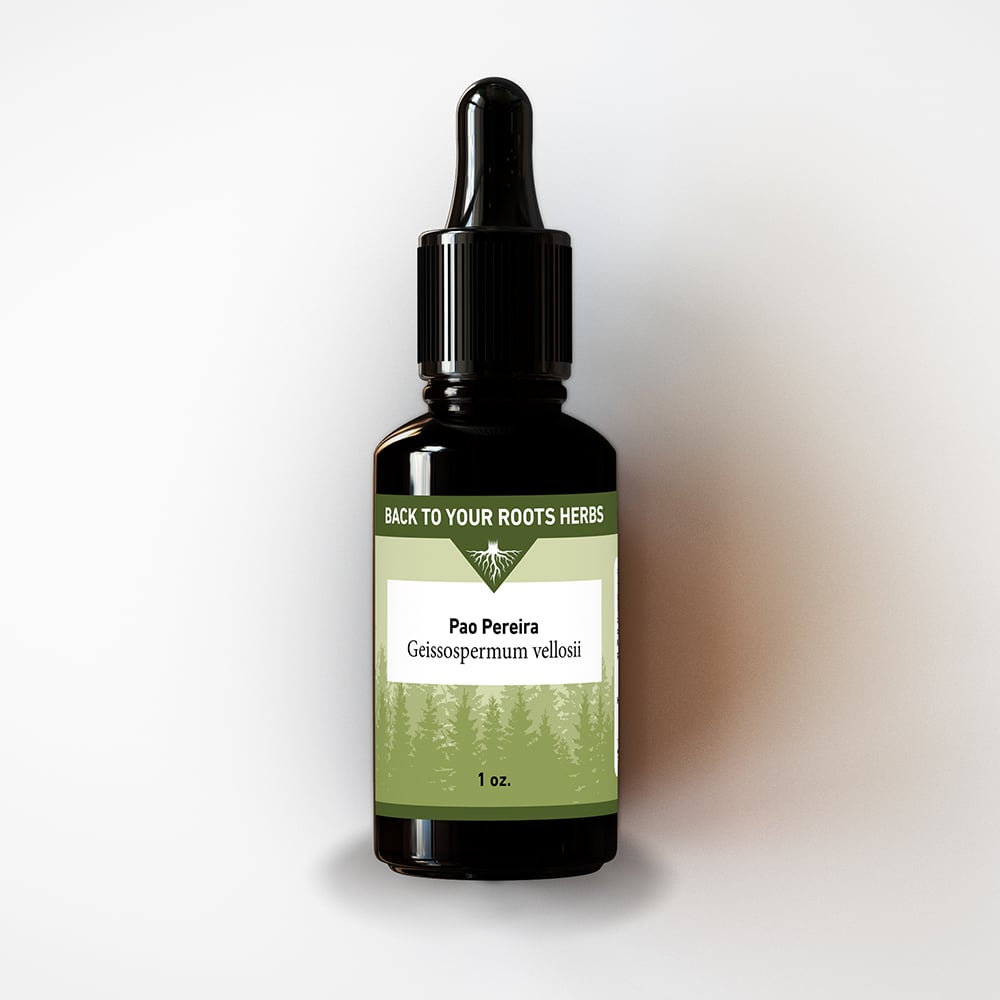
The Verdict: Pao Pereira Internal Quality Score, Bark Authentication, and Terroir Verification
Grade A+. Pao Pereira (Geissospermum vellosii) wild-harvested bark from deep Amazonas, Brazil, cold-macerated at a 1:3 ratio to preserve the full β-carboline alkaloid profile including naturally occurring flavopereirine, geissospermine, and geissoschizoline. Verified terroir at 3.4653° S, 62.2159° W. Flavopereirine-forward aromatic character. Sharply bitter. Slowly warming on the finish. An honest herbal supplement built from authenticated botanical material.
– Back To Your Roots Herbs Research Group
Sensory Analysis of Pao Pereira Bark, Alkaloid Aroma, and Amazonian Origin
What You See, Smell, and Taste
This is a first-hand report from our bench. We opened the amber glass, placed a dropper of this Pao Pereira tincture on a watch glass, and documented every sensory detail before the bottle went to packaging.
- Look: Deep amber to mahogany liquid. Clarity fully retained. A fine halo of bark particulates settles at the bottom of the 1 oz bottle. That sediment is raw evidence of minimally filtered bark material, not a defect.
- Smell: Warm and resinous. Top notes of bitter wood and leather. A mid-note of dry cacao husk. The alkaloid character arrives last as a faint almond-bitter lift at the back of the nose.
- Taste: Sharp, sustained bitterness from the first drop. Holds on the tongue for 40 to 60 seconds. Finishes with a slow warming sensation across the soft palate. The bitter signature is how we authenticate genuine Geissospermum vellosii bark. Sweet or mild tinctures are almost always mislabeled material.
How Does Pao Pereira Work as an Herbal Supplement, Medicinal Plant, and Traditional Amazonian Remedy?
Pao Pereira Bark and Its Botanical Identity
- The Herb: Geissospermum vellosii is an Amazonian rainforest tree sourced from Amazonas State, Brazil (3.4653° S, 62.2159° W). The common name pao pereira translates to “Pereira’s wood” and honors the 19th-century Brazilian pharmacist Jonas Pereira. Traditional Amazonian herbal practice has used this bark as a general wellness tonic for centuries.
- The Plant Part: The inner bark is where the pao pereira alkaloids concentrate. We use only stripped inner bark, not whole stem or mixed plant material.
- Family: Apocynaceae (the same family as Rauwolfia vomitoria and Tabebuia impetiginosa, both also used in herbal supplement traditions).
The Alkaloid Mechanism
Pao pereira bark contains a characteristic family of indole alkaloids built on a β-carboline (9H-pyrido[3,4-b]indole) skeleton. The principal alkaloid markers documented in G. vellosii bark include:
- Flavopereirine – the principal β-carboline marker used to authenticate genuine pao pereira bark.
- Geissospermine – the original bisindole isolate, first named “pereirine” in 1838.
- Geissoschizoline – a secondary alkaloid studied for interaction with cholinesterase enzymes.
- Vellosimine, Geissoschizone, and Geissolosimine – minor alkaloids rounding out the full spectrum profile.
Research on Flavopereirine
1838: The Original Isolation
Brazilian pharmacist Ezequiel Corrêa dos Santos isolated the first alkaloid from G. vellosii bark in Rio de Janeiro in 1838. He named it “pereirine.” This places pao pereira among the earliest isolated plant alkaloids in the history of pharmacognosy, predating the characterization of most plant-based indole alkaloids that became the foundation of modern phytochemistry.
The β-Carboline Family
Alkaloid characterization research by Dong et al. (2018, PMID 29985062) documented the β-carboline indole alkaloid profile of pao pereira bark and confirmed flavopereirine as the principal marker. Most commercial herbal supplements on the global market contain less than 100 ppm flavopereirine. Standardized bark extract of pao pereira produced by specialized cold-maceration methods can exceed 800 ppm. This is an eight-fold potency variance rarely disclosed in product marketing.
Geissoschizoline and Cellular Research
Phytochemistry research (Lima et al., 2020) has characterized geissoschizoline as a dual cholinesterase-interacting compound, while geissospermine shows selective butyrylcholinesterase activity. These are distinctions rarely mentioned in commercial pao pereira copy, and they reflect the breadth of the bark’s alkaloid pharmacology beyond flavopereirine alone.
Critical Usage Considerations for Pao Pereira Dosage, Contraindications, and Herbal Supplement Safety
Dosage and Daily Use
Traditional use suggests 15 to 30 drops (about 0.75 to 1.5 mL) of this pao pereira tincture one to three times daily, taken in a small amount of water or juice to soften the bitterness. Shake the amber bottle gently before each use. Keep in a cool, dark cabinet away from direct heat.
Contraindications
This is a potent bitter herbal supplement. We share the negative knowledge up front because trust matters more than a sale.
Pregnancy and Nursing
Do not use if pregnant, nursing, or attempting to conceive. Discontinue use at least two weeks before any scheduled surgical procedure. Consult a qualified healthcare professional before combining with prescription medications, especially antihypertensives, since the Apocynaceae family contains alkaloids that may interact with cardiovascular pharmacology. Not recommended for children under 18.
Clinical Specs for Pao Pereira Bark and Alkaloid Profile
| Spec | Detail |
|---|---|
| Serving Size | 15-30 drops (0.75-1.5 mL) |
| Frequency | 1-3 times daily in water or juice |
| Active Marker | Flavopereirine (β-carboline indole alkaloid) |
| Processing | 1:3 Cold-Macerated Liquid (Full Alkaloid Profile Preserved) |
| Safety | Heavy Metal Tested (Pass) |
| Ingredients | Wild-harvested Geissospermum vellosii inner bark, organic cane alcohol (40% ABV), distilled water |
| Other Ingredients | None. No fillers, no preservatives. |
| Purity | Organic, Non-GMO, Vegan |
| Free From | Wheat, Gluten, Soy, Dairy, Binders, Fillers |
| Origin | Amazonas State, Brazil (3.4653° S, 62.2159° W) |
| Manufactured | Virginia Beach, VA, USA |
Pao Pereira Comparison: Wild Amazonian Bark vs Generic Herbal Supplement
| Feature | BTYRH Pao Pereira Tincture | Generic Pereira Tincture |
|---|---|---|
| Origin | Amazonas, Brazil (specific terroir verified) | Unspecified “South America” |
| Preparation | 1:3 Cold-Macerated (full alkaloid profile) | Heat-processed or undisclosed method |
| Active Marker | Flavopereirine-forward (β-carboline alkaloid verified) | Not disclosed or <100 ppm |
| Taste | Sharply bitter, slowly warming, resinous finish | Mildly bitter or neutral (dilution flag) |
| Plant Part | Stripped inner bark only | Mixed bark and stem material |
| Safety | Heavy metal tested, lot-traced to harvest region | Untested/unknown |
Frequently Asked Questions About Pao Pereira, Flavopereirine, and β-Carboline Alkaloids
How Does Pao Pereira and Rauwolfia Work Together?
Pao pereira (Geissospermum vellosii) and Rauwolfia vomitoria are both Apocynaceae-family plants whose barks carry complementary indole alkaloid profiles. Pao pereira bark contributes flavopereirine and the β-carboline family. Rauwolfia bark contributes reserpine and a yohimbane alkaloid set. Traditional Amazonian and West African herbal practices often pair the two. Our separate Pao Pereira and Rauwolfia Vomitoria combination tincture exists for practitioners who want that pairing in one bottle.
What Is a Pao Pereira Supplement?
A pao pereira supplement is a dietary product made from the bark of Geissospermum vellosii, an Amazonian rainforest tree. Our extract of pao pereira is a liquid tincture. Other formats include capsules, dried bark tea, and standardized bark powder. The liquid tincture form preserves the native alkaloid profile better than heat-dried preparations and delivers the alkaloids faster under the tongue than a capsule.
Why Is This Bark So Bitter?
The sharp bitterness comes from the β-carboline alkaloids themselves. Indole alkaloids register on the bitter taste receptors (TAS2R family) of the tongue, and genuine Geissospermum vellosii inner bark is alkaloid-dense. If a pao pereira tincture tastes sweet or watery, the bark was either diluted, heat-degraded, or sourced from a related species with a weaker alkaloid profile. Bitterness is the quickest field authentication test for genuine Pao Pereira.
Has Anyone Had Experience With Pao Pereira?
Traditional Amazonian herbalists have used pao pereira bark as a general tonic for more than two centuries, and the ethnobotanical record in Brazilian herbal literature documents extensive folk use. Modern caregivers and integrative-medicine clinicians have added pao pereira to their herbal supplement shelves based on its characterized alkaloid content. Individual experience varies and should be discussed with a qualified healthcare professional, especially when paired with other supplements or medications.
Back To Your Roots Herbs Sourcing Standards
Every lot of pao pereira bark is traced back to its harvest coordinates in Amazonas State. Bark is stripped, shade-dried below 110°F to protect heat-sensitive alkaloids, and cold-macerated in organic cane alcohol for a minimum of four weeks. No microwave drying. No solvent stripping. No post-extraction standardization additives.
Lot Authentication and Terroir Verification
Each lot is voucher-authenticated against reference material matched to the original G. vellosii collection at the Emilio Goeldi Museum in Belem, Para (1.4558° S, 48.5039° W). Heavy metal screening is performed on every incoming bark batch.
DISCLAIMER: This statement has not been evaluated by the Food and Drug Administration. This product is not intended to diagnose, treat, cure, or prevent any disease.
Reviews
There are no reviews yet.