THE VERDICT
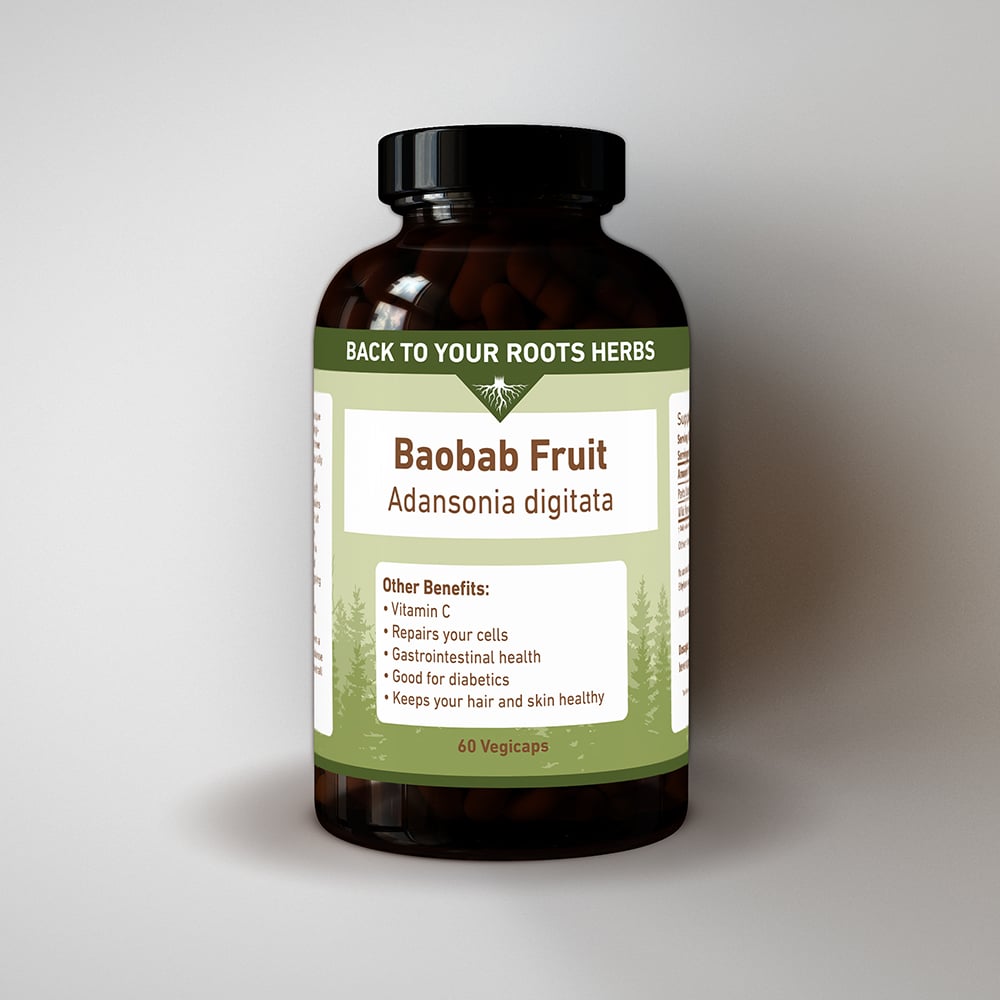
“The ‘Electrolyte’ Superfruit. Our analysis confirms these capsules contain 100% Wild-Harvested Adansonia digitata fruit pulp. Distinct from synthetic vitamins, this whole fruit powder delivers a massive dose of Vitamin C within a matrix of prebiotic fiber and electrolytes (Potassium/Magnesium). Rated 9.6/10 for bioavailability and gut support.”– Back To Your Roots Herbs Research Group
SENSORY ANALYSIS: The Physical Profile
We opened a capsule to verify the fruit quality.
Authentic Baobab pulp has a unique signature.
- The Look: The powder is a creamy, Off-White to Pale Beige color. It looks similar to yeast or fine sand.
- The Aroma: Upon opening, you will detect a faint Citrus and Sherbet scent. It smells tangy and fresh.
- The Taste: If tasted, it is sharply acidic and sweet (like lemonade powder). The capsule format is ideal for those who want the nutrients without the intense sour flavor.
Does Baobab support the Immune System?
Research suggests it is a potent source of bioavailable Vitamin C.
- The Herb: Baobab (Adansonia digitata) – The Tree of Life.
- The Nutrient: It contains up to 10x more Vitamin C than oranges.
- The Mechanism: Vitamin C is essential for the production of white blood cells (lymphocytes and phagocytes), which are part of the body’s normal immune defenses. Because it is bound to fruit fiber, absorption is sustained rather than flushed out quickly. (Source: Critical Reviews in Food Science and Nutrition, 2009).
Is Baobab a Prebiotic?
Yes, the fruit pulp consists of nearly 50% dietary fiber.
- Action: It is particularly rich in Soluble Fiber, which ferments in the colon to feed beneficial bacteria (Bifidobacteria).
- Benefit: A healthy microbiome improves digestion, reduces bloating, and enhances the absorption of the minerals found in the fruit itself.
CRITICAL USAGE: Dosage & Hydration
Baobab is a functional food, so the dosage is generous.
- Standard Dosage: Take 2 Capsules in the morning and 2 Capsules in the afternoon (Total 4 daily).
- Hydration: Because it is rich in electrolytes (Potassium), take it with a full glass of water to maximize cellular hydration and energy.
- Timing: Taking it with meals can help stabilize the glycemic response (blood sugar spike) of the food.
CLINICAL SPECS & DOSAGE
Sustainably wild-harvested from South Africa.
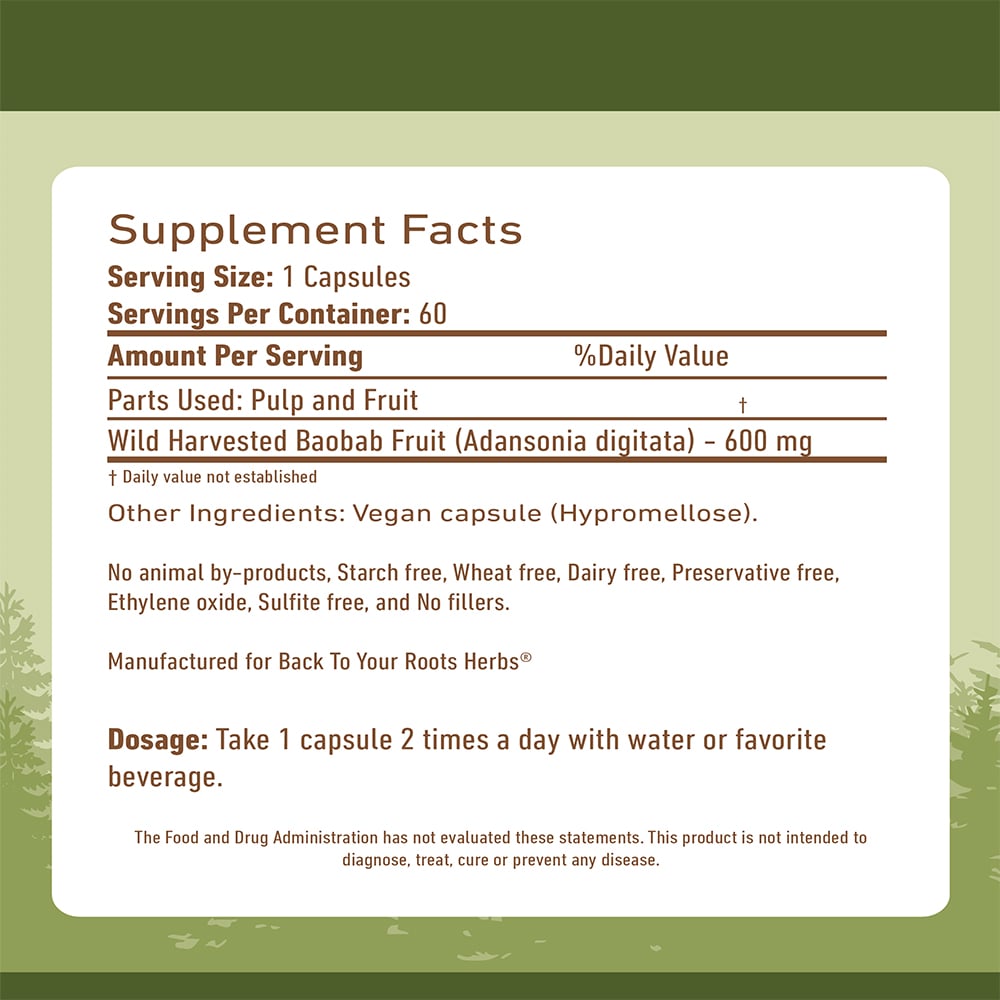
| Specification | Detail |
|---|---|
| Serving Size | 2 Capsules (approx. 1.2g) |
| Frequency | 2 Times Daily (Morning & Noon) |
| Active Ingredient | Adansonia digitata Fruit Pulp |
| Key Nutrients | Vitamin C, Potassium, Prebiotic Fiber |
| Primary Action | Immune & Gut Support |
| Allergen Status | Hypoallergenic (No corn, soy, wheat, dairy) |
COMPARISON: Baobab vs. Synthetic Vitamin C
Whole Food vs. Isolate.
| Feature | Baobab Fruit Capsules | Ascorbic Acid (Synthetic) |
|---|---|---|
| Source | Wild Fruit Pulp | Corn Syrup / Lab |
| Absorption | High (Fiber Matrix) | Fast (Rapid Excretion) |
| Gut Health | Prebiotic Support | Neutral / Acidic |
| Electrolytes | High (Potassium/Mag) | None |
| Best Use Case | Daily Wellness / Gut | Acute Deficiency |
Beyond synthetic vitamin C, baobab also stands apart among whole-food sources. Gram for gram, baobab fruit pulp supplies more vitamin C than many popular fruits, and laboratory testing has measured its antioxidant capacity as similar to or higher than apples, kiwis, strawberries, and oranges. Few fruit superfoods pair that vitamin C with such a high level of soluble pectin fiber in the same whole-food package.
How Has Baobab Traditionally Been Used? The “Tree of Life”
Baobab has fed and hydrated communities across Africa for centuries.
- The Source: Our pulp is wild-harvested in the warm northern reaches of Limpopo Province, South Africa (near 22.3° S, 30.5° E), where the baobab is so common it is almost synonymous with the region.
- The Food Tradition: The dry, tangy fruit pulp has long been eaten as a food and stirred into water to make a naturally tart, refreshing drink. This food and hydration heritage is why the species earned its “Tree of Life” name.
- The Whole Fruit: We use only the inner fruit pulp, the same part traditionally valued for food, sealed into a capsule for daily convenience.
Are Baobab Capsules Safe for Long-Term Daily Use?
Baobab fruit pulp is a food with a long history of daily dietary use and is generally well tolerated.
- Start Gradually: Because the pulp is rich in soluble fiber, taking too much too quickly may cause temporary gas or bloating. Begin with 1 to 2 capsules daily and work up to the full serving as your digestion adjusts.
- Stay Hydrated: Take your capsules with a full glass of water. Soluble fiber works best when paired with adequate fluid.
- Who Should Check First: If you are pregnant, nursing, taking prescription medication, or managing a health condition, talk with your healthcare provider before adding any new supplement.
Scientific Evidence & Authoritative Sources
Here is what published research reports about baobab fruit pulp. Human studies on whole baobab fruit are still limited and emerging, so we present these findings as nutrition and structure-function research, not medical claims.
- Carbohydrate & glycemic response: In a human study, the polyphenols in baobab fruit were associated with reduced starch digestion and a lower blood sugar response to a carbohydrate meal (Coe et al., Nutrition Research, 2013. PMID: 24176228). A later randomized controlled trial in healthy adults reported a lower post-meal glucose rise after baobab intake (PMID: 35057579).
- Vitamin C & antioxidant content: Reviews of the fruit report a vitamin C content of roughly 150 to 500 mg per 100 g of pulp, along with polyphenols that give it an antioxidant capacity comparable to common fruits (PMID: 37432337). Vitamin C contributes to the normal function of the immune system (NIH Office of Dietary Supplements).
- Prebiotic fiber: In a laboratory model of the human gut, pectin-rich baobab pulp increased beneficial short-chain fatty acids and supported Bifidobacteria, with prebiotic potential that compared favorably to inulin (Foltz et al., Microorganisms, 2021. PMID: 34576876).
Authoritative references: PubMed 24176228, PubMed 35057579, PubMed 37432337, PubMed 34576876, NIH Office of Dietary Supplements: Vitamin C, and USDA FoodData Central.
What to Look for in a Quality Baobab Capsule
Not all baobab supplements are equal. Check for these markers of quality.
- Whole Pulp, Not Extract: Look for 100% whole fruit pulp. Our capsules use the full-spectrum fruit, not a concentrated or diluted extract.
- Named Origin: Quality sellers name the harvest region. Ours is wild-harvested in Limpopo, South Africa.
- A Short Label: The ingredient list should be brief. Ours contains baobab fruit pulp in a vegetable-cellulose capsule, with no binders, flow agents, or added sugar.
DISCLAIMER
Legal Information: The Food and Drug Administration has not evaluated these statements. This product is not intended to diagnose, treat, cure, or prevent any disease. Consult a physician before starting any new supplementation regimen.
Written by the Back To Your Roots Herbs Research Group | Fact-checked. Last Reviewed: June 2026.
Reviews
There are no reviews yet.