The Verdict (Internal Quality Score)
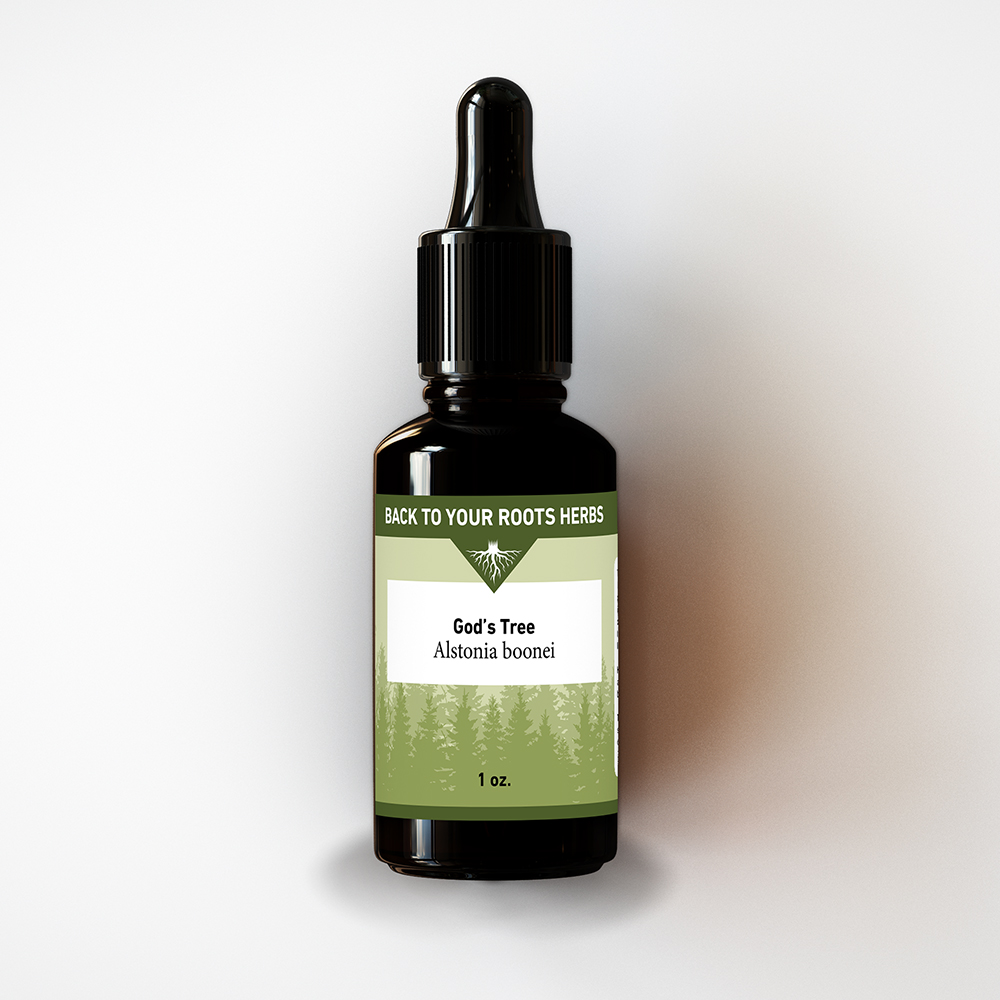
Grade A. This alstonia boonei bark tincture sources its stem bark from the Guineo-Congolian rainforest belt of West Africa (approximately 6.7 N, 1.5 W, Ashanti Region, Ghana), where Alstonia boonei De Wild has been gathered for generations under the Akan name “Onyame dua” (God’s tree) and the Yoruba name “Awun.” The alstonia bark extract preserves a defined indole alkaloid matrix – echitamine, echitamidine, N-alpha-formylechitamidine, voacangine, and akuammidine – alongside the triterpenoids beta-amyrin, alpha-amyrin acetate, lupeol, and ursolic acid. Anti-inflammatory activity of these triterpenoids was confirmed in peer-reviewed research (PMID 25026352). The bark of alstonia is processed as a full-spectrum 1:5 liquid extract that preserves the entire phytochemical fingerprint of the Apocynaceae stem bark.
– Back To Your Roots Herbs Research Group
Sensory Analysis of the Bark Tincture
- Look: Deep mahogany liquid. Light sediment of resinous bark particles is normal in a full-spectrum tincture of Alstonia boonei. No turbidity.
- Smell: Sharp, woody, slightly resinous. A faint milk-latex undertone characteristic of laticifer plants in the Apocynaceae family.
- Taste: Distinctly bitter. The bitterness arrives at the back of the tongue and lingers. This is the signature of the echitamine alkaloid load. A weak alstonia tincture tastes flat. A real one bites.
How Does Alstonia Boonei Bark Work?
- The Herb: Alstonia boonei De Wild (family Apocynaceae), sourced from the moist rainforest belt of West Africa spanning Ghana, Nigeria, Cameroon, Cote d’Ivoire, and parts of the DRC. The tree grows 30 to 45 meters tall and exudes a white latex from its stem bark when cut.
- The Mechanism: The Alstonia boonei bark tincture acts through multiple pathways. Indole alkaloids (echitamine, echitamidine) and pentacyclic triterpenoids (beta-amyrin, alpha-amyrin acetate, ursolic acid) modulate inflammatory cytokine production. Research on the n-hexane fraction of the Alstonia bark showed reversal of mitochondrial permeability transition pore opening from a 14-fold increase down to 2-4 fold in lipopolysaccharide-challenged Wistar rats (PMID 34429627).
- The Evidence: Olajide and colleagues (PMID 10904161) established that the methanol extract of Alstonia boonei stem bark significantly inhibited carrageenan-induced paw oedema, cotton-pellet granuloma, and anti-arthritic markers in rats, alongside analgesic activity in writhing and paw-licking assays. Hepatoprotective activity of the Alstonia boonei bark extract against isoniazid liver injury was documented more recently in Wistar rats (PMID via S2667142524002008).
Alstonia Boonei Bark Phytochemistry
The boonei bark contains five distinct alkaloid spots on silica gel chromatography. Beyond echitamine, the Alstonia boonei bark also yields boonein (a monoterpenoid), loganin (an iridoid glycoside), and the alstonine class alkaloid family. Antioxidant evaluation links the antioxidant activity of Alstonia boonei to its flavonoid and phenolic content. PubMed-indexed pharmacology research on the bark of Alstonia boonei now exceeds 50 distinct studies covering anti-inflammatory, antimicrobial, antiplasmodial, antipyretic, analgesic, and anxiolytic models. The molecule alstonine remains one of the most cited compounds in Apocynaceae literature.
Ethnobotany of the Alstonia Herbal Tincture in West Africa
In Ghana, herbalists call Alstonia boonei “Onyame dua.” Among the Yoruba of Nigeria, the tree is “Awun.” Igbo speakers call it “Egbu.” A bark decoction has been used for centuries in West African folk traditions, and the boonei extract was historically prepared by steeping fresh stem bark in palm wine or grain alcohol. The bark tincture format concentrates the Alstonia boonei phytochemistry into a stable, dosable liquid form. Alstonia is also a galactagogue plant in Akan tradition, applied to nursing mothers.
The Tincture of Alstonia Boonei: What Makes Ours Different
Most bark tinctures on the market are uncharacterized. Our Alstonia boonei bark tincture is prepared from authenticated Apocynaceae stem bark, processed at a 1:5 ratio in food-grade ethanol and purified water, then heavy-metal tested. The boonei bark extract retains the full triterpenoid and alkaloid spectrum.
Critical Usage
This Alstonia boonei supplement is a concentrated liquid extract. Start with a smaller amount to assess tolerance. The bitter flavor indicates active phytochemical content. Pregnant and nursing women should consult a qualified practitioner before use. People taking pharmaceutical medications, especially those metabolized by the liver, should discuss alstonia boonei tincture with their healthcare provider first.
Suggested Use
Take 1 mL (approximately 30 drops) 1 to 2 times daily, or as directed by a qualified herbalist. Shake well before each use. May be taken under the tongue or mixed into a small amount of water.
Common Questions About Alstonia Boonei Bark Tincture
How Is Alstonia Boonei Bark Tincture Prepared?
This Alstonia boonei bark tincture is prepared as a full-spectrum 1:5 liquid extract: one part authenticated Apocynaceae stem bark is macerated in five parts menstruum of food-grade sugar-cane alcohol and purified water, then heavy-metal tested before bottling. The 1:5 ratio is chosen to preserve the complete phytochemical fingerprint of the bark – the indole alkaloids (echitamine, echitamidine) and the pentacyclic triterpenoids (beta-amyrin, alpha-amyrin acetate, ursolic acid) – rather than isolating a single marker compound. The liquid format modernizes the traditional West African approach, in which fresh stem bark was historically steeped in palm wine or grain alcohol, into a stable, dosable extract.
What Are the Traditional Uses of Alstonia Boonei Bark?
Alstonia boonei is among the most widely used ethnobotanical trees of West Africa. In Ghana, Akan herbalists know it as “Onyame dua” (God’s tree); the Yoruba of Nigeria call it “Awun” and Igbo speakers “Egbu.” A bark decoction has featured in West African folk traditions for generations, and in Akan practice the bark has traditionally been regarded as a galactagogue used to support nursing mothers. Traditional preparation centered on decoctions and alcohol-steeped bark extracts. These uses are drawn from the ethnobotanical record and are described here for educational and cultural context.
What Has Alstonia Boonei Been Studied For?
Alstonia boonei stem bark is one of the more heavily researched species in the Apocynaceae family, with PubMed-indexed pharmacology spanning anti-inflammatory, analgesic, antipyretic, antiplasmodial, antioxidant, and hepatoprotective models. Olajide and colleagues reported that a methanol extract of the stem bark reduced carrageenan-induced paw oedema and cotton-pellet granuloma alongside analgesic activity in rodent assays (PMID 10904161). Research on the n-hexane fraction described modulation of mitochondrial permeability transition in lipopolysaccharide-challenged rats (PMID 34429627), and the triterpenoid fraction has shown anti-inflammatory activity in peer-reviewed research (PMID 25026352). These are preclinical and traditional-use findings reported in the scientific literature, not clinical endorsements. This product is not intended to diagnose, treat, cure, or prevent any disease.
Has Alstonia Boonei Bark Been Used for Skin Conditions?
Among the traditional benefits West African herbalists have long associated with Alstonia boonei, the ethnobotanical record also documents external skin and wound applications. In the folk practice of Ghana, Nigeria, and neighboring forest communities, a bark decoction was traditionally used externally to cleanse suppurating sores and ulcers, and the tree’s white latex was traditionally applied to skin complaints and swellings (PMID 22900200). These applications draw on the same indole alkaloid and pentacyclic triterpenoid constituents – echitamine, lupeol, ursolic acid, and beta-amyrin – described in the phytochemistry section above, the triterpenoid fraction of which has shown anti-inflammatory activity in peer-reviewed research (PMID 25026352). One point of clarity for shoppers: the Back To Your Roots Herbs product is a full-spectrum oral tincture formulated for internal use, not a topical skin preparation. The skin and wound uses above are part of the historical ethnobotanical record of the plant and are shared for educational and cultural context. Anyone considering Alstonia boonei specifically for a skin concern should speak with a qualified herbalist or healthcare provider. This product is not intended to diagnose, treat, cure, or prevent any disease.
Are There Side Effects of Alstonia Boonei Bark Tincture?
Because this is a concentrated liquid extract, it is best to start with a smaller amount to assess individual tolerance – the pronounced bitterness is a normal indicator of active phytochemical content, not a defect. Pregnant and nursing women should consult a qualified practitioner before use. Since several constituents are metabolized by the liver, anyone taking pharmaceutical medications – particularly those processed hepatically – should discuss this Alstonia boonei tincture with a healthcare provider before starting. Discontinue use and consult a qualified provider if any unexpected reaction occurs.
Clinical Specs
| Spec | Detail |
|---|---|
| Serving Size | 1 mL (approximately 30 drops) |
| Frequency | 1 to 2 times daily or as directed |
| Active Marker | Echitamine, Beta-Amyrin, Alpha-Amyrin Acetate, Ursolic Acid (Indole Alkaloids + Pentacyclic Triterpenoids) |
| Processing | Full-Spectrum 1:5 Liquid Extraction (Stem Bark) |
| Safety | Heavy Metal Tested (Pass) |
| Ingredients | Alstonia boonei De Wild Stem Bark, Sugar Cane Alcohol, Purified Water |
| Other Ingredients | None |
| Purity | Wild-Harvested, Non-GMO, Vegan |
| Free From | Wheat, Gluten, Soy, Dairy, Binders, Fillers |
| Origin | West African Rainforest Belt (Ghana, Nigeria, Cameroon) |
| Manufactured | Virginia Beach, VA, USA |
Comparison Table
| Feature | BTYRH Alstonia Boonei Bark Tincture | Generic Bark Extract |
|---|---|---|
| Origin | West African Rainforest Belt – Ashanti Region, Ghana (6.7 N, 1.5 W) | Unspecified |
| Preparation | Full-Spectrum 1:5 Stem Bark Tincture with characterized echitamine and triterpenoid profile | Powder reconstitution or alkaloid isolate |
| Taste | Distinctly bitter with woody resin notes (alkaloid indicator) | Masked or flat flavor |
| Safety | Heavy Metal Tested (Pass). Stem bark of authenticated Apocynaceae Alstonia boonei De Wild. | Unknown / Untested |
DISCLAIMER: These statements have not been evaluated by the Food and Drug Administration. This product is not intended to diagnose, treat, cure, or prevent any disease.
Reviews
There are no reviews yet.